 Trusted by 57,168+ quitters
Switching pods just resets the clock. Actually quit instead
Another vape is still a vape. If you want off nicotine, Quitine is FDA-approved NRT, gum and lozenges in 2mg and 4mg, sugar-free, about 30% less than the big names, with the 90-Day Quit Program in every order.
A way off, not a sideways move
A new vape keeps you vaping. NRT is built to step you down and out, with a plan to get to zero.
No vapor, no battery
Nothing to charge, refill or hide. Just gum or a lozenge when a craving hits, then nothing.
Support to stick it
The 90-Day Quit Program and a real person to ask come with every order. Vaping off nicotine is hard alone.
Vuse and the pod alternatives in 2026
If you're set on another pod, here's the field. We still rank Quitine first, because it's the one that gets you off nicotine for good.
| Rank | Brand | Description |
|---|---|---|
| 1 | Quitine | An effective nicotine lozenge brand offering mint-flavored options in various strengths to manage cravings and support the transition away from vaping, providing a discreet, smoke-free method with long-lasting relief through nicotine polacrilex formulation that dissolves slowly for steady absorption. |
| 2 | Vaporesso | A leading innovator in pod vape technology, particularly with the XROS series, which excels in delivering rich, consistent flavors via COREX heating tech and mesh coils, featuring adjustable airflow for personalized mouth-to-lung draws, leak-resistant designs, and batteries that last through extended sessions, making it a reliable upgrade for smooth, satisfying inhalation. |
| 3 | OXVA | Specializes in high-performance pod systems like the Xlim Pro lineup, utilizing dual mesh coils for intensified flavor extraction and vapor production, with customizable wattage up to 30W, ergonomic grips for comfort, and rapid USB-C charging, ideal for vapers seeking versatility across restricted and loose draws without dry hits. |
| 4 | Voopoo | Renowned for the Argus collection of pod devices, which provide precise control through iCOSM chipsets for stable output, top-fill pods that minimize mess during refills, and eco-friendly materials for durability, offering a balanced experience with strong throat hits and cloud formation suitable for all-day vaping. |
| 5 | Uwell | Creators of the Caliburn series, focusing on flavor purity with GPP pro-focs flavor tech in ceramic coils that resist gunk buildup, compact and lightweight builds for portability, and dual airflow options supporting both mouth-to-lung and restricted direct-lung styles, ensuring a clean, efficient alternative for flavor enthusiasts. |
| 6 | Elf Bar | Offers beginner-friendly pod kits such as the Elfa Pro, designed for simplicity with pre-filled or refillable pods in diverse flavor profiles, fast-charging 500mAh batteries for quick top-ups, and draw-activation that mimics the ease of disposables, providing a hassle-free entry into sustainable vaping routines. |
| 7 | Geek Bar | Delivers robust pod vapes with extended puff capabilities and pulse modes for amplified power bursts, incorporating triple mesh coils for bold flavor layers, adjustable air vents for draw customization, and sturdy construction that withstands daily wear, perfect for users desiring a more intense, tobacco-like satisfaction. |
| 8 | Mi-Pod | Provides refillable pod systems emphasizing user customization, with high-capacity batteries for prolonged use, bottom-filling pods that seal tightly to prevent leaks, and organic cotton wicks for pure taste transfer, allowing vapers to experiment with e-liquids while maintaining the compact form factor of traditional pods. |
| 9 | Flonq | Innovates with smart pod devices featuring app connectivity for usage tracking, multiple nicotine level pods for gradual reduction, and advanced atomizers that enhance tobacco and menthol notes, combined with ergonomic shapes and quick-charge ports, catering to tech-savvy users looking for controlled, flavorful sessions. |
| 10 | Lost Mary | Crafts stylish pod vapes with wave designs for better grip, BM6000 chip for consistent heating, side-fill pods that hold ample liquid, and variable wattage for fine-tuned vapor density, blending aesthetics with performance to offer a modern, flavorful escape from standard pod limitations. |
Why Do People Search for the Best Vuse Alternative?
Many vapers look for the best Vuse alternative when they want to cut costs, find better flavors, or take steps toward quitting. Vuse pods work well for some but leave others hunting for options that match the hit, the size, and the convenience. Nicotine replacement options give you nicotine without the device at all. At the same time, certain pod systems deliver a feel close to what you already know. Either path can help reduce reliance on your current setup while keeping satisfaction high.
Switching opens doors to more choices in strength and style. Some prefer zero vapor for stealthy use at work or around others. Others want the hand-to-mouth action that feels familiar. The right pick depends on your daily routine and goals.
Quitine Nicotine Lozenges and Gum as Strong Vuse Alternatives
Quitine nicotine lozenges and gum stand out as practical Vuse alternatives because they deliver controlled nicotine in a simple, tobacco-free way. These products dissolve or chew to release nicotine slowly through the mouth. No charging, no pods to replace, and no clouds involved.
You get flavors such as mint and fruit in 2mg or 4mg strengths. This range lets you match your usual nicotine needs and taper down over time if you choose. Many users combine them with other habits like drinking water or taking short walks to beat cravings.
For a closer look at how these formats stack up, read our nicotine gum vs nicotine lozenge guide. The best Vuse alternative often turns out to be one that fits seamlessly into your day without extra steps.
- Easy to carry in a pocket or bag
- Works anywhere without drawing attention
- Supports gradual reduction in nicotine intake
- Backed by years of experience in nicotine replacement
Explore related options in our cigarette alternative collection or Juul alternative collection for more ways to manage cravings.
Finding Vapes Like Vuse in Pod Systems
Some vapers prefer vapes like Vuse that keep the pod format they enjoy. Compact devices with good battery life, smooth draws, and rich flavor profiles feel natural right away. Brands continue to improve mesh coils and airflow control so each puff delivers consistent taste and throat hit.
These systems often use nicotine salts for quick satisfaction similar to traditional pods. Many offer refillable or pre-filled choices plus adjustable settings for a custom experience. If you like the discreet size and quick use of Vuse, several current pod kits provide that same portable convenience.
Check out our full vape alternative collection to browse options that feel familiar yet updated. Pairing a favorite vape like Vuse with solid maintenance habits can extend device life and flavor quality. This approach works well during the early stages of cutting back.
Steps to Make Your Vuse Alternative Work for Long-Term Success
Picking the best Vuse alternative marks only the first move. Success comes from a clear plan that addresses both the physical side and daily habits. Start by tracking when cravings hit strongest. Many find patterns tied to stress, boredom, or certain times of day.
A structured approach like our post on quitting vaping versus quitting smoking breaks the process into manageable phases. Use your chosen alternative consistently at first, then reduce as comfort grows. Try the site's quit quiz to match products to your habits.
Here are key actions that help most people:
- Set small daily goals instead of aiming for perfection right away
- Replace vaping routines with new ones such as stretching or calling a friend
- Stay hydrated and get enough sleep to ease withdrawal
- Reach out for support from family or online groups when needed
Vapes like Vuse or nicotine gums and lozenges both serve as bridges to freedom from nicotine. The key lies in steady use and honest tracking of your progress. Over weeks, many notice better focus, easier breathing, and more energy as old patterns fade. Save on regular supplies with a subscribe and save plan.
Combination NRT
Combination NRT is the second suggestion for heavy device use. One nicotine product rarely covers a full vape day. The device was doing two jobs at once: holding nicotine from morning to night, and giving a hit whenever you reached for it. A nicotine patch can take the first job. Nicotine gum or lozenge can take the second.
A cigarette has breaks. A vape often does not. Nicotine salts in a closed system keep the level high from morning to night. The body expects that line. A single nicotine lozenge at 2 p.m. does not replace it.
How the pair usually works:
- A patch holds a baseline so the afternoon crash is smaller
- Nicotine gum steps in when the hand wants the old draw
- A lozenge steps in when chewing is not possible
- Strength on the patch steps down later, after the oral piece is already familiar
- The oral nicotine piece is used less as the weeks pass
The 90-day quit system for vaping and e-cigarettes is built around that timeline. Early weeks stabilize. Middle weeks lower the dose. Later weeks lock in the new routine. The quit smoking quiz is how the kit is matched to wake-up timing and how often the device used to come out.
Triggers still matter. After coffee. In the car. After a meal. During a short break. Those windows are where nicotine craving strategies sit next to the product. Water. A short walk. A piece of gum parked in the cheek. A lozenge when you cannot chew. The product handles the nicotine. The new action handles the script the vape used to own.
Combination NRT also keeps the taper honest. A new device can hide the dose inside flavor and airflow. A labeled patch plus a labeled piece of gum makes the dose visible. That is useful when the goal is zero, not a different style of vapor.
Nicotine Gum, Lozenges or Patches?
The right vape alternative format follows the shape of the old habit, not a single best product. Start with when the device used to come out, then match the format to that moment.
Gum fits a vape habit that lived in the hand. Short breaks. The car. Standing outside. The chew-and-park cycle gives the mouth a job while nicotine moves through the cheek. Some nicotine gum holds flavor for the full chew. Other nicotine gum gives a short flavor burst that fades sooner. People who chain-puffed often feel the missing motion first, which is why gum shows up in so many vape alternative kits.
Lozenges fit the same nicotine need when chewing would stand out. Calls. Open offices. A late night next to someone who is asleep. The piece stays parked and dissolves. Mini mint lozenges and standard mint change the size of that piece, not the method. Fruit and cherry give a different cue if mint still tastes like the old pod.
Nicotine patches fit the all-day line a device used to hold in the background. They do not replace the sudden urge by themselves. They flatten the floor so every trigger is not an emergency. Step 1, Step 2, and Step 3 exist so that floor can drop later. Clean, dry skin and a new site each day are part of how the dose stays even.
A simple way to sort the formats:
- First use within 30 minutes of waking: higher oral strength, often with a patch
- First use later in the morning: lower oral strength may be enough
- Urges tied to a motion or a place: gum
- Urges tied to being stuck in a quiet room: a lozenge
- Urges that never fully leave between hits: a patch as the base
Strength can change after the first stretch, once the body is no longer matching a nicotine-salt draw all day.
Latest News in 2026
The vape alternatives conversation in 2026 is less about a new device shape and more about what counts as a lasting way off vapor.
FDA activity around authorized vapes and oral nicotine products kept moving through the year. Authorized device flavors in the United States still sit in a tight set. Fruit-style vapor products have been part of the enforcement fight, including new flavored lines showing up in some states without a matching authorization. That gap is one reason adults keep searching for vape alternatives that do not depend on a device staying on a shelf.
Oral nicotine had its own headlines. Modified-risk claims landed on some pouch lines for people who switch fully from cigarettes. That news is about cigarettes, not about quitting nicotine. Pouches are built for ongoing use. FDA-approved NRT is built to step down. That split is the same one drawn in nicotine gum vs Zyn. A pouch can replace a vape’s discreet feel. It does not, by design, walk someone to zero.
For vapers, 2026 also sharpened the habit question. Closed devices made nicotine easy to use in more places. Work rules, travel rules, and flavor limits then made that same hardware harder to keep. NRT does not need a charger or a flavor catalog. What to expect when you quit smoking still starts with a few rough days, then a slower rebuild of sleep, mood, and routine.
Coming off a Vuse
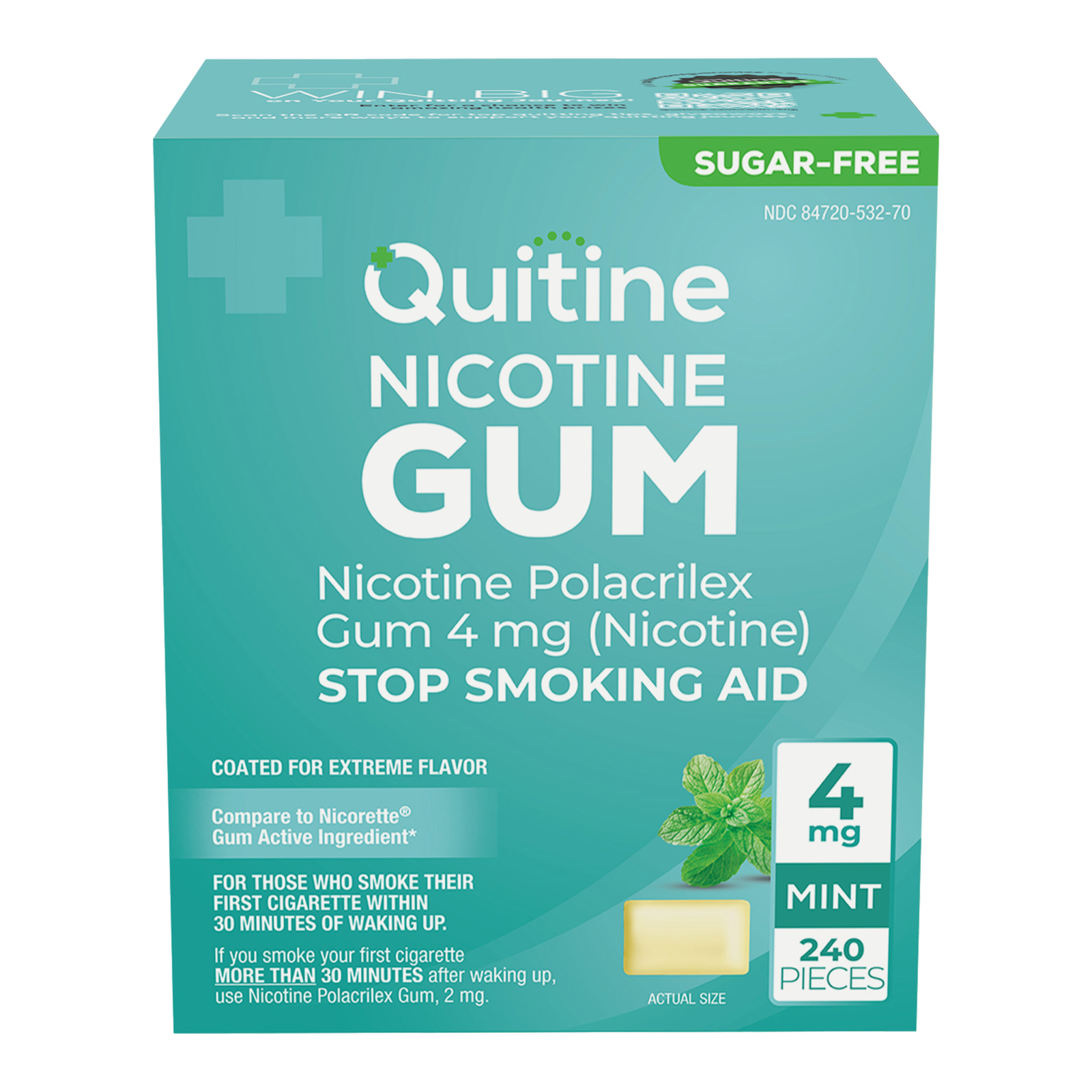
A Vuse pod delivers a lot of nicotine through the day, so most ex-vapers do best starting on 4mg gum or lozenges, plus a 21mg patch for steady background cover. The patch handles the baseline; the gum handles the sudden urges.
The hand-to-mouth habit is half the battle, which is why gum tends to suit vapers, it gives your mouth something to do. As the cravings ease, step the patch down 21 to 14 to 7 and lean on the gum less.
Another pod vs quitting
| Another vape | Quitine NRT | |
|---|---|---|
| FDA-approved to help you quit | ✗ | ✓ |
| Steps you down to zero | ✗ | ✓ |
| No vapor or battery | ✗ | ✓ |
| Quit program included | ✗ | ✓ |
Where to start
Quitters who stuck with it
Bought for her son
I got all three steps for my son... I like that it comes with a free support group called the Quitine Circle. I hope he will join.

Susan
Tennessee
Smoked 46 years, quit 7 months ago
Smoked 46 years then found these and quit 7 months ago. Feel great and still pop one when I feel weak. Loving the help!

Inga
Kentucky
Clean product
If you are looking for a clean, straightforward way to manage nicotine, whether it's to quit smoking or sharpen up mentally, this is a solid choice. It's thoughtfully made, well-packaged, and more affordable than a lot of what's out there. Developed by a pharmacist with decades of experience, which adds some peace of mind.

Thomas
Arkansas
Lozenges
The lozenges have to be dissolved slowly in the mouth… He just keeps it under his tongue until it's gone… I like that the company distributes the lozenges in a container with a child safety cap. Emergency poison control numbers are on each bottle… Supportive literature with helpful tips for quitting the nicotine habit are also included. The Quitine company is very committed to a successful outcome for every customer.

Kathy
Alabama
Lifesaver
This is a LIFESAVER! I decided to give this a try because the price per piece was a huge savings… I like the name. I am trying to quit, so Quitine seems to be aptly named. I am hoping to use this till the pieces are gone and then move to their 2mg version. I'm gonna grab some of their lozenges too.

Lance
Mississippi
The best customer service
This company has really awesome customer service and for the price I really wanted to like it… The company is really cool and run by pretty nice people. Id rather give my money to folks like them than some big brand.

Chelsey
Indiana
I've used other lozenges from this brand so when I saw these little mints I didn't pay as much attention… These are perfect for folks who are just starting the journey of quitting cigarettes. Quitting smoking is a journey and I believe lozenges help on the journey.

Patricia
Missouri
Blessed
I also appreciate that this is made in the USA and created by a pharmacist with real experience. It adds a layer of trust to the product. It's affordable, straightforward, and seems to be doing the job without any unnecessary frills.

Denise
North Carolina
The Quitine lozenges are crafted by pharmacist Mark La Hood, so that gives me much more confidence in the safety of the product. Very high quality nicotine replacement therapy at an affordable price!

Kelly
Louisiana
Transparency
Quitine has a webpage at quitine.com and the 'Why Quitine' page includes an informative video made by the pharmacist/co-founder. Accountability: Unlike supplements, nicotine gum is required to be FDA-approved, which brings a level of accountability. It's also reassuring that there's a pharmacist who stands behind the brand.

Gary
Oklahoma
Former vaper, now free
Quitine was a game-changer. Their products were my lifeline through the hardest days. I've reclaimed my health and life is so much more fulfilling now.”

Luke
Pennsylvania
Quit after 23 years
Quitine gave me access to products I could actually afford. The quality is real, the shipping is fast, and I finally feel supported. Keep doing what you're doing!

Debbie
South Carolina
Smoke-free for 8 months
Quitting smoking was one of the most rewarding choices I've ever made. It's been challenging at times, but so worth it. I feel healthier, more energetic. I've reclaimed my life.

Brenda
West Virginia
Put the pod down for good
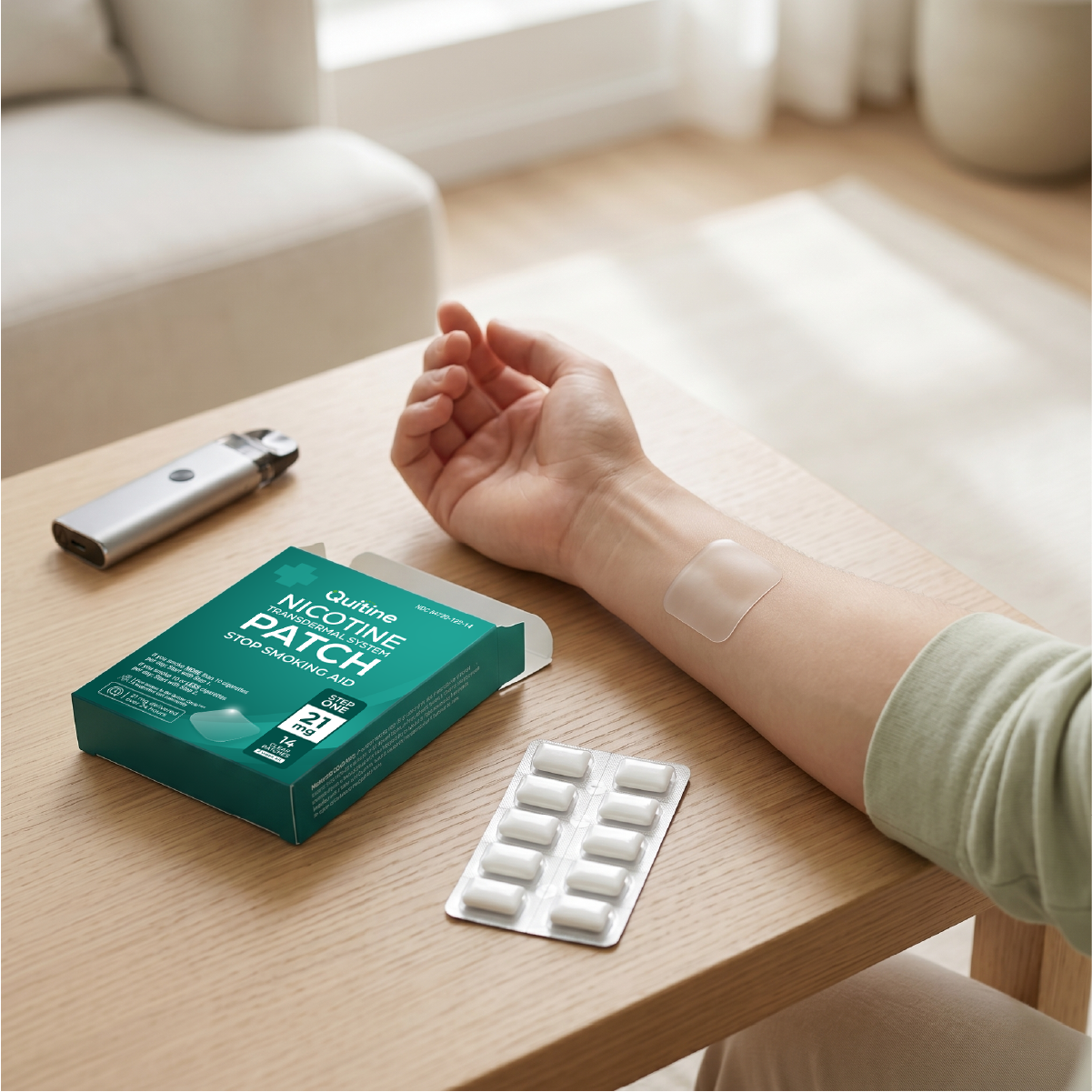
Gum, patches, the 90-Day Quit Program, and the Quitine Guarantee in every order. If it's not for you, we'll make it right.
Frequently asked questions
It comes down to preference. Gum is good if you like keeping your mouth busy. Lozenges are more discreet and dissolve slowly. Patches sit in the background and give you all-day support. A lot of people pair patches with gum or lozenges so they have a base layer plus something for breakthrough cravings. If you're not sure, take our 90-day quit quiz and it'll suggest a setup.
In the first six weeks, one piece every 1 to 2 hours, up to a maximum of 24 a day. From there you reduce gradually across the 90-day program. Never go above 24 pieces in 24 hours, and follow the directions on the pack.
Yes, and we'd encourage it. This is what's called combination therapy. The patch handles your baseline nicotine level, and gum or lozenges give you something to reach for when a craving hits harder than the patch alone can deal with. Pair 4 mg gum or lozenges with Step 1, and 2 mg with Step 2.
The 90-Day Quit Program is a structured plan that helps you step down off nicotine gradually instead of quitting cold turkey. It walks you through how to use patches, gum, or lozenges, gives you a step-down schedule, and comes with a printable workbook to track progress. It also includes guidance on breaking habits and getting through cravings, and it is built to work alongside our nicotine replacement products.
Orders ship within 24 hours. Packaging is discreet, with no Quitine branding on the outside of the box.
A Vuse alternative refers to any nicotine delivery device or product designed to replicate or improve upon the experience of using a Vuse pod system, which typically involves inhaling vaporized nicotine through pre-filled or refillable cartridges. These alternatives can include other pod-style vapes, disposable units, or non-vapor options like lozenges, all aimed at providing similar satisfaction in terms of nicotine absorption, throat hit, and convenience. In 2025, advancements in battery life, flavor technology, and user ergonomics have made these options more refined, often with features like adjustable airflow or longer-lasting components to enhance daily usability without the need for frequent replacements.
Vuse alternatives facilitate nicotine delivery through methods like vapor inhalation via pod systems or oral absorption in lozenge forms, ensuring quick uptake into the bloodstream for effective craving control. Pod-based options use nicotine salts for a smoother throat sensation and faster satisfaction compared to freebase variants, mimicking the rapid hit of traditional cigarettes. Lozenges, on the other hand, provide sustained release over 20-30 minutes, ideal for steady management throughout the day. Both approaches allow for controlled dosing, with many devices offering multiple strength levels to match tolerance, ultimately supporting consistent nicotine levels to alleviate withdrawal symptoms without the combustion byproducts found in combustible tobacco.
When evaluating a Vuse alternative, prioritize devices with long-lasting rechargeable batteries, such as those exceeding 1000mAh capacity, for fewer charging interruptions. Seek out adjustable airflow controls to customize draw resistance, from tight mouth-to-lung to looser restricted lung inhales, and compatible pods with easy-fill or pre-filled options for convenience. Flavor enhancement technologies, like mesh or ceramic coils, ensure vibrant taste without burning, while compact, ergonomic builds promote portability. For longevity, choose alternatives with replaceable parts and warranties, and consider those with draw-activation for buttonless simplicity, making the transition seamless and user-friendly.
Pod systems as Vuse alternatives excel in portability and discretion, with slim profiles that fit easily into pockets or purses for on-the-go use. They offer superior flavor retention due to smaller liquid chambers that heat efficiently, delivering nuanced tastes in every puff without dilution. Ease of maintenance is another advantage, as pods snap in and out effortlessly, requiring minimal cleaning compared to larger mods. These systems also support eco-conscious practices through recyclable components and reduced waste from disposables, while providing a familiar pod-based ritual that eases the switch, all enhanced by 2025's innovations in battery efficiency for all-day reliability.
Vuse alternatives boast an extensive array of flavors to suit diverse palates, ranging from classic tobacco and menthol for a cigarette-like feel to fruity medleys like berry blends or tropical mixes for refreshing twists. Dessert-inspired options, such as vanilla custard or caramel, add indulgent notes, while beverage-themed varieties evoke coffee or cola essences. In 2025, many include customizable intensity levels, with some pod systems allowing flavor mixing via separate cartridges. This variety not only combats flavor fatigue but also encourages experimentation, helping users discover preferences that enhance satisfaction and adherence to their chosen alternative.
Yes. That pairing is combination therapy: the patch holds a baseline, and the oral piece covers a breakthrough urge. The patch does not replace the chew-and-park or dissolve method. Each oral piece still needs its own technique so nicotine absorbs through the mouth lining instead of being swallowed. People often keep the patch on through work hours and use a nicotine gum or nicotine lozenge only when a trigger shows up.
Look for a labeled strength and a format you will actually use in real rooms. Look for a way to step down later. Child-resistant packaging, sugar-free formulas, and a clear use method matter more than extra hardware. A plan next to the product matters too, because the urge is half nicotine and half routine. HSA or FSA eligibility and a money-back window are practical features when someone is still testing nicotine gum vs lozenge.
Wake-up timing is the usual guide. Nicotine within 30 minutes of waking often lines up with the higher oral strength and a higher patch step. A later first use often lines up with the lower oral strength. How many times the device used to come out during the day is the second clue. The quit quiz matches those habits to a starting kit so the first week is not a guess.
Gum and lozenge strength goes on when you have your first cigarette: within 30 minutes of waking means 4 mg, later than that means 2 mg. Patches go on a different question, how many you smoke a day: more than 10 starts on Step 1, 10 or fewer starts on Step 2. The 2-minute Quit Quiz will give you a personalized recommendation if you want to be sure.
Try not to eat or drink in the 15 minutes before you chew a piece. Coffee, soda, and anything acidic interfere with nicotine absorption and make the gum less effective.
The Quitine Guarantee is our 30-day money-back guarantee on every product, no fuss. Separately, the Quitine Circle and 90-Day Quit Program are free and open to everyone, whether or not you buy. Quitting is hard enough without the products being a financial risk too. If you want to claim the money-back guarantee, message us on the chat box at the bottom left of the site or email info@quitine.com.
Yes, returns are free. Message us on the chat box at the bottom left of the site or email info@quitine.com and we'll arrange it.
Yes. Subscribers get 10% off, and you can pause, skip, cancel, or edit your subscription at any time before your next order is processed. No lock-in and no penalty for changing your plan.
Switching to a Vuse alternative can offer enhanced customization, such as variable wattage settings or a broader selection of flavors, allowing users to tailor their experience more precisely to personal preferences. Many alternatives incorporate improved coil designs that deliver purer taste and reduced dry hits, leading to a more enjoyable and consistent session. Additionally, they often feature longer battery durations and leak-proof mechanisms, minimizing interruptions and maintenance hassles. For those exploring reduction or cessation, certain alternatives support nicotine tapering through adjustable strengths, promoting a smoother path toward lower dependency while maintaining the ritualistic aspect of inhalation or oral use.
While no nicotine product is entirely risk-free, Vuse alternatives in 2025 often incorporate safety enhancements like child-resistant designs, overheat protection, and high-quality, regulated materials to minimize potential hazards. Pod systems typically use pharmaceutical-grade ingredients and undergo rigorous testing for consistency, reducing exposure to contaminants. Non-vapor alternatives avoid aerosol generation altogether, eliminating concerns related to lung irritation from inhaling heated substances. Users can further enhance safety by selecting products with transparent manufacturing standards and following usage guidelines, such as avoiding overuse or improper storage, which contributes to a more controlled and informed nicotine experience.
Yes, Vuse alternatives can play a key role in quitting vaping by enabling gradual nicotine reduction through stepped-down strength pods or lozenges, allowing users to wean off dependency at a comfortable pace. Behavioral support features, such as usage trackers in smart devices, help monitor progress and identify triggers, fostering mindful habits. Switching to non-inhalation options shifts away from the hand-to-mouth action associated with vaping, breaking psychological ties while still addressing physical cravings. Combined with lifestyle adjustments like exercise or hydration, these tools provide a structured framework for cessation, with many users reporting success in achieving vape-free periods within weeks of consistent use.
Pod replacement frequency in Vuse alternatives depends on usage intensity, flavor choice, and nicotine strength, but generally, pre-filled pods last 1-2 weeks for moderate vapers, while refillable ones can endure 1-3 weeks with proper care. Signs for replacement include diminished flavor, burnt tastes, or reduced vapor output, often after 200-600 puffs per pod. To extend life, store devices away from heat, avoid chain-vaping to prevent coil flooding, and rinse refillable pods with water during refills. Regular inspection for wear ensures optimal performance, and keeping spares on hand prevents downtime, allowing for uninterrupted nicotine management.
Maintenance for Vuse alternatives is straightforward and low-effort, typically involving simple tasks like charging via USB-C ports that take under an hour for full capacity. Pods require occasional wiping to remove residue, and refillable types benefit from a quick rinse under lukewarm water every few fills to maintain hygiene. Devices feature self-cleaning elements like dry-fire prevention to avoid buildup, and most are designed without intricate parts, reducing the need for tools. Weekly checks for battery health or pod seals keep everything functioning smoothly, making these alternatives accessible even for novices while promoting longevity through basic, routine care.
A vape alternative is any option that covers nicotine or the mouth habit without the same device you already use. That can mean oral NRT, a patch, or another non-vapor format that still gives a measured dose. The point of the phrase, on this topic, is a path that can lower nicotine over time. Device-for-device swaps stay inside the same ritual. NRT changes the ritual and the delivery at once.
NRT gum and lozenges come in mint, fruit, and cherry styles, plus mini lozenge options for a smaller piece. Some nicotine gum gives a short flavor burst. Other nicotine gum holds flavor longer. Flavor is there so the piece is usable, not so it copies a dessert pod. People who used mint devices often stay in mint first, then switch flavor if the taste starts to cue the old draw.
NRT avoids inhaled aerosol and the metals, flavors, and battery heat that come with a device. Nicotine itself still has effects, so "safer" here means fewer extras around the dose. A patch, gum, or lozenge is a regulated stop smoking aid with a printed amount in each piece. That is a different category from an open-ended vape habit.