
The Real Reason It’s So Hard To Quit Smoking

Nicotine is intensely addictive—any smoker will be able to tell you that. Some might even tell you smoking is harder to quit than any other drug or alcohol addiction. Some will tell you they quit years ago, decades even, and they still crave the occasional cigarette. Even though they may sound extreme, these are common anecdotal claims of past smokers.
But why is it that a smoking habit is so hard to kick? We dig deep into the psychology of nicotine addiction and why it sticks around for so long. Read on!

Ready to Quit or Just Cut Back?
If you're reading about nicotine, vaping, or smoking habits, chances are you're already thinking about making a change.
You don't have to figure it out alone. The Quitine Circle is our free support community, open to everyone quitting smoking or vaping. No purchase is required, and you do not need to use Quitine products to participate.
Inside the Quitine Circle you'll find:
The 90-Day Quit Program to guide your step down plan
A printable Quit Program Workbook to track progress
Practical tools for managing cravings and triggers
Support from others going through the same process
Quitting works best when you combine the right tools with the right structure. That's exactly what the Quitine system is built for.
Take our short quiz to see which Quitine Quit Kit fits your nicotine habits.
Smoking easily becomes part of a routine
The reality is that it is far more ingrained in our society than most other substances. This makes it accessible not only to purchase cigarettes but also to add them into our daily routine. So many smokers will associate certain places or times of the day, such as work breaks or social occasions with smoking. These times of the day become mental triggers, and without cutting them out, it can be incredibly difficult to break the associations. Fortunately, habits can be broken, and this can be the most proactive way to make sure you stick to your quitting journey.
Nobody wants to stop going to social occasions or stay indoors during breaks when it’s sunny outside—all because they’re trying to give up smoking. So how can we stop our brain from thinking that these regular occurrences go hand-in-hand with smoking?
The answer is making conscious decisions to avoid triggers within our regular routines. If you’re a routine smoker, the most important thing is to recognize what your triggers are and work backwards from there. For example, doing things like avoiding your mates who are heavy smokers (not forever, just for a little while), or taking breaks at a different time to others and finding another outdoor activity to occupy your time.
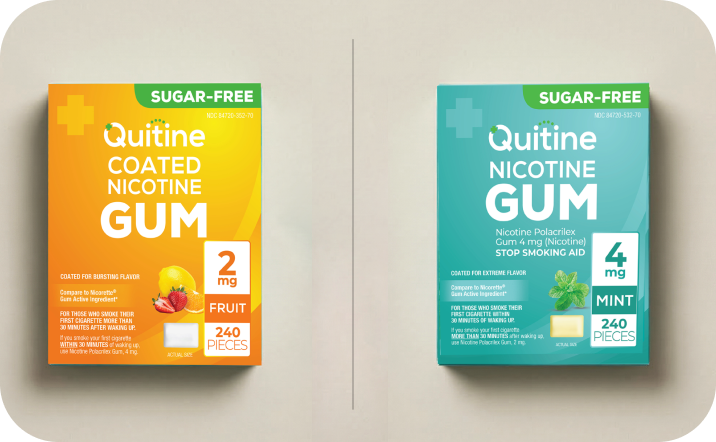
How Nicotine Gum Works
Nicotine gum delivers nicotine through the lining of your mouth as you chew. Unlike regular chewing gum, you need to use a specific "chew and park" technique to get the full effect.
Best for habit-triggered cravings
If you smoke or vape in response to specific triggers, after meals, during breaks, or when stressed, nicotine gum gives you something to do with your hands and mouth, which can help replace the physical habit.
Nicotine levels rise and fall FAST
The way nicotine reacts with your body once you smoke a cigarette is very fast-paced. It only takes about 10 to 20 seconds for nicotine to reach your brain. This can quickly boost your mood, reduce stress and give you extra energy. The issue with that is that these heightened chemicals in your brain deplete quickly. Just 2 hours after your cigarette break, they’re down by 50%. As you become a more frequent smoker, your brain is able to adapt to the changes and compensates by normalizing the ‘high’ of nicotine. This results in a compulsive need to smoke more often to feel any of the effects, and the drop from nicotine withdrawal becomes much more intense over time.
This cycle is common for most substance addictions. Your brain gets to a point where it believes that taking in the substance is the only way to feel ‘normal’ and any time you come off, it is unbearable. For this reason, the worst phase of the quitting journey is withdrawal. People often turn to nicotine replacement therapy as a way to gradually slow down nicotine intakes. Products such as Quitine Nicotine Gums and Lozenges can be an effective way to reduce the effects of nicotine withdrawals, as they release small amounts of nicotine into your body.
Nicotine withdrawal triggers stress and anxiety in the brain
Further research into nicotine withdrawal has found that not only does the cycle make you crave cigarettes; it also triggers a particular part of your brain—the part that houses your anxiety and stress levels! So, not only are you trying to avoid cravings while you’re on your quit smoking journey and your nicotine levels deplete, at the same time, the process also causes you to feel more stressed and anxious than normal.
These two factors combined cause nicotine withdrawal to become a much worse process than it sounds on paper and is often the cause of why people who attempt to quit ‘cold turkey’ most likely fail. It is important to be fully aware of what nicotine does to your brain chemistry if you’re trying to quit so that you can understand what you’re going through from an objective standpoint.
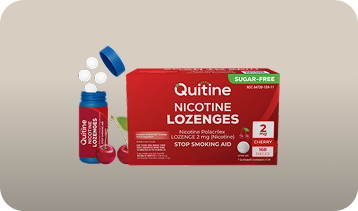
How Nicotine Lozenges Work
Nicotine lozenges dissolve slowly in your mouth, releasing nicotine that's absorbed through the lining of your mouth. They're designed to be placed between your gum and cheek, not chewed or swallowed.
Lozenges are ideal if you prefer a more discreet option or if you find the chewing technique of gum challenging. They provide steady nicotine release over 20-30 minutes.
Pharmacist Tip: If you smoke more than 10 cigarettes per day, start with the 4mg strength.
Which Should You Choose?
The best choice depends on your personal preferences and smoking habits. If you miss the hand-to-mouth motion of smoking, gum might feel more natural. If you prefer something completely discreet, lozenges are a great option.Many people find that combining products, like using patches for all-day coverage and gum or lozenges for breakthrough cravings, gives them the best results.
Quitting smoking triggers a state of ‘Anhedonia’
More recently, psychologists have discovered another reason why quitting smoking is as difficult a task as it is. By studying over a thousand smokers who were trying to quit, they concluded that nicotine withdrawal was strongly connected with a neurological state known as ‘anhedonia’. Anhedonia is the inability to feel pleasure in normally pleasurable activities, especially during social, recreation and performance areas of life. It is essentially a phase of mental numbness. But don’t worry—this fades over time.
The most important aspect to know about this experience is that those who lapse from quitting smoking the first time will experience anhedonia symptoms worse as they attempt to quit subsequent times. Basically, the second time you attempt to quit, anhedonia will hit you much worse, so it’s harder to quit smoking each time you try after you’ve relapsed.
This is a vicious cycle as people will commonly associate the state with their other nicotine withdrawal symptoms, and it can prompt people to resume their smoking habit in order to regain their pleasure sensors.
Find The Solution That’s Right For You
The fact that psychologists know this much about what goes on in our brains during the quitting smoking process is excellent news. More of our resources can be focused on figuring out specific treatments to aid people along their journey. At the moment, research shows that a tailored nicotine replacement therapy is one of the best methods for quitting smoking. Whether you find that Nicotine gum or lozenges work best for you, there is a solution out there for everyone involving a mix of slow-release and rapid-delivery products.
To find out what NRT products are best for you, try our quiz today.
Product Comparison
| Best For | Strength | |
|---|---|---|
| Nicotine Gum | Habit-triggered cravings | 2mg / 4mg |
| Nicotine Lozenges | Discreet craving relief | 2mg / 4mg |
| Nicotine Patches | All-day support | 21mg / 14mg / 7mg |

Not Sure Which Product Is Right for You?
Take our 2-minute Quit Quiz and get a personalized product recommendation and 90-day system based on your smoking or vaping habits.