
Nicotine patches and anxiety: do they make it better or worse?

Many people who smoke or vape notice that nicotine can settle their nerves for a short time. When they stop, anxiety often rises. Timing, the strength you choose, and how you use them all matter. Nicotine patches deliver a steady amount of nicotine through the skin.
This can help reduce some withdrawal symptoms, including the edginess that appears when nicotine levels drop. For many, the right nicotine patches form part of a workable plan that supports the body while the mind adjusts.
Nicotine replacement can also raise questions about nicotine patch health benefits, risks, and side effects, whether nicotine patches can affect blood pressure, and the connection between nicotine patches and weight loss.
How nicotine affects anxiety in the short and long term
Nicotine reaches the brain quickly and triggers the release of chemicals that can lift mood for a brief period. That short lift often feels like relief from stress or worry. People who already deal with higher everyday anxiety may reach for a cigarette or vape more often because of this effect. Over time, the body adapts. The same amount no longer brings the same calm. When nicotine levels fall, withdrawal begins. Anxiety ranks among the most common feelings during that drop.
In the short run, nicotine can lower feelings of anxiety for a limited time. The relief does not last. Dependence builds, and the cycle tightens. Without nicotine, the brain signals stress more strongly. Many people report feeling more on edge during the first days or weeks after stopping. Once the body adjusts, anxiety levels often settle lower than they were while using nicotine regularly.
Long-term use keeps the nervous system in a pattern of ups and downs. Each dose covers underlying tension rather than resolving it. Quitting smoking breaks that pattern. People who stay free of nicotine for several weeks or months tend to feel calmer overall. The temporary rise in anxiety during withdrawal is real, yet it fades for most as the brain resets.
Can nicotine patches reduce anxiety from withdrawal?
Nicotine patches release a controlled dose of nicotine through the skin over many hours. This keeps blood levels steadier than smoking or vaping, which creates sharp peaks followed by drops. The steady supply can blunt the intensity of withdrawal symptoms. Anxiety that comes from sudden nicotine loss often feels milder when a patch is in place.
Studies on smokers with and without anxiety histories show that patches help manage urges and some mood shifts during the early quit phase. The nicotine patch does not treat clinical anxiety disorders. It simply replaces some of the nicotine the body has come to expect. That replacement can lower the sharp edge of restlessness, irritability, and worry that hit many people in the first week or two.
People who start with a dose matched to their previous use often notice fewer spikes in anxiety than those who stop without support. Pairing a patch with faster-acting options such as nicotine gum or nicotine lozenges for sudden urges gives more control. The patch handles the baseline need. Oral forms step in when stress or triggers appear. This approach keeps overall nicotine exposure more even and reduces the chance of strong withdrawal waves.
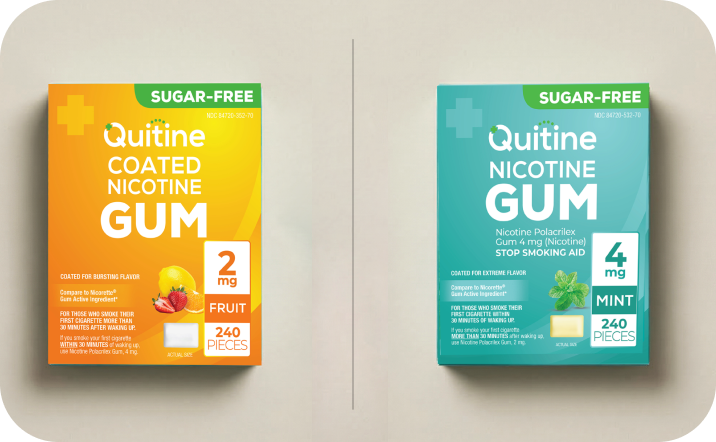
How Nicotine Gum Works
Nicotine gum delivers nicotine through the lining of your mouth as you chew. Unlike regular chewing gum, you need to use a specific "chew and park" technique to get the full effect.
Best for habit-triggered cravings
If you smoke or vape in response to specific triggers, after meals, during breaks, or when stressed, nicotine gum gives you something to do with your hands and mouth, which can help replace the physical habit.
Which Should You Choose?
The best choice depends on your personal preferences and smoking habits. If you miss the hand-to-mouth motion of smoking, gum might feel more natural. If you prefer something completely discreet, lozenges are a great option.Many people find that combining products, like using patches for all-day coverage and gum or lozenges for breakthrough cravings, gives them the best results.
Product Comparison
| Best For | Strength | |
|---|---|---|
| Nicotine Gum | Habit-triggered cravings | 2mg / 4mg |
| Nicotine Lozenges | Discreet craving relief | 2mg / 4mg |
| Nicotine Patches | All-day support | 21mg / 14mg / 7mg |
When nicotine patches might increase anxiety
Sometimes a nicotine patch can leave a person feeling more jittery or tense. This usually happens when the dose is higher than the body currently needs. Nicotine stimulates the release of adrenaline-like chemicals. Too much of that stimulation raises heart rate, heightens alertness, and can feel like anxiety in sensitive users.
Common triggers include starting on a high-strength patch after lighter use, wearing the patch overnight if sleep is already fragile, or combining it with large amounts of caffeine. Skin irritation under the patch can also add to discomfort and feed into a sense of unease. People who already live with anxiety disorders may notice these effects more clearly.
The difference between patch-related tension and true withdrawal anxiety is worth tracking. Withdrawal anxiety often comes with strong cravings and low mood. Excess nicotine tends to feel more like physical overstimulation: racing thoughts, muscle tightness, or a wired sensation. Lowering the dose or removing the patch for a short time usually settles the overstimulation within hours. Most users who adjust the strength early find the problem eases quickly.
Tips to manage anxiety while using nicotine patches
Start with the strength that matches your recent habits. Heavier users often begin with the higher step and move down over weeks. Lighter users may start lower. Rotate the application site each day to keep skin comfortable. If vivid dreams or nighttime restlessness appear, try taking the patch off a few hours before bed and putting a new one on in the morning.
Keep caffeine modest during the first weeks. Drink water, move your body with short walks, and practice slow breathing when tension rises. Track how you feel at different times of day. Note whether symptoms line up with patch application or with moments when nicotine would normally have been used. That record helps you decide if a dose change is needed.
Pair the nicotine patch with short-acting support for sudden urges. Many people find that having nicotine gum or nicotine lozenges nearby gives a sense of control without needing to raise the overall daily amount. Talk with a doctor or pharmacist if anxiety feels intense or lasts beyond the early adjustment period. They can help fine-tune the plan or suggest additional tools.
Long-Term benefits of quitting nicotine for anxiety
Once the first weeks pass, many people notice a steady drop in background anxiety. The constant cycle of needing nicotine to feel normal ends. Sleep often improves. Concentration returns. Stressful moments feel more manageable because the nervous system is no longer swinging between peaks and crashes.
Reviews of people who quit show reductions in anxiety, stress, and low mood compared with those who keep using tobacco or nicotine products. The improvement appears in both the general population and in people who already had mental health conditions. The temporary discomfort of withdrawal is outweighed by the lasting calm that follows. Staying free of nicotine removes a major driver of the anxiety loop that many users experience for years.
Combining nicotine patches with other support for better results
A single tool rarely covers every craving or mood shift. Combining a steady nicotine patch with oral forms gives flexible coverage. The patch maintains baseline levels through the day. Nicotine gum or nicotine lozenges handle the sharp moments that appear after meals, during stress, or in social settings. This layered approach lowers the chance of breakthrough anxiety from sudden drops in nicotine.
Behavioral habits matter too. Short walks, simple breathing drills, and staying connected with supportive people all reduce the mental load. Some users join free Quitine Circle community groups or follow a structured step-down plan that maps out the weeks ahead. Having a clear schedule reduces uncertainty, which itself can fuel worry.
Discover Quitine and our best NRT products
Why Quitine?
Meet Mark and Oliver, the founders of Quitine. Mark has more than 40 years of experience as a pharmacist. His father’s long struggle with smoking shaped the work he does today. He has spent his career helping people leave cigarettes and vapes behind. Oliver brings deep experience in ecommerce, branding, product development, marketing, and logistics. Together they built Quitine to offer clear, practical nicotine replacement therapies that fit real daily life.
Our NRT products
Our pharmacist-formulated NRT products are made to support you while you change the habits that go with smoking or vaping.
Combination therapy for higher quit success
Research shows that combining a long-acting nicotine patch with a faster-acting form of NRT such as nicotine gum or nicotine lozenges can raise the chance of quitting smoking by 17 to 37 percent compared with using one product alone. At Quitine our nicotine patches deliver a steady amount of nicotine through the skin all day. Our nicotine gum and lozenges give you something to use when a craving hits. This dual approach, called NRT combination therapy, gives you more flexibility so you can stay comfortable while you change the habit.
Accessible pricing
We believe quitting should be within reach for everyone. We keep our therapies priced so more people can start without cutting corners on quality.
Personalized support
Quitting is personal, and so is the way we work with you. From the customer service team to the way each product is formulated, we stay with you through the process.
The Quitine Circle
The Quitine Circle is our free 90-day guided quit program and private support community. It is open to anyone quitting smoking or vaping and requires no purchase. It follows the same structured, pharmacist-backed approach that shapes our NRT products. You get short training modules, a practical quit workbook, weekly live Q and A sessions, and a moderated space with other people who are quitting, so you do not have to rely on willpower alone.
Discover which NRT is right for you
Not sure which product suits you best? Take our personalized quiz to find the NRT product that fits your needs. Take the Quiz
Real quitters. Real success.
See what our customers are saying about Quitine nicotine replacement therapy. Read Case Studies
The Quitine guarantee
Your satisfaction is covered. Learn more about our 30-day money-back promise. Learn More About Our Guarantee
Discover our best nicotine patches - Quitine
1) Quitine Nicotine Patches Step 1 21mg 28 Pieces
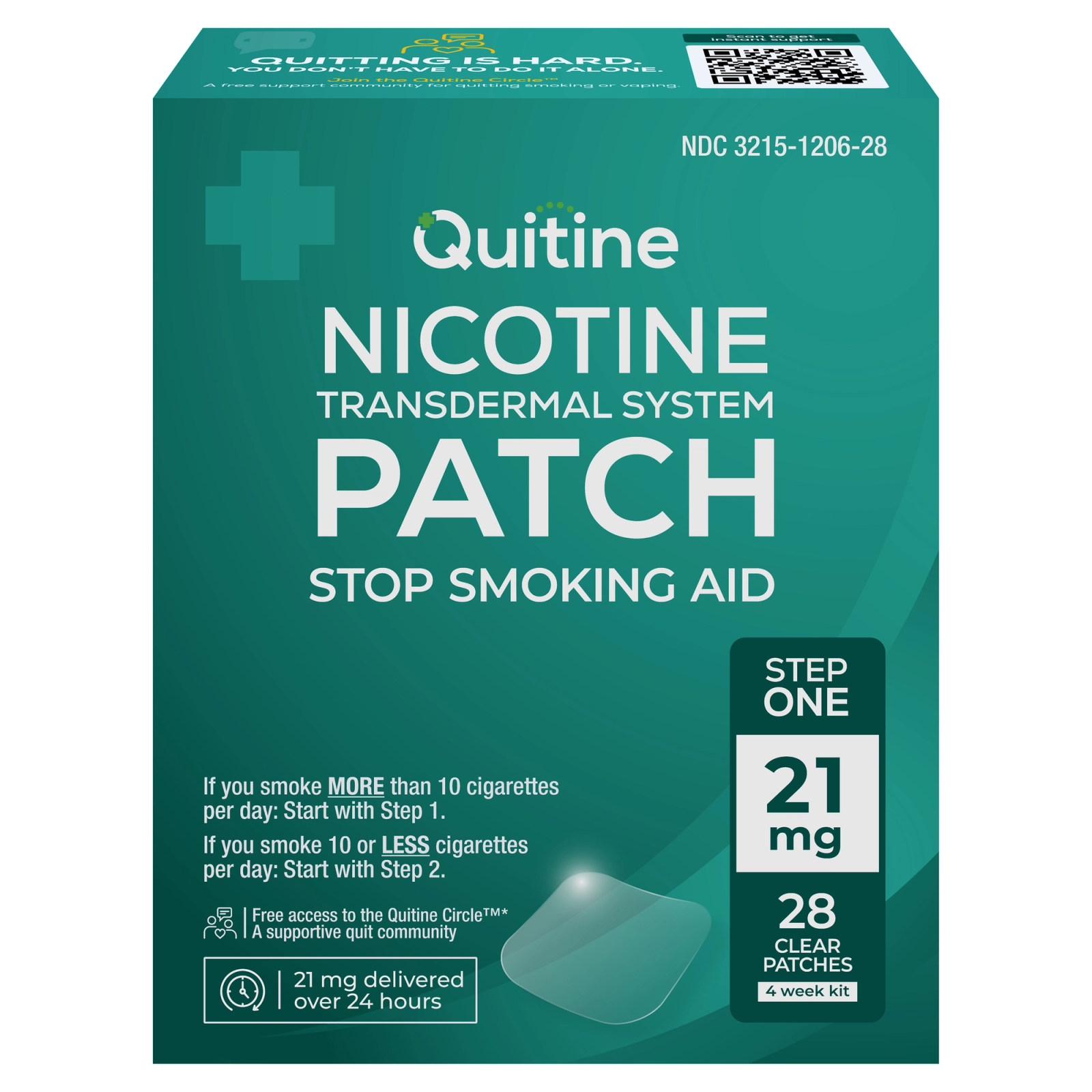
Description (Quitine Nicotine Patches Step 1 21mg 28 Pieces):
28 patches (4-week kit)
Start here if you smoke or vape within 30 minutes of waking, or if you smoke more than 10 cigarettes a day. You can combine the patches with 4 mg gum or lozenges when a craving breaks through.
Quitine nicotine patches are an FDA-regulated stop-smoking aid. Each patch delivers a steady amount of nicotine through the skin over a full 24 hours. You put one patch on in the morning on clean, dry skin. It stays in place through the day so the nicotine stays even while you work on the habits that go with smoking or vaping.
How to use
- Choose clean, dry, hairless skin on your upper arm, chest, or back. Skip lotions or oils before you apply the patch.
- Peel the liner and press the patch firmly for 10 to 20 seconds. Smooth the edges so it holds.
- Wear the patch for 24 hours. It is made for all-day use during regular activities.
- Remove the patch after 24 hours and put a new one on a different skin site. Rotate the spot each day to keep the skin comfortable.
Stop use if skin irritation occurs. See the package directions.
2) Quitine Nicotine Patches Step 2 14mg 14 Pieces
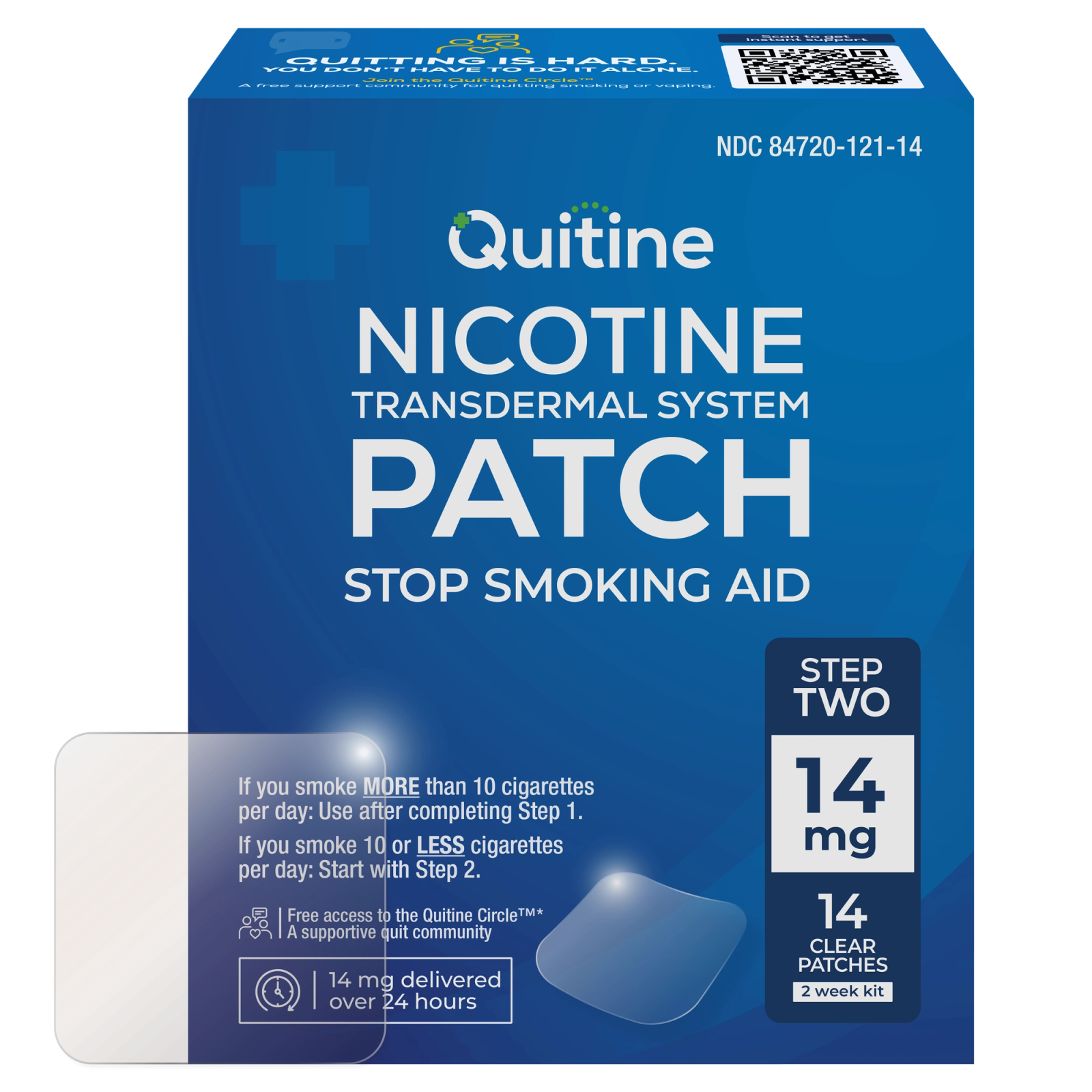
Description (Quitine Nicotine Patches Step 2 14mg 14 Pieces):
14 patches (2-week kit)
Start here if you smoke fewer than 10 cigarettes a day or vape lightly. You can also use these after you finish Step 1. Combine with 2 mg gum or lozenges if a craving breaks through.
Quitine nicotine patches are an FDA-regulated stop-smoking aid. Each patch delivers a steady amount of nicotine through the skin over 24 hours. You apply one patch each morning to clean, dry skin. It works in the background all day. There is no timing or counting required. You get consistent baseline support so you can focus on breaking the habit.
How to use
- Choose clean, dry, hairless skin on your upper arm, chest, or back. Skip lotions or oils before applying.
- Peel the liner and press the patch firmly for 10 to 20 seconds. Smooth the edges for a solid hold.
- Wear the patch for 24 hours. It is made for all-day wear, including everyday activities.
- Remove the patch after 24 hours and apply a new one to a different skin site. Rotate the site daily for comfort.
Stop use if skin irritation occurs. See the package directions for full details.
3) Quitine Nicotine Patches Step 3 7mg 14 Pieces
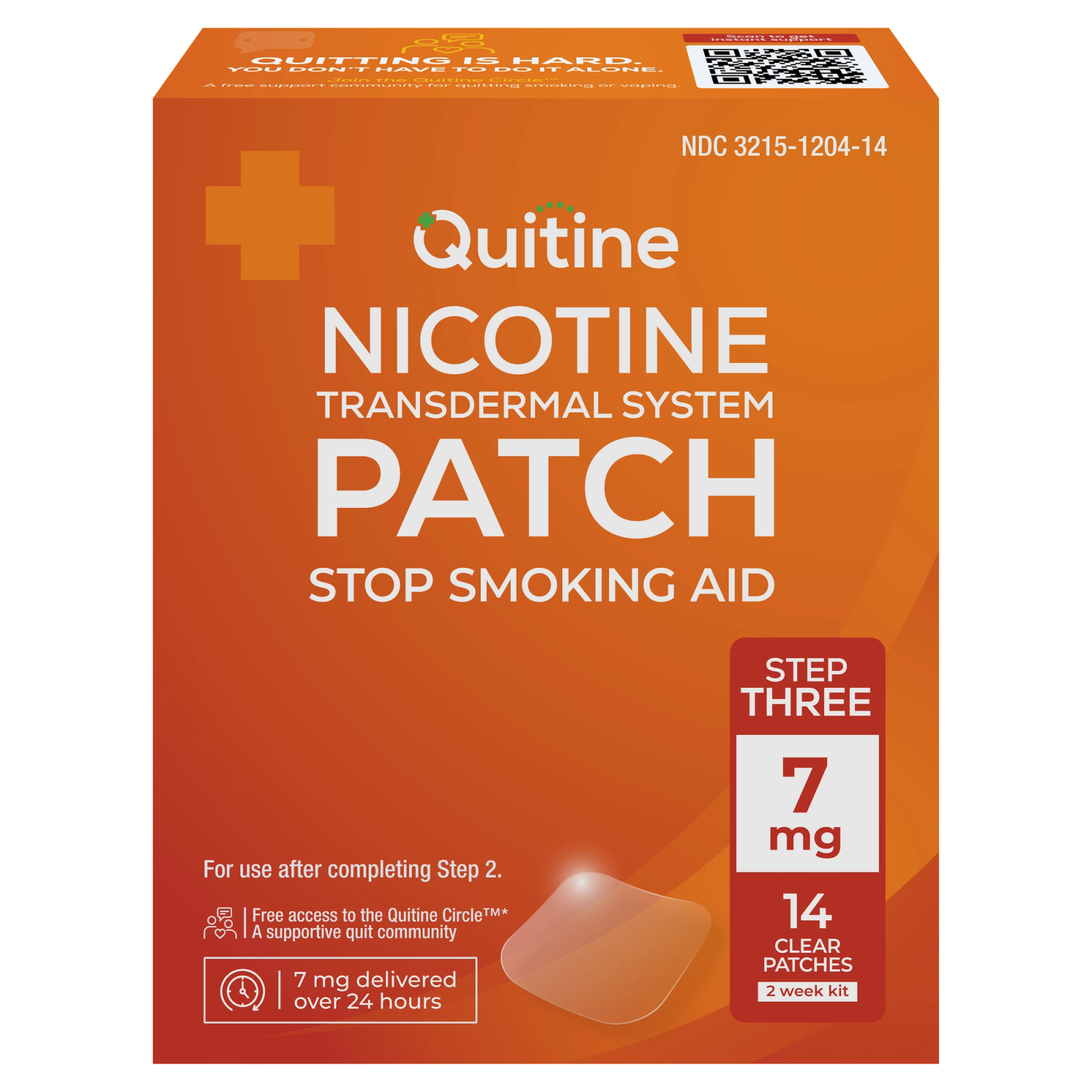
Description (Quitine Nicotine Patches Step 3 7mg 14 Pieces):
14 patches (2-week kit)
Use after you finish Step 2. This is the final taper. You can use the patches alone or add 2 mg gum or lozenges on harder days.
Quitine nicotine patches are an FDA-regulated stop-smoking aid. Each one delivers a steady amount of nicotine through the skin over 24 hours. You apply one patch every morning to clean, dry skin. The patch works in the background all day so you can focus on changing the habit itself.
How to use
- Choose a clean, dry, hairless area of skin on your upper arm, chest, or back. Skip any lotions or oils before you put the patch on.
- Peel the liner and press the patch firmly for 10 to 20 seconds. Smooth the edges so it stays in place.
- Wear the patch for a full 24 hours through everyday activities.
- After 24 hours, take it off and put a new patch on a different skin site. Rotate the location each day for comfort.
Stop use if skin irritation appears and follow the package directions.
Read also:
- Quit Strategies: Managing Cravings While Quitting Smoking or Vaping
- Mind Effects of Quitting with Nicotine Gum
- What Is a Nicotine Lozenge?
- How to Create a Quit Smoking Plan That Works
- Smoking vs. Vaping vs. Nicotine Gum
Start Your Personalized 90-Day Plan.
FAQ
Do nicotine patches treat anxiety disorders?
Nicotine patches belong to the category of nicotine replacement therapy and focus solely on easing the physical side of withdrawal that arises when someone stops smoking or vaping. Clinical anxiety disorders involve broader patterns that typically require separate evaluation and care from a qualified professional. The steady nicotine delivery from a patch can lessen the specific restlessness tied to falling nicotine levels, yet it leaves other sources of anxiety untouched. People managing both nicotine dependence and an anxiety diagnosis often coordinate their NRT use with their existing treatment plan so the two approaches work side by side without interference.
How long does anxiety from quitting last when using a patch?
The length of time anxiety lingers after quitting varies with each person’s prior nicotine intake, daily stress load, and overall health. A well-matched patch can soften the intensity of the early phase so the peak feelings of edginess feel less sharp than they might without support. As the body gradually adapts to lower nicotine exposure, residual tension tends to ease in parallel with other withdrawal signals such as restlessness or difficulty concentrating. Tracking personal patterns over successive days helps reveal when the shift toward greater calm begins to take hold for that individual.
Can I wear a nicotine patch if I already have anxiety?
Many individuals who already experience anxiety successfully include a nicotine patch in their quit process when the strength aligns with their recent habits. Careful monitoring of how the body responds in the first few days allows early adjustments if overstimulation appears. Combining the patch with slower lifestyle measures such as consistent sleep and moderate physical movement can further support emotional steadiness. A conversation with a healthcare provider remains useful for anyone taking other medications or managing a formal anxiety diagnosis, ensuring the overall approach stays compatible.
What should I do if the patch makes me feel more anxious?
Feelings of heightened tension after applying a patch often signal that the current strength exceeds what the body needs at that moment. Temporarily removing the patch or moving to a lower step usually brings the overstimulated sensation down within a short window. Distinguishing this wired physical response from true withdrawal anxiety, which more often pairs with strong cravings and low mood, guides the right next adjustment. Reducing caffeine and noting the timing of symptoms relative to patch changes supply practical clues that can be shared with a pharmacist or doctor if the discomfort persists.
Is combination NRT better when anxiety is part of quitting?
Pairing a nicotine patch with a faster oral form such as nicotine gum or nicotine lozenges supplies both steady baseline coverage and on-demand relief for sudden spikes. The patch maintains even levels across the day while the oral option addresses the sharp moments that can amplify anxious feelings. This layered setup often creates a greater sense of predictability for people whose anxiety rises when nicotine fluctuates. Matching both components to personal use patterns keeps total nicotine exposure controlled and responsive throughout the transition.

Ready to Quit or Just Cut Back?
If you're reading about nicotine, vaping, or smoking habits, chances are you're already thinking about making a change.
You don't have to figure it out alone. The Quitine Circle is our free support community, open to everyone quitting smoking or vaping. No purchase is required, and you do not need to use Quitine products to participate.
Inside the Quitine Circle you'll find:
The 90-Day Quit Program to guide your step down plan
A printable Quit Program Workbook to track progress
Practical tools for managing cravings and triggers
Support from others going through the same process
Quitting works best when you combine the right tools with the right structure. That's exactly what the Quitine system is built for.
Take our short quiz to see which Quitine Quit Kit fits your nicotine habits.

Not Sure Which Product Is Right for You?
Take our 2-minute Quit Quiz and get a personalized product recommendation and 90-day system based on your smoking or vaping habits.