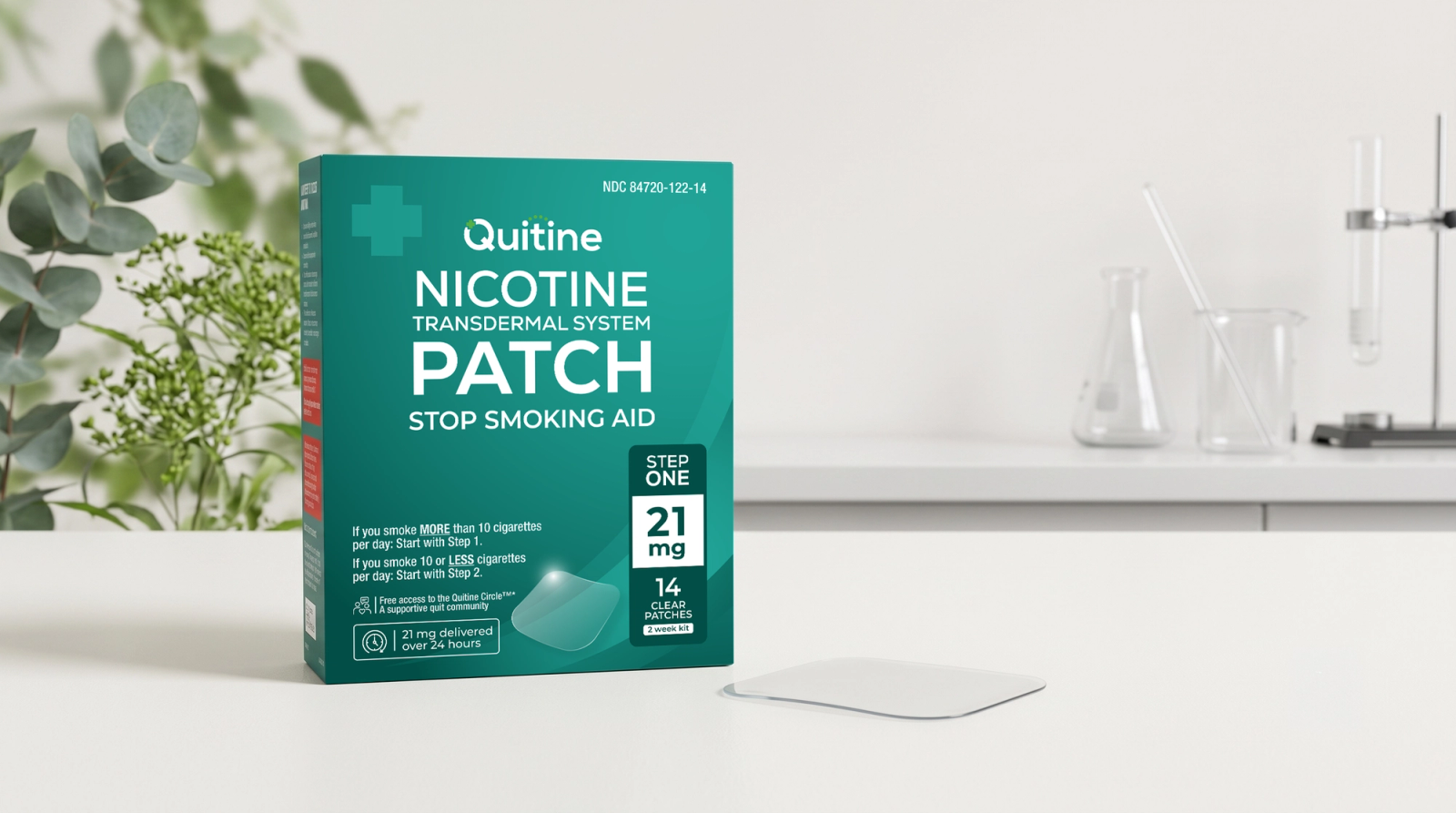
Pure vs. synthetic nicotine patches: ingredients comparison

Choosing the right nicotine patch starts with knowing its contents. Pure patches use refined tobacco-derived nicotine, while synthetic ones are lab-made with no tobacco material - both deliver the same active molecule but differ in impurities and production. Understanding pure vs synthetic ingredients helps you choose a patch that fits your quit plan.
Beyond the nicotine source, understanding how nicotine patches work can help you use them more effectively throughout your quit journey. Proper application also matters, as choosing the right nicotine patch placement can support consistent nicotine delivery, improve adhesion, and reduce the risk of skin irritation.
What pure nicotine means in a patch
Pure nicotine in patches usually refers to pharmaceutical-grade nicotine extracted from tobacco leaves and then cleaned to remove most plant residues. The molecule is the same S-nicotine found in tobacco. Manufacturers refine it so that the final active ingredient reaches high purity levels suitable for medical use.
The process begins with tobacco plant material. Extraction pulls out nicotine along with related alkaloids. Multiple purification steps then strip away unwanted compounds. The result is nicotine that meets strict standards for nicotine replacement therapy products. Inactive ingredients in the patch itself focus on delivery. These include adhesives that hold the patch to skin and layers that control how fast nicotine moves through the skin.
This form has been used in nicotine patches for decades. It provides consistent dosing because the purification creates a reliable starting material. Skin absorption remains steady over 24 hours when the patch is made well.
What synthetic nicotine means in a patch
Synthetic nicotine is built in a laboratory from chemical building blocks. Common starting points include forms of nicotinic acid (related to vitamin B3) or other pyridine compounds. Chemists run a series of reactions that assemble the exact nicotine molecule. No tobacco leaf or plant extract enters the process.
The finished synthetic nicotine is chemically identical to the pure tobacco-derived version. Studies show that synthetic lots can lack certain natural alkaloids such as cotinine, nornicotine, and nicotine-N-oxide that sometimes remain in tiny amounts after tobacco extraction. Total impurity levels stay low in both types when pharmaceutical standards apply. Metals such as lead and arsenic appear at similar low levels in carefully made batches of either kind.
Because the synthesis is controlled from the first step, batch-to-batch consistency can be very tight. Some makers promote this as a tobacco-free advantage. The nicotine still works the same way in the body once it reaches the bloodstream through the skin.
Side-by-side ingredients comparison
Both pure and synthetic nicotine serve as the active ingredient. The key differences sit in the source and the trace compounds that travel with the nicotine before final purification.
Source
- Pure (Tobacco-Derived) Nicotine: Extracted from tobacco leaves then refined
- Synthetic Nicotine: Built from chemical precursors in a lab
Main molecule
- Pure (Tobacco-Derived) Nicotine: S-nicotine
- Synthetic Nicotine: S-nicotine (identical)
Common trace compounds
- Pure (Tobacco-Derived) Nicotine: Possible residual alkaloids such as cotinine or nornicotine at very low levels
- Synthetic Nicotine: Often free of those plant alkaloids
Production
- Pure (Tobacco-Derived) Nicotine: Extraction + multi-step purification
- Synthetic Nicotine: Multi-step chemical synthesis
Typical patch inactive ingredients
- Pure (Tobacco-Derived) Nicotine: Acrylate adhesive, polyester, silicone adhesive, release liners
- Synthetic Nicotine: Same types of adhesives and film layers
Regulatory status for NRT
- Pure (Tobacco-Derived) Nicotine: Long history of FDA-cleared use in patches
- Synthetic Nicotine: Available and regulated when used in approved products
Inactive ingredients do the real work of delivery. A typical clear nicotine patch uses a thin film, an adhesive layer that sticks to skin without leaving heavy residue, and a protective backing. These materials stay the same whether the nicotine started as pure or synthetic. The adhesive must release nicotine at a controlled rate so blood levels stay even through the day and night.
How the source affects purity and consistency
Research comparing multiple lots of synthetic and extracted nicotine found that both can reach assay levels above 99 percent. Enantiomeric purity (the correct left-handed form of the molecule) stays very high in quality material of either type. Synthetic versions often show lower or undetectable amounts of the natural minor alkaloids that come from the tobacco plant. That difference is one reason some brands highlight synthetic nicotine as cleaner.
At the same time, total impurity content can be similar once both materials meet pharmaceutical specifications. The real variable is the manufacturer’s process controls. Careful testing for residual solvents, metals, and related compounds matters more than the original source for most users.
For patch performance, the finished product’s design controls release rate more than the nicotine origin. A well-made patch keeps nicotine levels steady so withdrawal symptoms stay lower throughout the day. Poor adhesive or uneven layers can cause skin irritation or uneven dosing no matter which nicotine is used.
Why patch design and support matter more than source alone
The nicotine source is only one piece. How the patch is built, how clearly the ingredients are listed, and what support comes with it decides daily experience. Clear nicotine patches that blend with skin and come off cleanly reduce irritation for many people. Rotating application sites (upper arm, chest, back) further protects the skin.
A structured step-down plan helps the body adjust. Most users begin with a higher strength when they smoke or vape soon after waking or use more than a light daily amount. They then move to mid and low strengths over weeks. Pairing the patch with fast-acting oral options for sudden urges raises success for many quitters.
Pharmacist oversight adds another layer of confidence. When a product is developed by someone with decades of experience helping people stop smoking and vaping, the formula and instructions tend to stay practical and clear. Details on that approach appear on the About Quitine page.
How Quitine approaches nicotine patches
Quitine focuses on pharmacist-developed clear nicotine patches that deliver steady 24-hour support. The active ingredient is the same FDA-approved nicotine used in leading NRT products. Inactive ingredients stay simple: acrylate adhesive, polyester, and silicone adhesive. The patches are thin, transparent, and designed to stay in place while leaving little residue when removed.
The three-step system moves from 21 mg to 14 mg to 7 mg. Many people start with the 21 mg nicotine patch if they need stronger early support. The full nicotine patches collection includes both 14-piece and 28-piece packs so you can match your pace. Combination use with nicotine lozenges or nicotine gum is encouraged for breakthrough cravings.
A free 90-day quit program, progress tools, and community support sit alongside the products. HSA/FSA eligibility and a 30-day money-back guarantee lower the barrier to starting. The goal is reliable delivery plus guidance that keeps you on track.
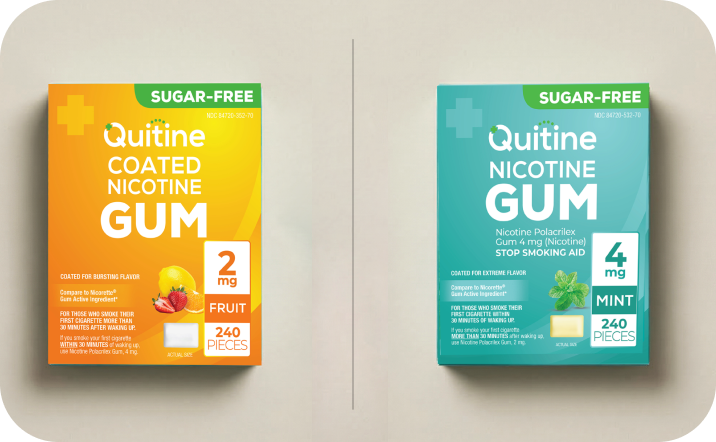
How Nicotine Gum Works
Nicotine gum delivers nicotine through the lining of your mouth as you chew. Unlike regular chewing gum, you need to use a specific "chew and park" technique to get the full effect.
Best for habit-triggered cravings
If you smoke or vape in response to specific triggers, after meals, during breaks, or when stressed, nicotine gum gives you something to do with your hands and mouth, which can help replace the physical habit.
Which Should You Choose?
The best choice depends on your personal preferences and smoking habits. If you miss the hand-to-mouth motion of smoking, gum might feel more natural. If you prefer something completely discreet, lozenges are a great option.Many people find that combining products, like using patches for all-day coverage and gum or lozenges for breakthrough cravings, gives them the best results.
Product Comparison
| Best For | Strength | |
|---|---|---|
| Nicotine Gum | Habit-triggered cravings | 2mg / 4mg |
| Nicotine Lozenges | Discreet craving relief | 2mg / 4mg |
| Nicotine Patches | All-day support | 21mg / 14mg / 7mg |
Discover Quitine and our best NRT products
Why Quitine?
Meet Mark and Oliver, the founders of Quitine. Mark has more than 40 years of experience as a pharmacist. His father’s long struggle with smoking shaped the work he does today. He has spent his career helping people leave cigarettes and vapes behind. Oliver brings deep experience in ecommerce, branding, product development, marketing, and logistics. Together they built Quitine to offer clear, practical nicotine replacement therapies that fit real daily life.
Our NRT products
Our pharmacist-formulated NRT products are made to support you while you change the habits that go with smoking or vaping.
Combination therapy for higher quit success
Research shows that combining a long-acting nicotine patch with a faster-acting form of NRT such as nicotine gum or nicotine lozenges can raise the chance of quitting smoking by 17 to 37 percent compared with using one product alone. At Quitine our nicotine patches deliver a steady amount of nicotine through the skin all day. Our nicotine gum and lozenges give you something to use when a craving hits. This dual approach, called NRT combination therapy, gives you more flexibility so you can stay comfortable while you change the habit.
Accessible pricing
We believe quitting should be within reach for everyone. We keep our therapies priced so more people can start without cutting corners on quality.
Personalized support
Quitting is personal, and so is the way we work with you. From the customer service team to the way each product is formulated, we stay with you through the process.
The Quitine Circle
The Quitine Circle is our free 90-day guided quit program and private support community. It is open to anyone quitting smoking or vaping and requires no purchase. It follows the same structured, pharmacist-backed approach that shapes our NRT products. You get short training modules, a practical quit workbook, weekly live Q and A sessions, and a moderated space with other people who are quitting, so you do not have to rely on willpower alone.
Discover which NRT is right for you
Not sure which product suits you best? Take our personalized quiz to find the NRT product that fits your needs. Take the Quiz
Real quitters. Real success.
See what our customers are saying about Quitine nicotine replacement therapy. Read Case Studies
The Quitine guarantee
Your satisfaction is covered. Learn more about our 30-day money-back promise. Learn More About Our Guarantee
Discover our best nicotine patches - Quitine
1) Quitine Nicotine Patches Step 1 21mg 28 Pieces
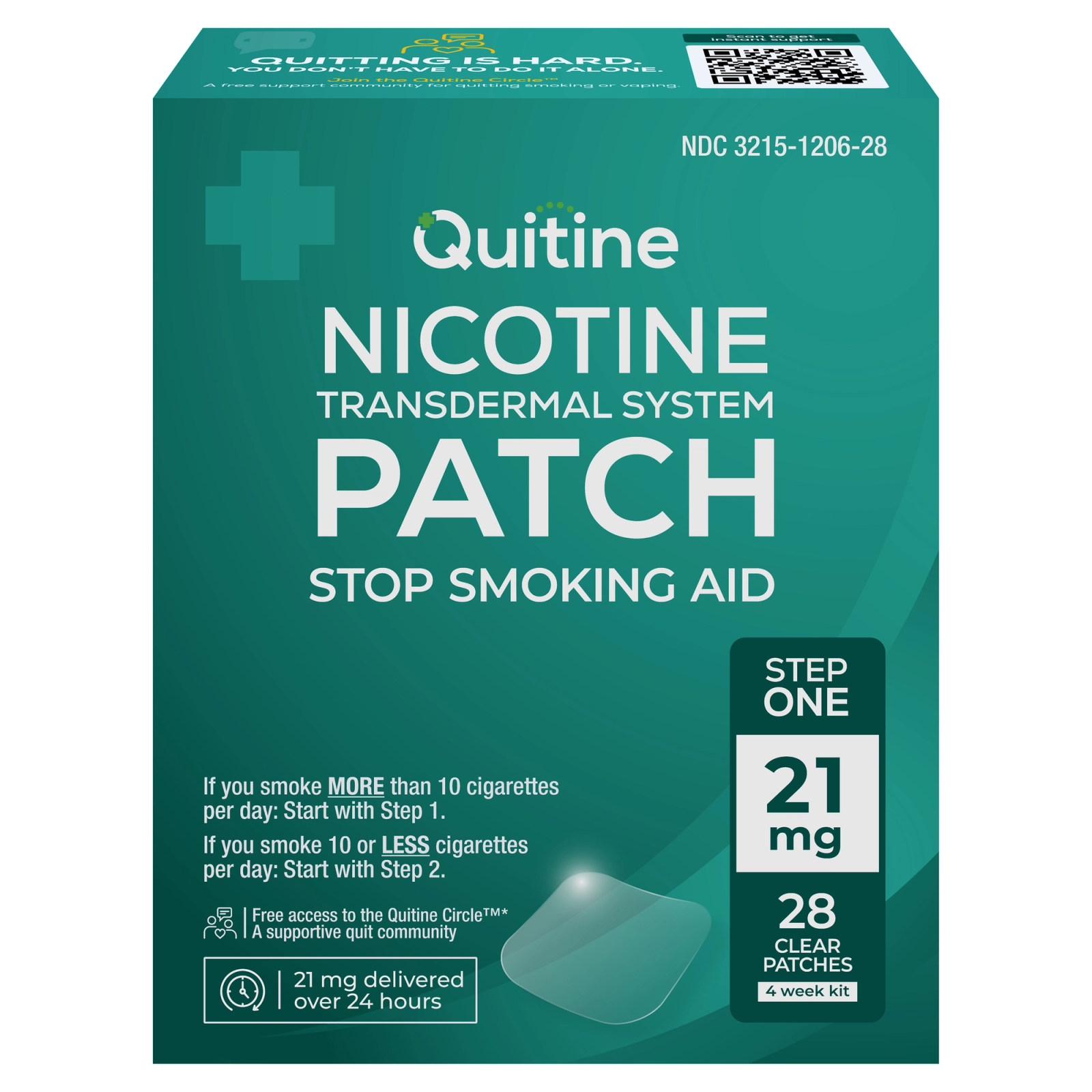
Description (Quitine Nicotine Patches Step 1 21mg 28 Pieces):
28 patches (4-week kit)
Start here if you smoke or vape within 30 minutes of waking, or if you smoke more than 10 cigarettes a day. You can combine the patches with 4 mg gum or lozenges when a craving breaks through.
Quitine nicotine patches are an FDA-regulated stop-smoking aid. Each patch delivers a steady amount of nicotine through the skin over a full 24 hours. You put one patch on in the morning on clean, dry skin. It stays in place through the day so the nicotine stays even while you work on the habits that go with smoking or vaping.
How to use
- Choose clean, dry, hairless skin on your upper arm, chest, or back. Skip lotions or oils before you apply the patch.
- Peel the liner and press the patch firmly for 10 to 20 seconds. Smooth the edges so it holds.
- Wear the patch for 24 hours. It is made for all-day use during regular activities.
- Remove the patch after 24 hours and put a new one on a different skin site. Rotate the spot each day to keep the skin comfortable.
Stop use if skin irritation occurs. See the package directions.
2) Quitine Nicotine Patches Step 2 14mg 14 Pieces
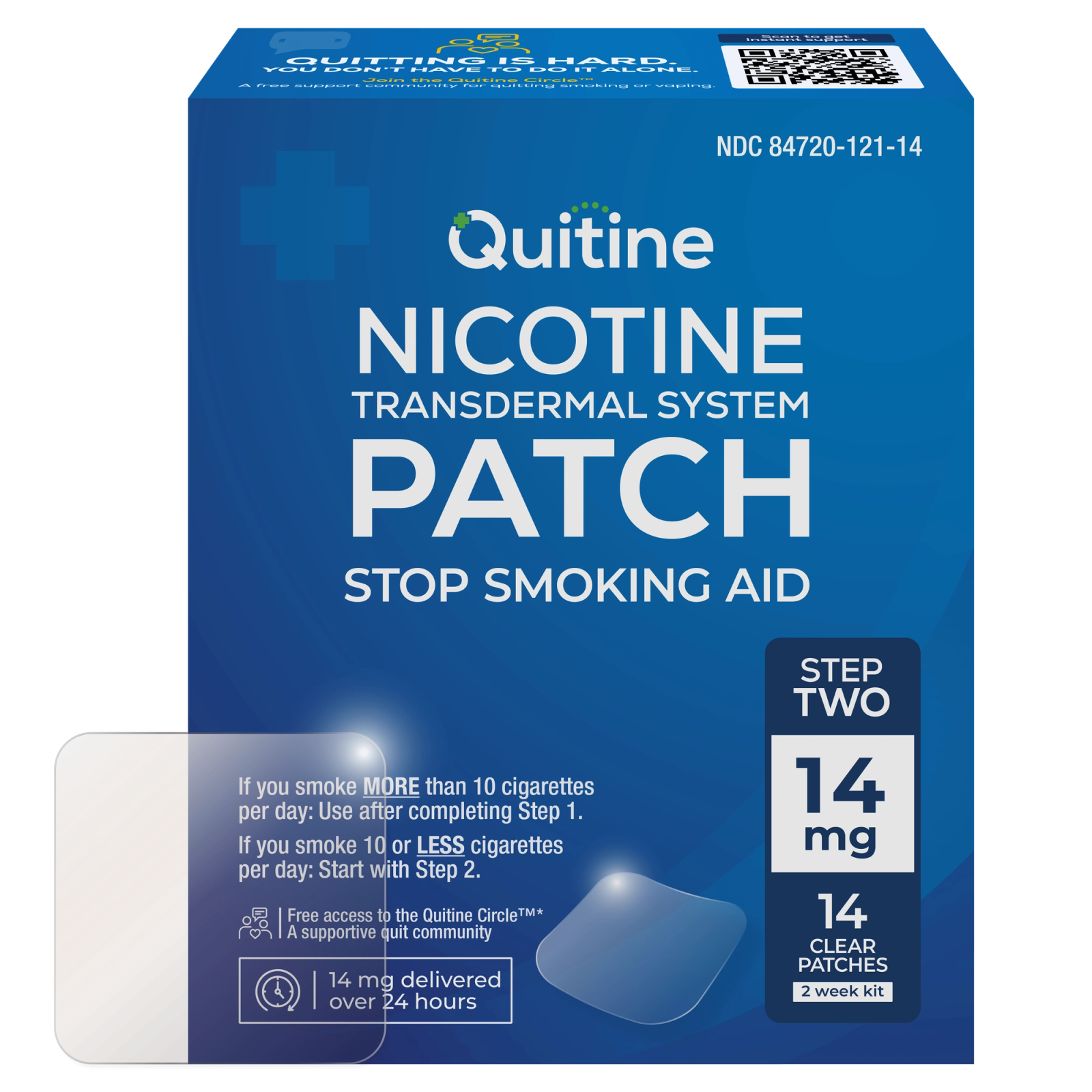
Description (Quitine Nicotine Patches Step 2 14mg 14 Pieces):
14 patches (2-week kit)
Start here if you smoke fewer than 10 cigarettes a day or vape lightly. You can also use these after you finish Step 1. Combine with 2 mg gum or lozenges if a craving breaks through.
Quitine nicotine patches are an FDA-regulated stop-smoking aid. Each patch delivers a steady amount of nicotine through the skin over 24 hours. You apply one patch each morning to clean, dry skin. It works in the background all day. There is no timing or counting required. You get consistent baseline support so you can focus on breaking the habit.
How to use
- Choose clean, dry, hairless skin on your upper arm, chest, or back. Skip lotions or oils before applying.
- Peel the liner and press the patch firmly for 10 to 20 seconds. Smooth the edges for a solid hold.
- Wear the patch for 24 hours. It is made for all-day wear, including everyday activities.
- Remove the patch after 24 hours and apply a new one to a different skin site. Rotate the site daily for comfort.
Stop use if skin irritation occurs. See the package directions for full details.
3) Quitine Nicotine Patches Step 3 7mg 14 Pieces
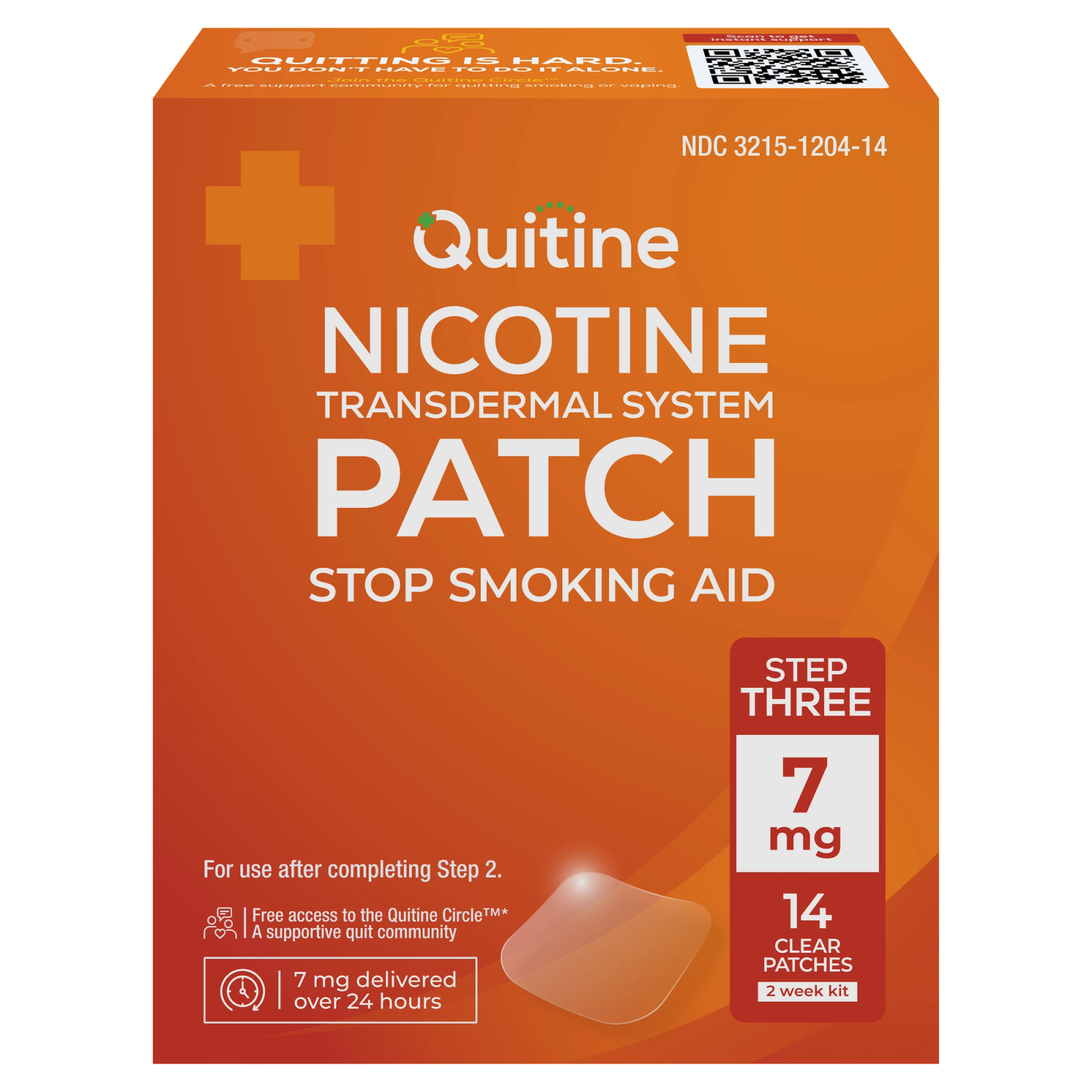
Description (Quitine Nicotine Patches Step 3 7mg 14 Pieces):
14 patches (2-week kit)
Use after you finish Step 2. This is the final taper. You can use the patches alone or add 2 mg gum or lozenges on harder days.
Quitine nicotine patches are an FDA-regulated stop-smoking aid. Each one delivers a steady amount of nicotine through the skin over 24 hours. You apply one patch every morning to clean, dry skin. The patch works in the background all day so you can focus on changing the habit itself.
How to use
- Choose a clean, dry, hairless area of skin on your upper arm, chest, or back. Skip any lotions or oils before you put the patch on.
- Peel the liner and press the patch firmly for 10 to 20 seconds. Smooth the edges so it stays in place.
- Wear the patch for a full 24 hours through everyday activities.
- After 24 hours, take it off and put a new patch on a different skin site. Rotate the location each day for comfort.
Stop use if skin irritation appears and follow the package directions.
Practical tips for using any nicotine patch
Apply the patch to clean, dry, hairless skin between the neck and waist. Press firmly for 10 to 20 seconds. Change the site every day and avoid the same spot for at least a week. Wear the patch for the full recommended time unless sleep disturbance appears; in that case some people remove it at night and restart in the morning.
Store unused patches away from heat and moisture. Fold used patches sticky sides together and discard them where children and pets cannot reach them. If skin redness lasts more than a day or becomes painful, switch sites more carefully or talk with a pharmacist. Full guidance on application appears in the how to use NRT section.
Consistency beats perfection. Daily use keeps nicotine levels even and reduces the sharp drops that trigger strong urges. Adding oral NRT only when needed prevents over-use while covering sudden cravings.
Choosing between pure and synthetic based on your goals
If you prefer a product with a long track record in medical NRT, pure tobacco-derived nicotine remains the standard in most approved patches. If you want material free of any plant-related alkaloids, synthetic nicotine offers that option. In both cases, look for clear labeling of active and inactive ingredients, controlled release technology, and a step-down schedule.
Quality manufacturing and transparent support often matter more than the pure-versus-synthetic label. A patch that stays on, releases evenly, and comes with practical guidance helps more people finish the process.
Many users also benefit from pairing the patch with behavioral tools and community encouragement. The physical delivery of nicotine handles the chemical side of dependence. Changing routines and managing triggers handles the rest. The quit quiz page can help match products to individual patterns.
Read also:
- Clear nicotine patch
- Nicotine Lozenges vs. Nicotine Patch: Pros and Cons of Each Quit Smoking Aid
- Nicotine Gum vs. Nicotine Patch: Comparing Two Popular Quit Smoking Aids
- Nicotine Patch Reviews: What to Know
- 21mg nicotine patch
FAQ
Is synthetic nicotine safer than pure tobacco-derived nicotine in patches?
Both pure and synthetic nicotine reach the bloodstream in the same chemical form once the patch releases them. The body processes the molecule identically regardless of whether it began as tobacco-derived material or laboratory synthesis. Differences in residual plant alkaloids or solvent traces stay at pharmaceutical levels in regulated products, so any safety edge comes from overall manufacturing controls rather than the starting source. Skin tolerance and correct daily use influence comfort more than the pure versus synthetic distinction. Quality testing for metals and related compounds applies equally to both types used in the collection of nicotine patches.
Do pure and synthetic nicotine patches feel different on the skin?
The nicotine molecule itself produces no distinct sensation under the adhesive. Comfort depends on the thickness of the film, the flexibility of the backing, and how the adhesive interacts with individual skin chemistry. Some people notice less residue or better stretch with certain silicone or acrylate combinations, independent of whether the active ingredient is pure or synthetic. Daily site rotation and clean dry application further shape the wearing experience over weeks. These factors remain consistent across regulated clear nicotine patch designs that share similar construction.
Can I switch from a pure nicotine patch to a synthetic one mid-quit?
The body responds to the milligram strength delivered through the skin rather than the production path of the nicotine. Matching the current step keeps blood levels steady during the change. Any shift in craving patterns after a switch usually traces back to adhesive differences or application technique instead of the pure or synthetic origin. Monitoring how the new patch holds and releases over the first few days helps maintain the same routine. Combination with oral forms continues to work the same way with either type, whether nicotine gum or nicotine lozenges.
What inactive ingredients should I watch for in nicotine patches?
Acrylate and silicone adhesives form the main contact layer that holds the patch and meters release. Polyester films and release liners complete the structure in most clear designs. People with a history of reactions to medical tapes often check the full inactive list for specific acrylate copolymers or residual monomers. Simple formulas with fewer added stabilizers make it easier to identify any personal sensitivity. These materials appear across both pure and synthetic nicotine patches that meet pharmaceutical standards.
How does a structured plan improve results with either type of patch?
Gradual strength reduction gives the body time to adjust its dependence without abrupt drops that intensify urges. Matching the starting dose to daily smoking or vaping patterns sets a stable baseline from the first week. Adding short-acting oral support only for breakthrough moments covers gaps while the patch handles the steady background. Behavioral adjustments around triggers reinforce the physical taper so the overall process feels more manageable. The same framework applies whether the nicotine in the patch is pure or synthetic, and it aligns with the approach outlined in the quit smoking or vaping with a structured 90-day plan.

Ready to Quit or Just Cut Back?
If you're reading about nicotine, vaping, or smoking habits, chances are you're already thinking about making a change.
You don't have to figure it out alone. The Quitine Circle is our free support community, open to everyone quitting smoking or vaping. No purchase is required, and you do not need to use Quitine products to participate.
Inside the Quitine Circle you'll find:
The 90-Day Quit Program to guide your step down plan
A printable Quit Program Workbook to track progress
Practical tools for managing cravings and triggers
Support from others going through the same process
Quitting works best when you combine the right tools with the right structure. That's exactly what the Quitine system is built for.
Take our short quiz to see which Quitine Quit Kit fits your nicotine habits.

Not Sure Which Product Is Right for You?
Take our 2-minute Quit Quiz and get a personalized product recommendation and 90-day system based on your smoking or vaping habits.