
Nicotine patches and emotional regulation

Your brain has learned to expect nicotine at certain times of day. When that supply stops, feelings can jump. Many people feel snappy, restless, or low in the first days after they quit smoking or vaping. A nicotine patch gives a slow, even dose through the skin so those swings stay smaller.
You still have work to do on habits and stress. The patch keeps the chemical side more even so you can think more clearly. Steady patch support can help manage your mood after quitting vaping or smoking.
Daily factors can also influence how nicotine patches feel during a quit attempt. Topics such as nicotine patches and sweating, nicotine patches and alcohol consumption, and nicotine patches and mental fatigue can affect comfort, concentration, and the overall experience.
Discover Your Best Quit Strategy.
Why quitting hits your mood so hard
Nicotine acts on nicotinic acetylcholine receptors in the brain. Those receptors talk to systems that handle dopamine, serotonin, and norepinephrine. That is why a cigarette or vape can feel like it "takes the edge off." A large part of that calm is the end of nicotine withdrawal. The smoke or vapor is not giving you a separate kind of peace.
When nicotine drops, receptors that were used to a regular hit go quiet. The result is a cluster of feelings that often show up together:
- Irritability and a short fuse
- Anxiety or a sense of being on edge
- Low mood or less interest in things that used to feel good
- Trouble focusing
- Restlessness and poor sleep
Cleveland Clinic lists these as common nicotine withdrawal symptoms, and they often peak in the first few days. The feelings are real. They are also temporary for most people. A nicotine patch does not erase them. It can flatten the worst of the chemical dip so the emotional part is easier to ride out.
Smoking also trains a loop. Stress hits. You light up. Mood lifts for a few minutes. The brain files that as the way you handle feelings. Break the loop and the old cue still fires, even if you now have a patch on your arm.
How a nicotine patch steadies emotions
A nicotine patch releases nicotine through the skin over many hours. Blood levels rise slowly and stay flatter than they do with a cigarette. That matters when you are trying to keep your reactions in check.
Cigarette nicotine spikes fast and falls fast. Each drop can trigger nicotine craving plus a sour mood. The patch avoids that roller coaster. Research on transdermal nicotine has found lower scores for negative mood and fatigue in people who were nicotine deprived, compared with a placebo patch. Other work has shown that a patch can reduce activity in brain areas tied to craving.
The patch is a nicotine replacement, not an antidepressant. You give the receptors a smaller, cleaner signal without smoke or vapor. For many people that is enough to cut the sharp edge of irritability, keep focus from collapsing mid-afternoon, make anxiety less loud, and reduce the urge to smoke just to "feel normal."
Nicotine patch dose still matters. Too little and withdrawal leaks through. Too much and some people feel wired or sleep poorly. That is why a step-down quit nicotine plan, starting higher and moving lower, is the usual path. A 21mg nicotine patch is often the starting point for people who smoke more than ten cigarettes a day or who reach for nicotine soon after waking.
What withdrawal does to irritability, anxiety, and low mood
Irritability is often the first thing family members notice. Small delays feel huge. A comment that would have rolled off now lands like an insult. This tracks with older lab work where nicotine changed how people responded after they were provoked. Some participants on a nicotine patch showed less urge to "hit back" in a game designed to spark anger.
Anxiety can feel like a buzz under the skin. Hands want something to do. The mind jumps to the next cigarette. A nicotine patch will not treat a long-standing anxiety disorder on its own. It can take the extra layer that nicotine withdrawal adds on top.
Low moods are mixed. Some people feel flat. Others feel sad. A few studies of transdermal nicotine in older adults with depression reported improvement in mood, apathy, and rumination. Those trials were small and are not a reason to use a patch as a stand-alone depression treatment. They do show that nicotinic receptors sit close to the circuits that shape how we feel.
Psychology Today has summarized recent patch trials in people with late-life depression, including work that also noted better scores on rumination and self-reported thinking. That research is still early. For someone quitting tobacco, keeping nicotine more often keeps mood more even.
Sleep loss makes every feeling worse. Some people have vivid dreams on a 24-hour patch. If that happens, talk with a clinician about taking the patch off at night. Do not guess and double up.
Steady nicotine vs the spike from smoking
Think of two graphs.
Smoking: a sharp peak, then a fall, then another peak. Each fall can look like stress. Each peak can look like relief. Over years the brain starts to treat the fall as danger.
Patch: a gentle ramp, then a plateau. You still get nicotine. You do not get the same reward hit, which is part of why a slip cigarette can taste worse when a patch is already on. That dulling of the reward from a slip is useful. It makes a single cigarette less likely to turn into a pack.
This is why many clinicians like combination nicotine therapy. The patch holds the floor. Nicotine gum or a nicotine lozenge covers the moment when a trigger hits, a fight, a coffee break, a long drive.
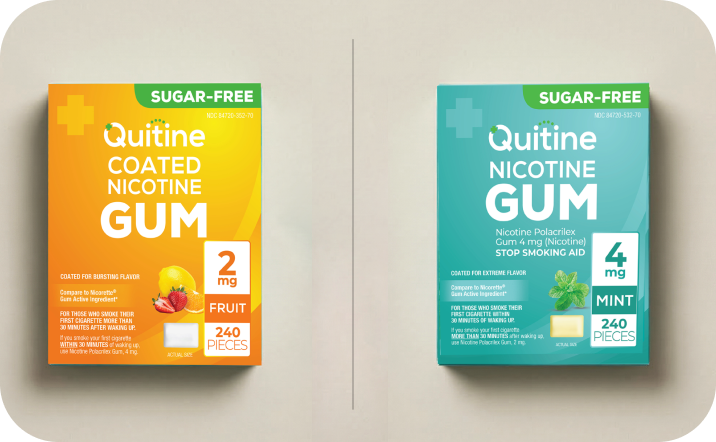
How Nicotine Gum Works
Nicotine gum delivers nicotine through the lining of your mouth as you chew. Unlike regular chewing gum, you need to use a specific "chew and park" technique to get the full effect.
Best for habit-triggered cravings
If you smoke or vape in response to specific triggers, after meals, during breaks, or when stressed, nicotine gum gives you something to do with your hands and mouth, which can help replace the physical habit.
Which Should You Choose?
The best choice depends on your personal preferences and smoking habits. If you miss the hand-to-mouth motion of smoking, gum might feel more natural. If you prefer something completely discreet, lozenges are a great option.Many people find that combining products, like using patches for all-day coverage and gum or lozenges for breakthrough cravings, gives them the best results.
Product Comparison
| Best For | Strength | |
|---|---|---|
| Nicotine Gum | Habit-triggered cravings | 2mg / 4mg |
| Nicotine Lozenges | Discreet craving relief | 2mg / 4mg |
| Nicotine Patches | All-day support | 21mg / 14mg / 7mg |
Who feels the mood shift most
People who have used nicotine to handle feelings often feel the shift more. That includes many who live with depression or anxiety. A 2024 report covered in ScienceDaily found that stop-smoking aids still worked for people with a mental health history. The condition did not cancel the benefit of a patch, gum, or other tools.
That is good news. It does not mean the first week will feel easy. Smokers with a past mood problem often report stronger early withdrawal. A patch can close part of that gap. It does not replace therapy, medicine you already take, or a talk with your doctor before you start.
Women sometimes report stronger mood symptoms during a quit. Heavy daily users often do too. People who smoke within minutes of waking usually need a higher starting patch. The nicotine gum vs nicotine patch comparison is useful here. Gum is something you chew and park when a cue hits. The patch is a set-and-forget cover you put on in the morning.
If you already take psychiatric medicine, ask a clinician before you add NRT. Nicotine can change how some drugs are processed. Safety first.
How to use patches when feelings run high
Put the patch on clean, dry skin. The upper arm, chest, or back work well. Press for a short count so the adhesive sets. Change the nicotine patch placement each day so the skin stays calm.
Keep a simple log for two weeks:
- Time you put the patch on
- Mood in the morning, mid-day, and evening (good, mixed, or rough)
- Any snap moments and what triggered them
- Whether you used a lozenge or gum
Patterns show up fast. Maybe late afternoon is the danger window. Maybe evenings after dinner. Then you can plan a walk, a snack, or a rescue lozenge before the feeling peaks.
Drink water. Eat on a regular schedule. Hunger mimics anxiety. Caffeine can amplify jitters once nicotine is lower, so some people cut back a little in week one.
If skin itches, rotate sites and use a different spot. If you feel nauseous, the dose may be high. If you feel raw and craving by noon, the dose may be low.
Do not smoke while wearing a patch unless a clinician has given you a clear plan. Extra nicotine can make the heart race and the stomach turn.
Combining a patch with gum or lozenges
Breakthrough cravings are emotional as much as physical. A fight. A deadline. A smell. The patch is already working in the background. A nicotine lozenge dissolves in the mouth over about 20 to 30 minutes. A piece of nicotine gum gives you a chew you can park between cheek and gum. Keep the extra pieces with you for a sudden cue.
That combination is a standard approach in many quit smoking programs. It matches how people actually live. You cannot pause a meeting to go outside. You can park a lozenge.
Choose strength based on how soon you used nicotine after waking and how many times a day you used it. Heavier patterns usually start with a Step 1 nicotine patch plus a 4 mg oral nicotine product. Lighter patterns may start lower. A short product quit quiz can sort the first kit without guesswork.
Discover Quitine and our best NRT products
Why Quitine?
Meet Mark and Oliver, the founders of Quitine. Mark has more than 40 years of experience as a pharmacist. His father’s long struggle with smoking shaped the work he does today. He has spent his career helping people leave cigarettes and vapes behind. Oliver brings deep experience in ecommerce, branding, product development, marketing, and logistics. Together they built Quitine to offer clear, practical nicotine replacement therapies that fit real daily life.
Our NRT products
Our pharmacist-formulated NRT products are made to support you while you change the habits that go with smoking or vaping.
Combination therapy for higher quit success
Research shows that combining a long-acting nicotine patch with a faster-acting form of NRT such as nicotine gum or nicotine lozenges can raise the chance of quitting smoking by 17 to 37 percent compared with using one product alone. At Quitine our nicotine patches deliver a steady amount of nicotine through the skin all day. Our nicotine gum and lozenges give you something to use when a craving hits. This dual approach, called NRT combination therapy, gives you more flexibility so you can stay comfortable while you change the habit.
Accessible pricing
We believe quitting should be within reach for everyone. We keep our therapies priced so more people can start without cutting corners on quality.
Personalized support
Quitting is personal, and so is the way we work with you. From the customer service team to the way each product is formulated, we stay with you through the process.
The Quitine Circle
The Quitine Circle is our free 90-day guided quit program and private support community. It is open to anyone quitting smoking or vaping and requires no purchase. It follows the same structured, pharmacist-backed approach that shapes our NRT products. You get short training modules, a practical quit workbook, weekly live Q and A sessions, and a moderated space with other people who are quitting, so you do not have to rely on willpower alone.
Discover which NRT is right for you
Not sure which product suits you best? Take our personalized quiz to find the NRT product that fits your needs. Take the Quiz
Real quitters. Real success.
See what our customers are saying about Quitine nicotine replacement therapy. Read Case Studies
The Quitine guarantee
Your satisfaction is covered. Learn more about our 30-day money-back promise. Learn More About Our Guarantee
Discover our best nicotine patches - Quitine
1) Quitine Nicotine Patches Step 1 21mg 28 Pieces
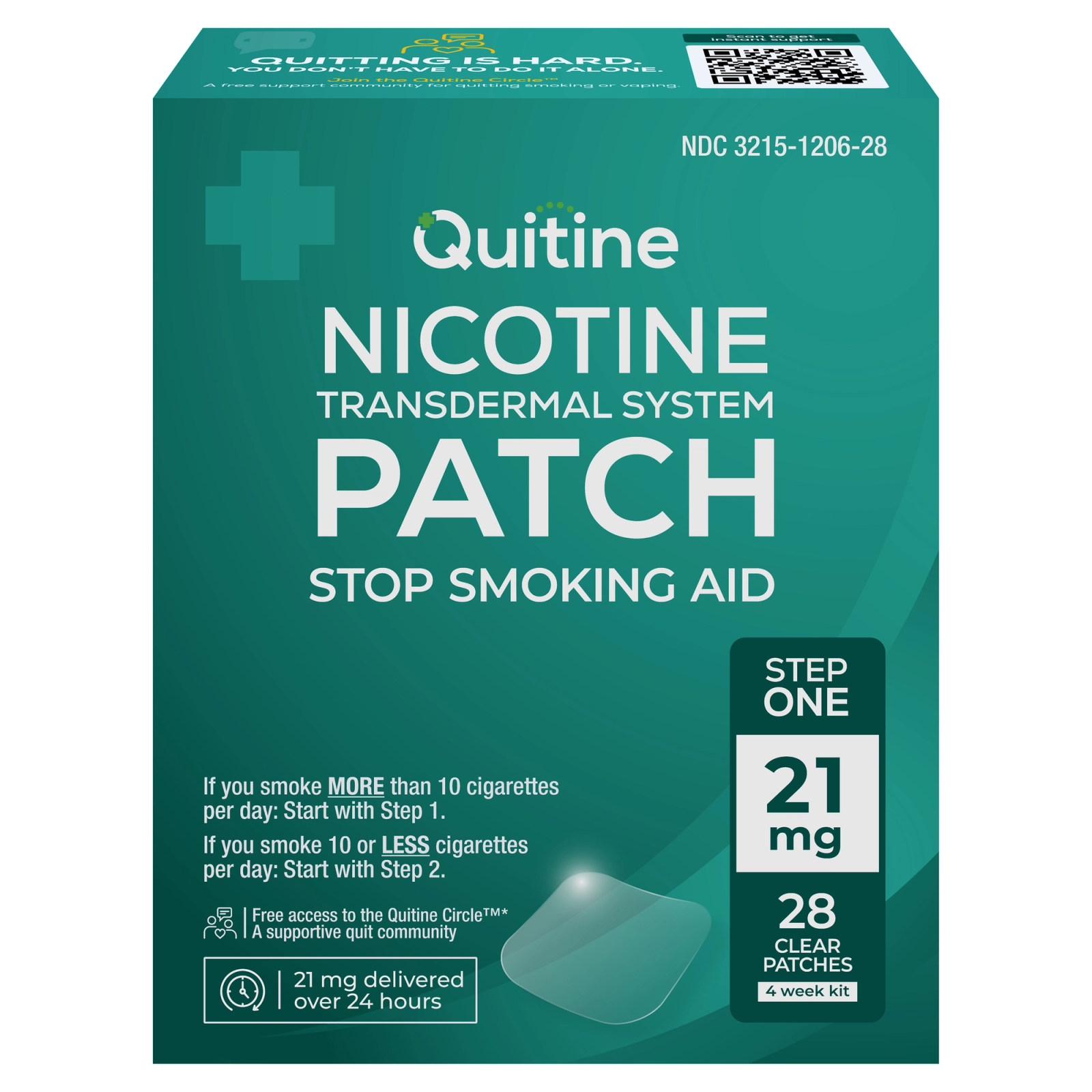
Description (Quitine Nicotine Patches Step 1 21mg 28 Pieces):
28 patches (4-week kit)
Start here if you smoke or vape within 30 minutes of waking, or if you smoke more than 10 cigarettes a day. You can combine the patches with 4 mg gum or lozenges when a craving breaks through.
Quitine nicotine patches are an FDA-regulated stop-smoking aid. Each patch delivers a steady amount of nicotine through the skin over a full 24 hours. You put one patch on in the morning on clean, dry skin. It stays in place through the day so the nicotine stays even while you work on the habits that go with smoking or vaping.
How to use
- Choose clean, dry, hairless skin on your upper arm, chest, or back. Skip lotions or oils before you apply the patch.
- Peel the liner and press the patch firmly for 10 to 20 seconds. Smooth the edges so it holds.
- Wear the patch for 24 hours. It is made for all-day use during regular activities.
- Remove the patch after 24 hours and put a new one on a different skin site. Rotate the spot each day to keep the skin comfortable.
Stop use if skin irritation occurs. See the package directions.
2) Quitine Nicotine Patches Step 2 14mg 14 Pieces
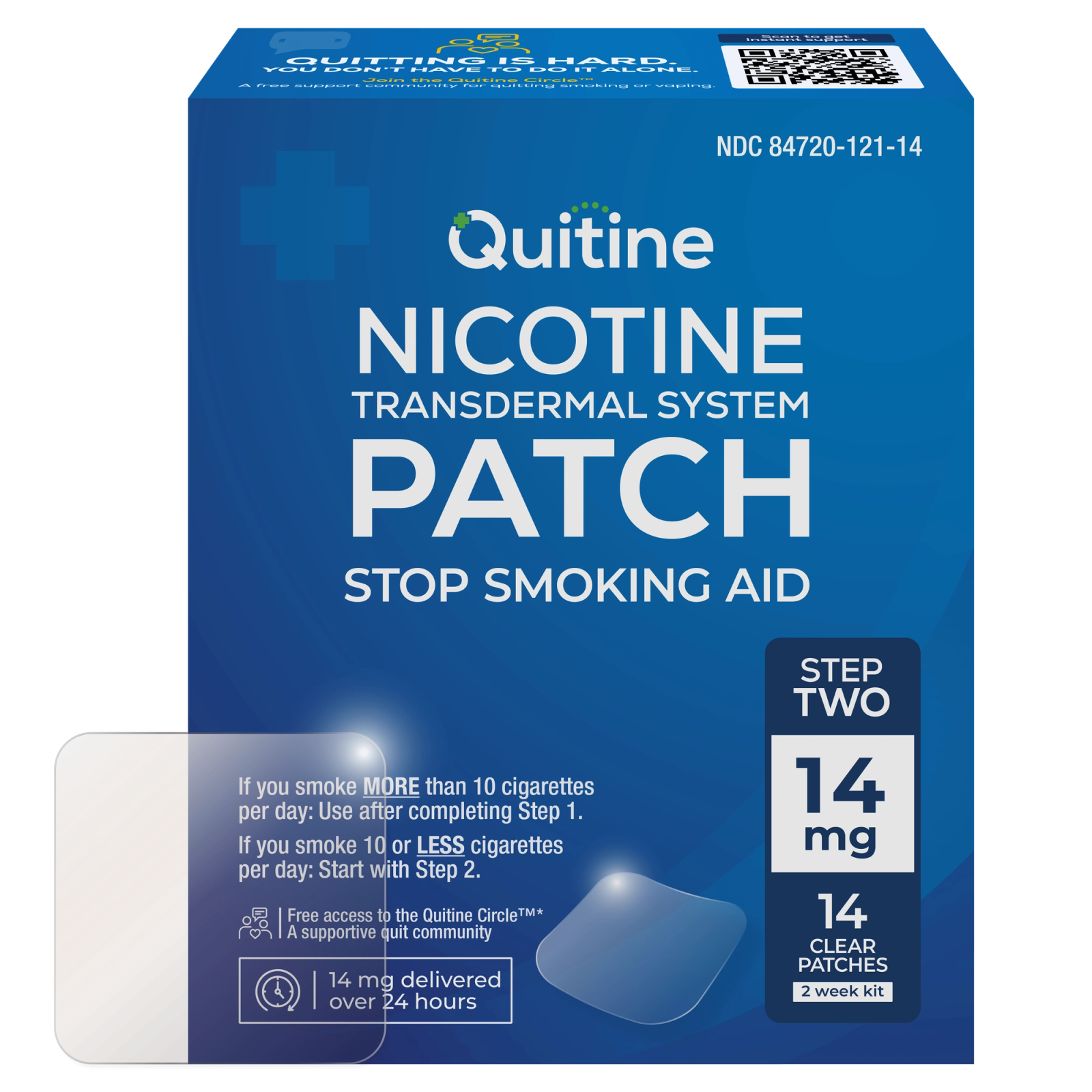
Description (Quitine Nicotine Patches Step 2 14mg 14 Pieces):
14 patches (2-week kit)
Start here if you smoke fewer than 10 cigarettes a day or vape lightly. You can also use these after you finish Step 1. Combine with 2 mg gum or lozenges if a craving breaks through.
Quitine nicotine patches are an FDA-regulated stop-smoking aid. Each patch delivers a steady amount of nicotine through the skin over 24 hours. You apply one patch each morning to clean, dry skin. It works in the background all day. There is no timing or counting required. You get consistent baseline support so you can focus on breaking the habit.
How to use
- Choose clean, dry, hairless skin on your upper arm, chest, or back. Skip lotions or oils before applying.
- Peel the liner and press the patch firmly for 10 to 20 seconds. Smooth the edges for a solid hold.
- Wear the patch for 24 hours. It is made for all-day wear, including everyday activities.
- Remove the patch after 24 hours and apply a new one to a different skin site. Rotate the site daily for comfort.
Stop use if skin irritation occurs. See the package directions for full details.
3) Quitine Nicotine Patches Step 3 7mg 14 Pieces
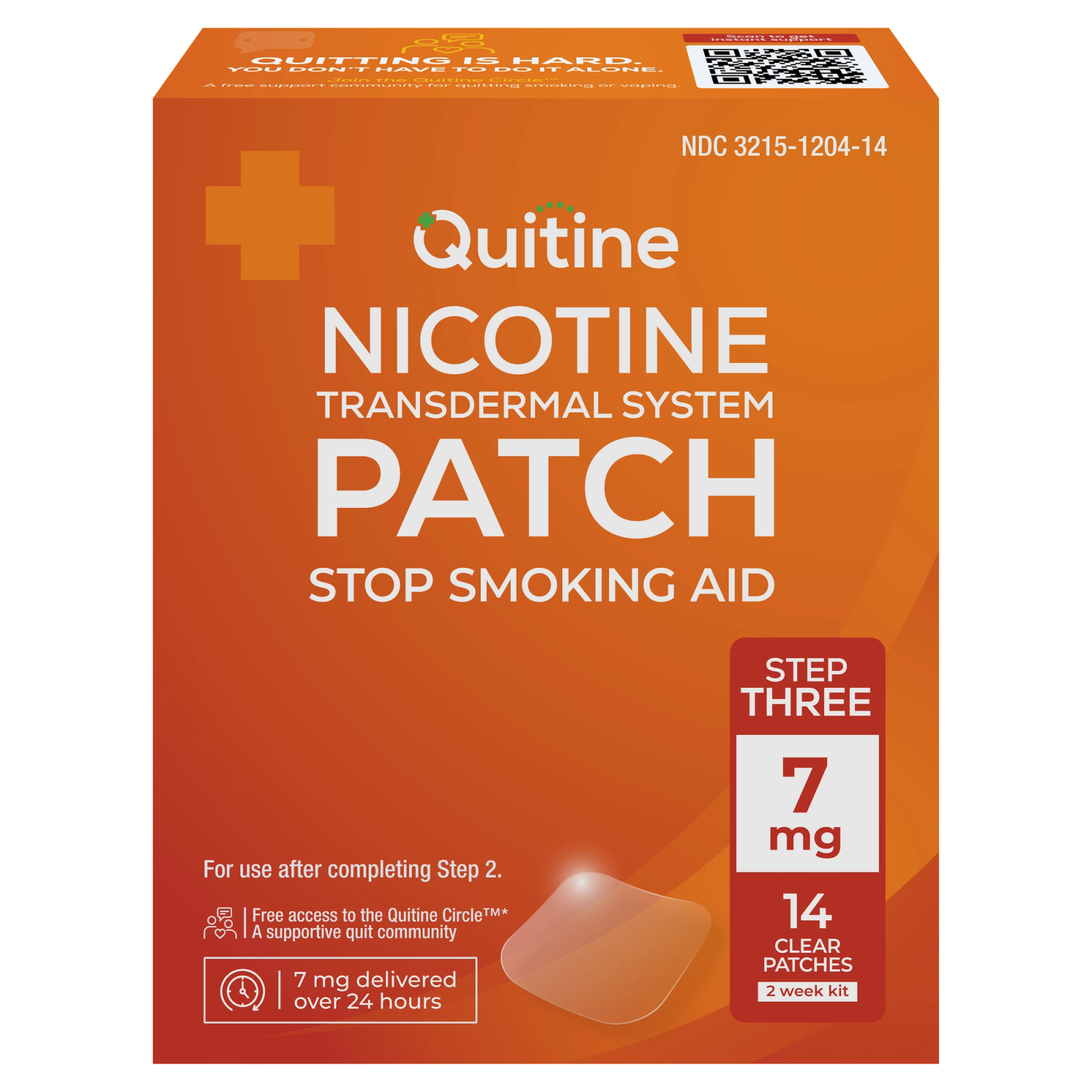
Description (Quitine Nicotine Patches Step 3 7mg 14 Pieces):
14 patches (2-week kit)
Use after you finish Step 2. This is the final taper. You can use the patches alone or add 2 mg gum or lozenges on harder days.
Quitine nicotine patches are an FDA-regulated stop-smoking aid. Each one delivers a steady amount of nicotine through the skin over 24 hours. You apply one patch every morning to clean, dry skin. The patch works in the background all day so you can focus on changing the habit itself.
How to use
- Choose a clean, dry, hairless area of skin on your upper arm, chest, or back. Skip any lotions or oils before you put the patch on.
- Peel the liner and press the patch firmly for 10 to 20 seconds. Smooth the edges so it stays in place.
- Wear the patch for a full 24 hours through everyday activities.
- After 24 hours, take it off and put a new patch on a different skin site. Rotate the location each day for comfort.
Stop use if skin irritation appears and follow the package directions.
FAQ
Do nicotine patches help with mood swings when you quit?
They often help the swings that come from falling nicotine levels. A patch keeps a steadier amount in the blood, so irritability and edginess tend to be milder than cold turkey. They do not treat every kind of mood problem. If you already live with depression or anxiety, keep your usual care in place and tell your clinician you are starting nicotine replacement therapy.
Can a nicotine patch make anxiety worse?
Some people feel wired if the dose is too high or if they still drink a lot of coffee. Others feel calmer because withdrawal anxiety drops. Start with the step that matches how much you used. If your heart races or sleep falls apart, lower the dose or take the patch off at night after you check with a clinician.
How long do emotional withdrawal symptoms last with a patch?
The roughest feelings usually ease after the first several days, then keep fading over a few weeks. A patch shortens and softens that window for many users. Sleep and appetite can lag behind mood. Keep the step-down going instead of jumping off early when you have one good day.
Should I use gum or lozenges with a patch if my emotions spike?
Yes, that pairing is common and useful. The patch holds the day. An oral nicotine product covers a sudden cue. Keep the extra pieces with you. Use them for triggers, not as a constant chew. If you need many rescue doses every hour, the patch strength may be too low.
Are Quitine patches different for emotional regulation than store brands?
The active idea is the same: steady nicotine through the skin. The difference is the system around the patch. Quitine adds a clear 21-to-14-to-7 path, oral nicotine products that match the patch, and a free circle of support for the days mood slips. That extra structure is what many people need when feelings, not just cravings, threaten the quit.
Discover Your Best Quit Strategy.
Read Also:

Ready to Quit or Just Cut Back?
If you're reading about nicotine, vaping, or smoking habits, chances are you're already thinking about making a change.
You don't have to figure it out alone. The Quitine Circle is our free support community, open to everyone quitting smoking or vaping. No purchase is required, and you do not need to use Quitine products to participate.
Inside the Quitine Circle you'll find:
The 90-Day Quit Program to guide your step down plan
A printable Quit Program Workbook to track progress
Practical tools for managing cravings and triggers
Support from others going through the same process
Quitting works best when you combine the right tools with the right structure. That's exactly what the Quitine system is built for.
Take our short quiz to see which Quitine Quit Kit fits your nicotine habits.

Not Sure Which Product Is Right for You?
Take our 2-minute Quit Quiz and get a personalized product recommendation and 90-day system based on your smoking or vaping habits.