
Nicotine patches for autism: myths, facts, and research

People search for nicotine patches for autism because of reports on brain receptors and small studies on aggression. The evidence stays limited and the risks real, especially for children. These products exist for controlled delivery, but their approved role is helping adults stop smoking or vaping, not treating autism.
Research also explores nicotine patches and ADHD, nicotine patches for arthritis, nicotine patches for menopause symptoms, the best nicotine patch for long COVID, and nicotine patch protocols for chronic illness, although evidence remains limited.
Why nicotinic receptors matter in autism discussions
Brain research shows differences in nicotinic acetylcholine receptors among many people with autism spectrum disorder. These receptors help control attention, mood, and certain behaviors. Some scientists suggest that stimulating them with nicotine could ease specific issues.
This idea comes from postmortem studies and animal work. It does not mean nicotine fixes autism. Core features such as social communication differences and restricted interests stay complex. No large trials prove nicotine changes those traits. The receptor findings give a starting point for research, nothing more.
Common myths about nicotine patches and autism
One widespread myth claims nicotine patches cure autism or make someone “neurotypical.” Online stories and parent groups sometimes share dramatic personal accounts. These stories lack controlled evidence and often mix other factors.
Another myth says any form of nicotine helps every person with ASD. Reality differs. Responses vary widely. Some people report no change. Others notice only short-term shifts in irritability. A related claim treats nicotine patches as safe for children with autism simply because the substance appears in adult studies. Developing brains react differently, and pediatric experts warn against routine use in kids without nicotine dependence.
Myths spread fast because families want practical options. Clear facts protect against unproven approaches.
What current research actually shows
Small studies have looked at transdermal nicotine for aggression and irritability in autism. One case report described an adolescent in a hospital setting who received nicotine patches alongside standard care. Caregivers noted fewer aggressive episodes during the treatment period.
An exploratory trial in adults with ASD tested short-term patch use. Some participants showed reduced aggression scores compared with placebo weeks. Caregivers reported overall improvement in a majority of the small group. Sleep ratings and irritability measures also shifted for certain people.
These findings appear in peer-reviewed journals. Sample sizes stayed tiny. Study lengths were short. No large randomized trials confirm lasting benefits or safety across broader groups. The Autism Science Foundation states that no clinical trials have shown nicotine patches safe or effective as an autism treatment.
Side effects in these and related studies include skin irritation at the patch site, sleep disruption, headaches, and nervousness. Researchers stress the need for more work before any clinical recommendation.
Nicotine may influence attention and working memory in other conditions such as ADHD, according to separate adult studies. That does not transfer automatically to autism core symptoms.
Safety concerns and why caution matters
Nicotine affects the developing brain. Health systems advise against its use in children and teens who do not already depend on it. Patches deliver steady doses through the skin. In someone without prior exposure, that can create dependence and alter focus or mood pathways.
Adults face their own considerations. Skin reactions occur often. Sleep problems and digestive upset appear in reports. Combining patches with other medications needs medical oversight.
Self-experimentation carries extra risk. Dosing decisions without professional guidance can lead to excess intake or unexpected interactions. Families exploring any option should talk with clinicians who know the individual’s full history.
Approved and practical uses of nicotine patches
Nicotine patches belong to nicotine replacement therapy. Their clear, approved purpose is helping adults stop smoking or vaping. They release a steady amount of nicotine over many hours. This eases withdrawal while the person breaks the habit of lighting up or inhaling aerosol.
Most programs use a step-down approach. Higher-strength patches start the process. Lower strengths follow as dependence drops. Many people pair the patch with faster-acting forms such as nicotine gum or nicotine lozenges for sudden cravings.
Quality matters. Consistent delivery, clear labeling, and pharmacist input improve the chance of success. Structured plans that last several months give the brain time to adjust without abrupt stops. Guidance on how to use NRT supports proper application and timing.
For anyone focused on quitting, products designed specifically for that goal offer the most reliable path. Research on autism remains separate and unfinished.
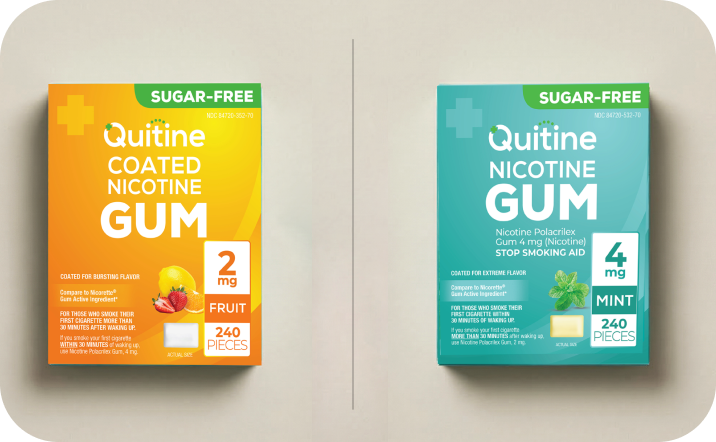
How Nicotine Gum Works
Nicotine gum delivers nicotine through the lining of your mouth as you chew. Unlike regular chewing gum, you need to use a specific "chew and park" technique to get the full effect.
Best for habit-triggered cravings
If you smoke or vape in response to specific triggers, after meals, during breaks, or when stressed, nicotine gum gives you something to do with your hands and mouth, which can help replace the physical habit.
Which Should You Choose?
The best choice depends on your personal preferences and smoking habits. If you miss the hand-to-mouth motion of smoking, gum might feel more natural. If you prefer something completely discreet, lozenges are a great option.Many people find that combining products, like using patches for all-day coverage and gum or lozenges for breakthrough cravings, gives them the best results.
Product Comparison
| Best For | Strength | |
|---|---|---|
| Nicotine Gum | Habit-triggered cravings | 2mg / 4mg |
| Nicotine Lozenges | Discreet craving relief | 2mg / 4mg |
| Nicotine Patches | All-day support | 21mg / 14mg / 7mg |
How Quitine approaches nicotine replacement
Quitine builds nicotine replacement products around real quitting needs. A pharmacist with decades of experience behind the counter helped shape the line. The range includes nicotine patches in step strengths, plus gum and lozenges.
The system pairs the products with a 90-day structure. Users can take a short quiz that matches strength and form to their habits. Support extends beyond the package through free community tools and progress tracking. Many adults choose this approach because the focus stays on steady reduction and lasting change rather than temporary relief alone.
Patches from the collection deliver controlled amounts over 24 hours. Users apply them to clean skin and rotate sites to limit irritation. The design suits people who want set-and-forget support during the day and night.
The combination of pharmacist input, clear step-down guidance, and ongoing tools gives users a more complete framework. Those ready to quit smoking or vaping find the products practical.
Discover Quitine and our best NRT products
Why Quitine?
Meet Mark and Oliver, the founders of Quitine. Mark has more than 40 years of experience as a pharmacist. His father’s long struggle with smoking shaped the work he does today. He has spent his career helping people leave cigarettes and vapes behind. Oliver brings deep experience in ecommerce, branding, product development, marketing, and logistics. Together they built Quitine to offer clear, practical nicotine replacement therapies that fit real daily life.
Our NRT products
Our pharmacist-formulated NRT products are made to support you while you change the habits that go with smoking or vaping.
Combination therapy for higher quit success
Research shows that combining a long-acting nicotine patch with a faster-acting form of NRT such as nicotine gum or nicotine lozenges can raise the chance of quitting smoking by 17 to 37 percent compared with using one product alone. At Quitine our nicotine patches deliver a steady amount of nicotine through the skin all day. Our nicotine gum and lozenges give you something to use when a craving hits. This dual approach, called NRT combination therapy, gives you more flexibility so you can stay comfortable while you change the habit.
Accessible pricing
We believe quitting should be within reach for everyone. We keep our therapies priced so more people can start without cutting corners on quality.
Personalized support
Quitting is personal, and so is the way we work with you. From the customer service team to the way each product is formulated, we stay with you through the process.
The Quitine Circle
The Quitine Circle is our free 90-day guided quit program and private support community. It is open to anyone quitting smoking or vaping and requires no purchase. It follows the same structured, pharmacist-backed approach that shapes our NRT products. You get short training modules, a practical quit workbook, weekly live Q and A sessions, and a moderated space with other people who are quitting, so you do not have to rely on willpower alone.
Discover which NRT is right for you
Not sure which product suits you best? Take our personalized quiz to find the NRT product that fits your needs. Take the Quiz
Real quitters. Real success.
See what our customers are saying about Quitine nicotine replacement therapy. Read Case Studies
The Quitine guarantee
Your satisfaction is covered. Learn more about our 30-day money-back promise. Learn More About Our Guarantee
Discover our best nicotine patches - Quitine
1) Quitine Nicotine Patches Step 1 21mg 28 Pieces
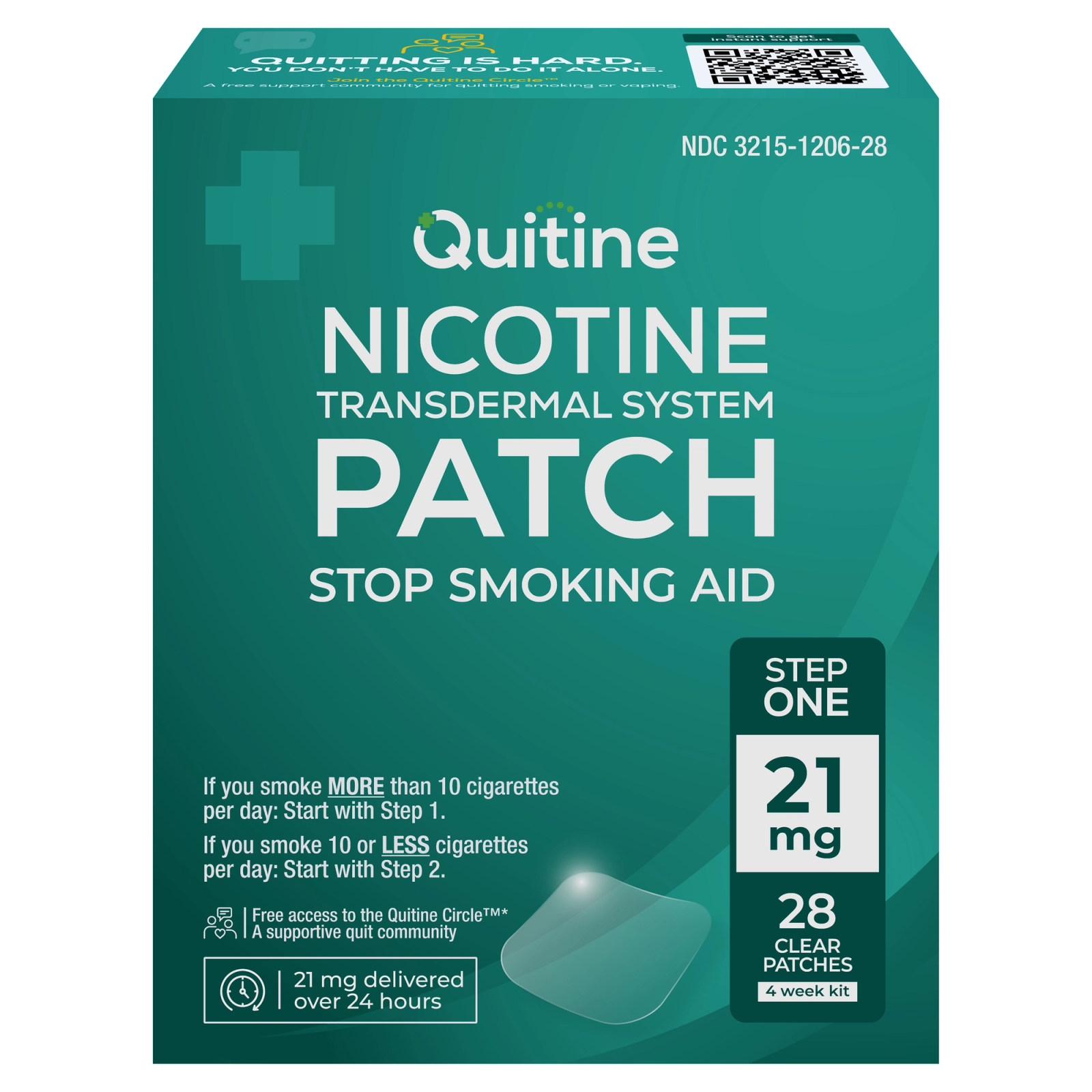
Description (Quitine Nicotine Patches Step 1 21mg 28 Pieces):
28 patches (4-week kit)
Start here if you smoke or vape within 30 minutes of waking, or if you smoke more than 10 cigarettes a day. You can combine the patches with 4 mg gum or lozenges when a craving breaks through.
Quitine nicotine patches are an FDA-regulated stop-smoking aid. Each patch delivers a steady amount of nicotine through the skin over a full 24 hours. You put one patch on in the morning on clean, dry skin. It stays in place through the day so the nicotine stays even while you work on the habits that go with smoking or vaping.
How to use
- Choose clean, dry, hairless skin on your upper arm, chest, or back. Skip lotions or oils before you apply the patch.
- Peel the liner and press the patch firmly for 10 to 20 seconds. Smooth the edges so it holds.
- Wear the patch for 24 hours. It is made for all-day use during regular activities.
- Remove the patch after 24 hours and put a new one on a different skin site. Rotate the spot each day to keep the skin comfortable.
Stop use if skin irritation occurs. See the package directions.
2) Quitine Nicotine Patches Step 2 14mg 14 Pieces
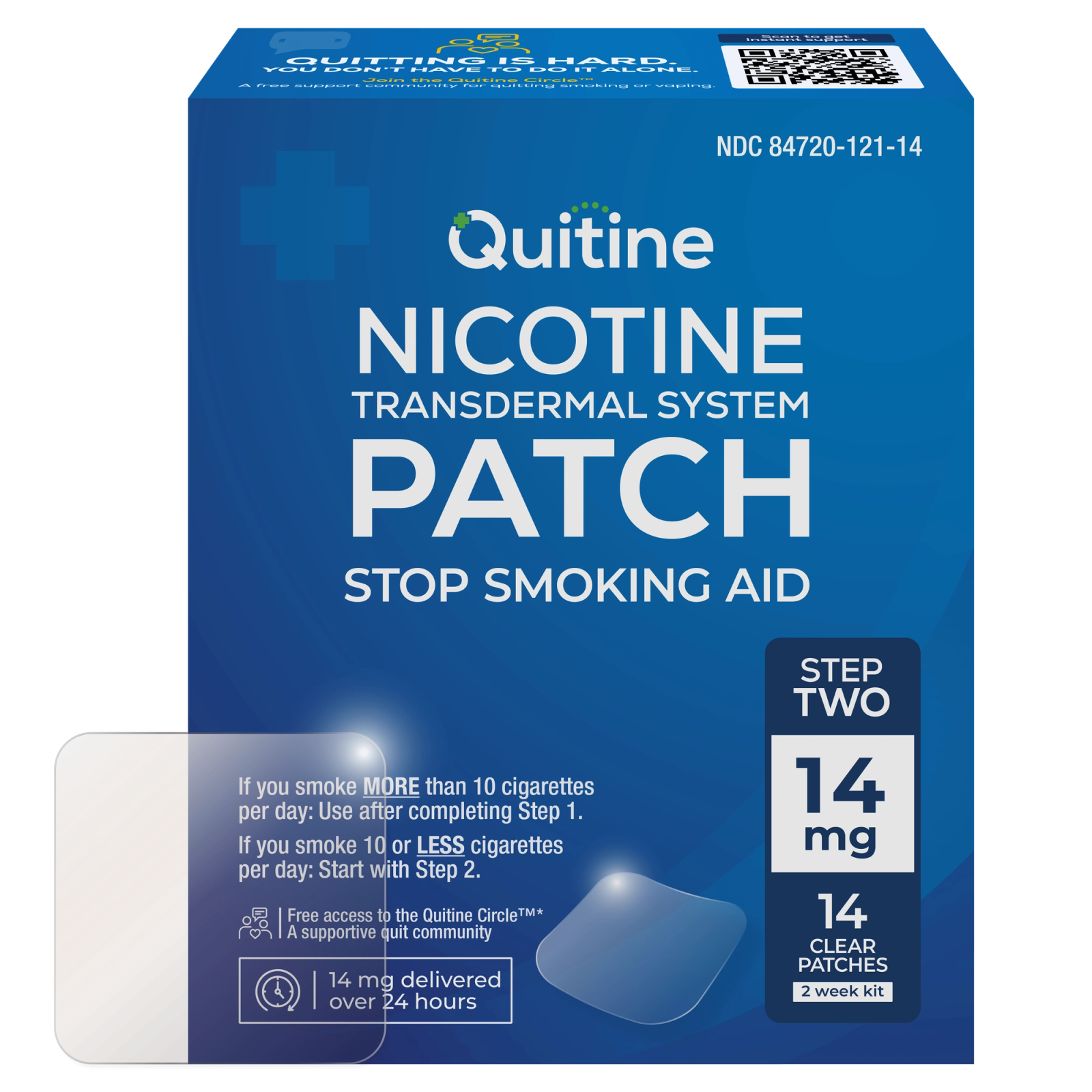
Description (Quitine Nicotine Patches Step 2 14mg 14 Pieces):
14 patches (2-week kit)
Start here if you smoke fewer than 10 cigarettes a day or vape lightly. You can also use these after you finish Step 1. Combine with 2 mg gum or lozenges if a craving breaks through.
Quitine nicotine patches are an FDA-regulated stop-smoking aid. Each patch delivers a steady amount of nicotine through the skin over 24 hours. You apply one patch each morning to clean, dry skin. It works in the background all day. There is no timing or counting required. You get consistent baseline support so you can focus on breaking the habit.
How to use
- Choose clean, dry, hairless skin on your upper arm, chest, or back. Skip lotions or oils before applying.
- Peel the liner and press the patch firmly for 10 to 20 seconds. Smooth the edges for a solid hold.
- Wear the patch for 24 hours. It is made for all-day wear, including everyday activities.
- Remove the patch after 24 hours and apply a new one to a different skin site. Rotate the site daily for comfort.
Stop use if skin irritation occurs. See the package directions for full details.
3) Quitine Nicotine Patches Step 3 7mg 14 Pieces
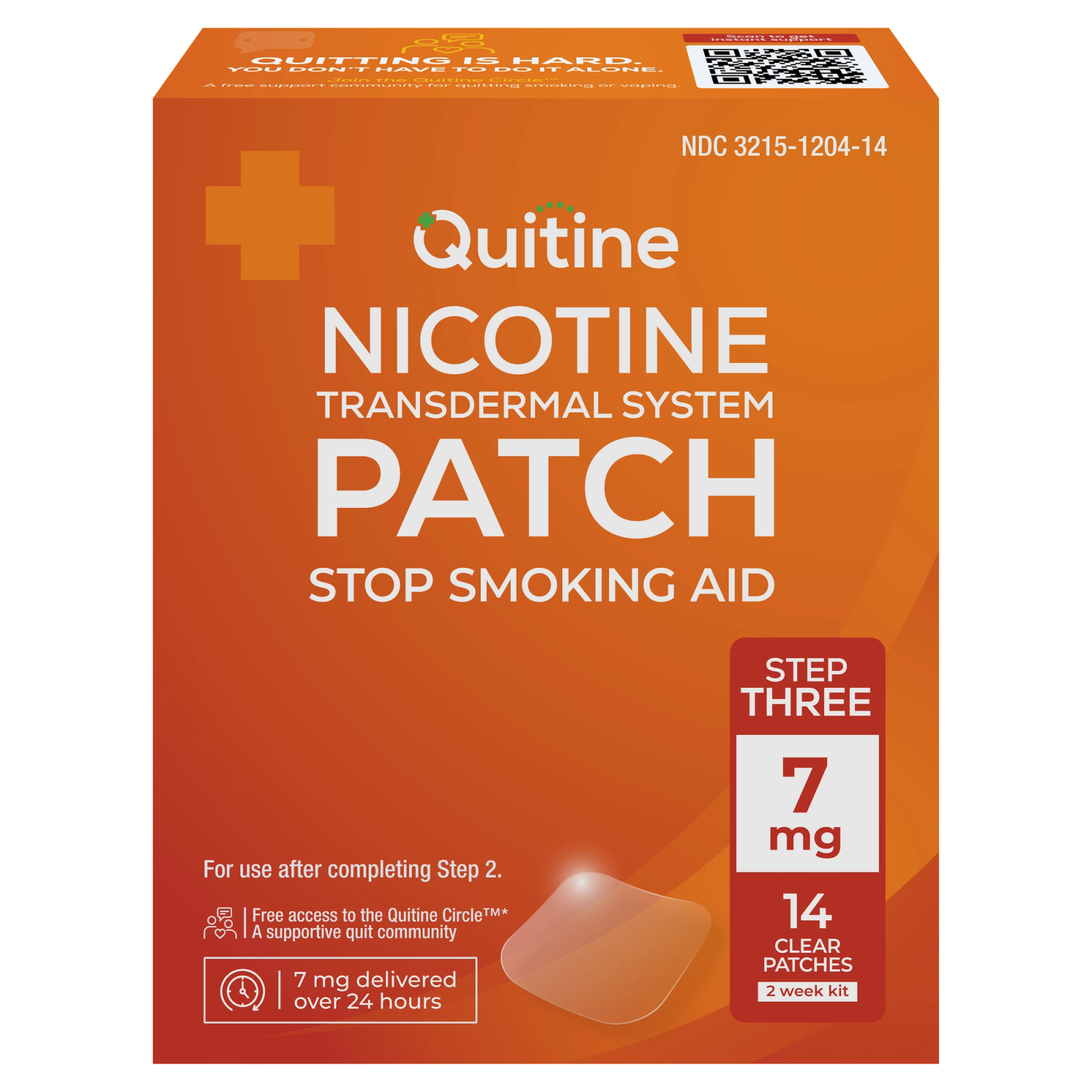
Description (Quitine Nicotine Patches Step 3 7mg 14 Pieces):
14 patches (2-week kit)
Use after you finish Step 2. This is the final taper. You can use the patches alone or add 2 mg gum or lozenges on harder days.
Quitine nicotine patches are an FDA-regulated stop-smoking aid. Each one delivers a steady amount of nicotine through the skin over 24 hours. You apply one patch every morning to clean, dry skin. The patch works in the background all day so you can focus on changing the habit itself.
How to use
- Choose a clean, dry, hairless area of skin on your upper arm, chest, or back. Skip any lotions or oils before you put the patch on.
- Peel the liner and press the patch firmly for 10 to 20 seconds. Smooth the edges so it stays in place.
- Wear the patch for a full 24 hours through everyday activities.
- After 24 hours, take it off and put a new patch on a different skin site. Rotate the location each day for comfort.
Stop use if skin irritation appears and follow the package directions.
Practical steps if you are exploring options
Speak with a doctor first. Share any autism-related concerns and current medications. Ask about evidence levels for any approach under discussion.
For quitting tobacco or vape products, look at proven nicotine replacement. Match the form to daily patterns. Steady delivery through patches works well for constant cravings. Oral forms handle spikes. Details on pairing options appear in comparisons of nicotine gum vs. nicotine patch.
Track progress. Note changes in mood, sleep, and behavior. Adjust only under guidance. Avoid mixing untested ideas with established care such as behavioral support or therapies already in place.
Stay skeptical of claims that sound too complete. Autism involves many systems. No single patch addresses every part.
Read also:
- Nicotine gum vs. nicotine patch: comparing two popular quit smoking aids
- The 21mg patch: your steady all-day base
- Nicotine patch reviews: what to know
- A clear patch nobody has to see
- Quitting smoking, the way that actually works
FAQ
Are nicotine patches approved to treat autism?
Nicotine patches fall under nicotine replacement therapy and hold FDA approval solely for supporting adults who want to stop smoking or vaping. No regulatory body has cleared them for addressing autism spectrum disorder or its related traits. Research into receptor activity continues in laboratory settings, yet that work remains separate from any approved clinical use. Families seeking information on this topic can review general details about nicotine patches as they relate to their intended purpose.
Can nicotine patches help with aggression in autism?
Discussions around aggression and autism sometimes reference early observations involving nicotine delivery, but those remain exploratory and lack the breadth needed for broader conclusions. Individual responses differ, and any short-term notes from limited settings do not establish a reliable pattern. The focus of nicotine replacement stays on withdrawal support for people with established nicotine dependence rather than behavioral symptoms in autism. Additional context on how nicotine patches function appears in materials covering their standard application.
Is it safe to give nicotine patches to a child with autism?
Developing brains process substances differently from adult systems, which is why health guidance restricts nicotine exposure in children and adolescents who lack prior dependence. Patches introduce a continuous dose that can influence pathways still forming, raising concerns beyond those seen in adult quitting programs. Medical evaluation becomes essential before considering any form of nicotine in younger individuals. Information about the role of nicotine replacement centers on adult use cases.
What makes a good nicotine patch for quitting?
A solid nicotine patch provides consistent release across a full day, clear strength options for gradual reduction, and straightforward instructions that match real routines. Skin comfort and secure adhesion matter for daily wear, as does the ability to combine it with oral forms when cravings shift. Pharmacist involvement in product design often brings practical refinements that support longer-term use. Details on step strengths and application appear in resources describing the 21mg nicotine patch and related options.
Where can someone find reliable nicotine replacement products?
Reliable nicotine replacement options come from sources that prioritize FDA-regulated formulations, transparent labeling, and guidance on proper step-down schedules. Products developed with input from experienced pharmacists tend to emphasize steady delivery and practical pairing of forms. Looking for clear information on strengths and usage helps match the product to individual patterns of smoking or vaping. Overviews of available nicotine patches and complementary forms provide further background on what consistency looks like. The quit smoking or vaping with a structured 90-day plan offers structured support alongside the products.

Ready to Quit or Just Cut Back?
If you're reading about nicotine, vaping, or smoking habits, chances are you're already thinking about making a change.
You don't have to figure it out alone. The Quitine Circle is our free support community, open to everyone quitting smoking or vaping. No purchase is required, and you do not need to use Quitine products to participate.
Inside the Quitine Circle you'll find:
The 90-Day Quit Program to guide your step down plan
A printable Quit Program Workbook to track progress
Practical tools for managing cravings and triggers
Support from others going through the same process
Quitting works best when you combine the right tools with the right structure. That's exactly what the Quitine system is built for.
Take our short quiz to see which Quitine Quit Kit fits your nicotine habits.

Not Sure Which Product Is Right for You?
Take our 2-minute Quit Quiz and get a personalized product recommendation and 90-day system based on your smoking or vaping habits.