
Nicotine patches vs other nicotine replacement therapies: which is better?

A nicotine patch keeps a steady dose in your system for many hours. Other nicotine replacement therapies, like gum and lozenges, plus prescription inhalers and nasal spray, work faster when a craving hits. On their own, nicotine patches and fast-acting NRT help many people quit smoking or vaping.
For people comparing quitting methods, nicotine patches and long-term dependency risk and nicotine patches vs. cold turkey quitting highlight key differences in nicotine exposure, cravings, and withdrawal.
How nicotine patches work
A nicotine patch is a thin adhesive you place on clean, dry skin. Nicotine moves through the skin into the blood. Levels rise slowly, then stay fairly even for 16 to 24 hours. That slow, even release is the point. You are not chasing a spike. You are covering the background urge that shows up after meals or first thing in the morning.
Typical over-the-counter strengths are 21 mg nicotine patches, 14 mg nicotine patches, and 7 mg nicotine patches. Many people who smoke more than about 10 cigarettes a day, or who reach for nicotine soon after waking, start on a higher strength. They then step down over several weeks. How nicotine patches work covers placement, rotation, and the step-down sequence in plain language.
What patches do well
- One application covers the whole day
- No chewing, parking, or timing a dose every hour
- Fits busy workdays and travel
- Easy to pair with nicotine gum or a nicotine lozenge when an urge breaks through
Where patches fall short on their own
- Relief is not instant. It can take a couple of hours to feel the full effect
- A sudden trigger (coffee, stress, a smoke break at work) can still hit
- Some people get skin redness if they reuse the same spot
- Night wear can bother light sleepers
The Mayo Clinic notes that the patch is simple and can control nicotine cravings for a full day. It also notes that many people do better when they add a short-acting nicotine product for breakthrough urges.
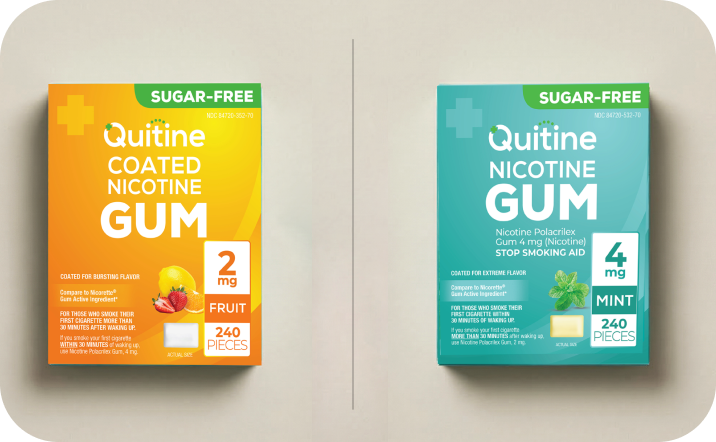
How Nicotine Gum Works
Nicotine gum delivers nicotine through the lining of your mouth as you chew. Unlike regular chewing gum, you need to use a specific "chew and park" technique to get the full effect.
Best for habit-triggered cravings
If you smoke or vape in response to specific triggers, after meals, during breaks, or when stressed, nicotine gum gives you something to do with your hands and mouth, which can help replace the physical habit.
Which Should You Choose?
The best choice depends on your personal preferences and smoking habits. If you miss the hand-to-mouth motion of smoking, gum might feel more natural. If you prefer something completely discreet, lozenges are a great option.Many people find that combining products, like using patches for all-day coverage and gum or lozenges for breakthrough cravings, gives them the best results.
Product Comparison
| Best For | Strength | |
|---|---|---|
| Nicotine Gum | Habit-triggered cravings | 2mg / 4mg |
| Nicotine Lozenges | Discreet craving relief | 2mg / 4mg |
| Nicotine Patches | All-day support | 21mg / 14mg / 7mg |
What the other NRT options actually do
Other nicotine replacement therapies usually mean four formats. Three of them are fast. One (the patch) is slow. Knowing the job of each format stops you from treating them as clones.
Nicotine gum:
Nicotine gum is chewed, then parked between the cheek and gum. Nicotine absorbs through the lining of the mouth. Effects often start within minutes.
Gum gives you something to do with your hands and mouth. That helps if your habit is tied to the cigarette or vape itself, not only to nicotine.
Use the chew-and-park method. Chew until you feel a tingle, park it, then chew again when the tingle fades. Swallowing the juice can upset your stomach. Acidic drinks like coffee or soda can slow absorption if you sip while the piece is in your mouth.
Strengths are commonly 2 mg and 4 mg. People who use nicotine soon after waking often start with higher strength.
Nicotine lozenges:
A nicotine lozenge sits between the gum and cheek and dissolves. You do not chew it. Relief is still faster than a patch, and the piece is quiet enough for meetings or commutes.
Nicotine lozenges suit people who dislike chewing or who want a more discreet oral nicotine option. Mini lozenges dissolve faster. Regular lozenges last a bit longer. Both still need correct parking. Chewing or swallowing the piece wastes nicotine and can cause hiccups or heartburn.
A side-by-side nicotine lozenges vs nicotine patch comparison is useful if you want oral relief without the chew-and-park routine.
Nicotine inhaler:
The nicotine inhaler is a plastic mouthpiece with a nicotine cartridge. You puff it. Nicotine absorbs in the mouth and throat, not deep in the lungs. It copies the hand-to-mouth motion of smoking.
In many places this product needs a prescription. It can help people who miss the ritual as much as the nicotine. Throat irritation is a common early complaint.
Nicotine nasal spray:
Nasal spray is the fastest medical NRT. Nicotine hits the bloodstream quickly through the lining of the nose. It is usually prescription-only. It can sting at first. Doctors often reserve it for people with very strong, sudden cravings who did not get enough relief from gum or lozenges.
The U.S. Food and Drug Administration treats patches, gum, and lozenges as over-the-counter stop-smoking aids. Inhaler and spray stay in the prescription group in the United States.
Combination NRT is the comparison that matters
Asking "nicotine patches vs other NRT" as a winner-take-all contest misses the design of these nicotine products. They do different jobs.
The patch holds a floor under your nicotine level so the day is not one long withdrawal. Nicotine gum or lozenge covers the spike: after lunch, during a stressful call, when someone else lights up.
High-certainty Cochrane evidence shows that combination NRT (a patch plus a fast-acting form) leads to more long-term quits than a single form. The CDC and many clinic guides teach the same pairing. Mayo Clinic also notes that many people benefit from using more than one quit smoking product.
A practical combo looks like this:
- Apply a Step 1 21 mg patch in the morning if you are a heavier user.
- Keep 4 mg nicotine gum or a 4 mg nicotine lozenge for urges that still break through.
- After several weeks, move to a 14 mg Step 2 patch, then a 7 mg Step 3 patch.
- Drop the oral dose strength as morning urges ease.
Do not stack two patches unless a clinician tells you to. Do not cut a patch. Rotate the nicotine patch placement each day. If you wear the patch at night and have vivid dreams, some people switch to a 16-hour wear pattern. Follow the label or ask a pharmacist.
How to choose based on your day, not a brand slogan
Use your pattern, not a ranking list.
You may lean on a patch first if:
- You use nicotine most of the day, not only at a few triggers
- You want a set-and-forget routine
- You keep forgetting to take gum or lozenges on a schedule
You may lean on gum or lozenges first if:
- Most urges are short and tied to coffee, driving, or breaks
- Skin adhesives bother you
- You want control over each dose
You may start with both if:
- You smoke or vape heavily
- Past quits failed because afternoon cravings punched through a patch
- You already know willpower alone does not hold after week one
A short 90-day quit smoking quiz maps starting strength and whether you need an oral rescue product. That is more useful than buying a single box and hoping it covers every trigger.
Talk with a clinician before you start if you are pregnant, under 18, have had a recent heart event, or take other regular medicines. NRT is far less harmful than continued smoking for most adults, but personal medical history still matters.
Side effects, technique, and mistakes that waste a good product
Technique decides whether NRT feels "weak" or useful.
Patch habits that help
- Clean, dry, hair-light skin on the upper arm, chest, or back
- Press for 10 to 20 seconds
- New spot every day
- Wash hands after you apply or remove it
- Fold used patches so the sticky sides meet and keep them away from kids and pets
Skin itch or redness on the old site is common. A new site usually settles it. Strong redness, swelling, or a rash that spreads means stop and get advice.
Gum and lozenge habits that help
- Park the piece. Do not chew gum like regular gum all the way through
- Do not eat or drink for about 15 minutes before an oral dose
- Use enough pieces in the first weeks. Under-dosing is a frequent reason people say "NRT did nothing"
- Watch for hiccups or mouth irritation, which often mean you are releasing nicotine too fast
Inhaler and spray habits that help
- Short, frequent puffs for the inhaler, not deep lung hits
- Expect nose or throat sting with spray at the start
- Keep the product with you. A rescue dose in a drawer at home does not help at 2 p.m. at work
NRT is not a cigarette. You should not feel the same rush. If you feel nothing at all and still want to smoke within an hour, the dose or the combination is probably too low, not "proof that patches fail." The how to use NRT guide walks through patch placement and chew-and-park in more detail.
Discover Quitine and our best NRT products
Why Quitine?
Meet Mark and Oliver, the founders of Quitine. Mark has more than 40 years of experience as a pharmacist. His father’s long struggle with smoking shaped the work he does today. He has spent his career helping people leave cigarettes and vapes behind. Oliver brings deep experience in ecommerce, branding, product development, marketing, and logistics. Together they built Quitine to offer clear, practical nicotine replacement therapies that fit real daily life.
Our NRT products
Our pharmacist-formulated NRT products are made to support you while you change the habits that go with smoking or vaping.
Combination therapy for higher quit success
Research shows that combining a long-acting nicotine patch with a faster-acting form of NRT such as nicotine gum or nicotine lozenges can raise the chance of quitting smoking by 17 to 37 percent compared with using one product alone. At Quitine our nicotine patches deliver a steady amount of nicotine through the skin all day. Our nicotine gum and lozenges give you something to use when a craving hits. This dual approach, called NRT combination therapy, gives you more flexibility so you can stay comfortable while you change the habit.
Accessible pricing
We believe quitting should be within reach for everyone. We keep our therapies priced so more people can start without cutting corners on quality.
Personalized support
Quitting is personal, and so is the way we work with you. From the customer service team to the way each product is formulated, we stay with you through the process.
The Quitine Circle
The Quitine Circle is our free 90-day guided quit program and private support community. It is open to anyone quitting smoking or vaping and requires no purchase. It follows the same structured, pharmacist-backed approach that shapes our NRT products. You get short training modules, a practical quit workbook, weekly live Q and A sessions, and a moderated space with other people who are quitting, so you do not have to rely on willpower alone.
Discover which NRT is right for you
Not sure which product suits you best? Take our personalized quiz to find the NRT product that fits your needs. Take the Quiz
Real quitters. Real success.
See what our customers are saying about Quitine nicotine replacement therapy. Read Case Studies
The Quitine guarantee
Your satisfaction is covered. Learn more about our 30-day money-back promise. Learn More About Our Guarantee
Discover our best nicotine patches - Quitine
1) Quitine Nicotine Patches Step 1 21mg 28 Pieces
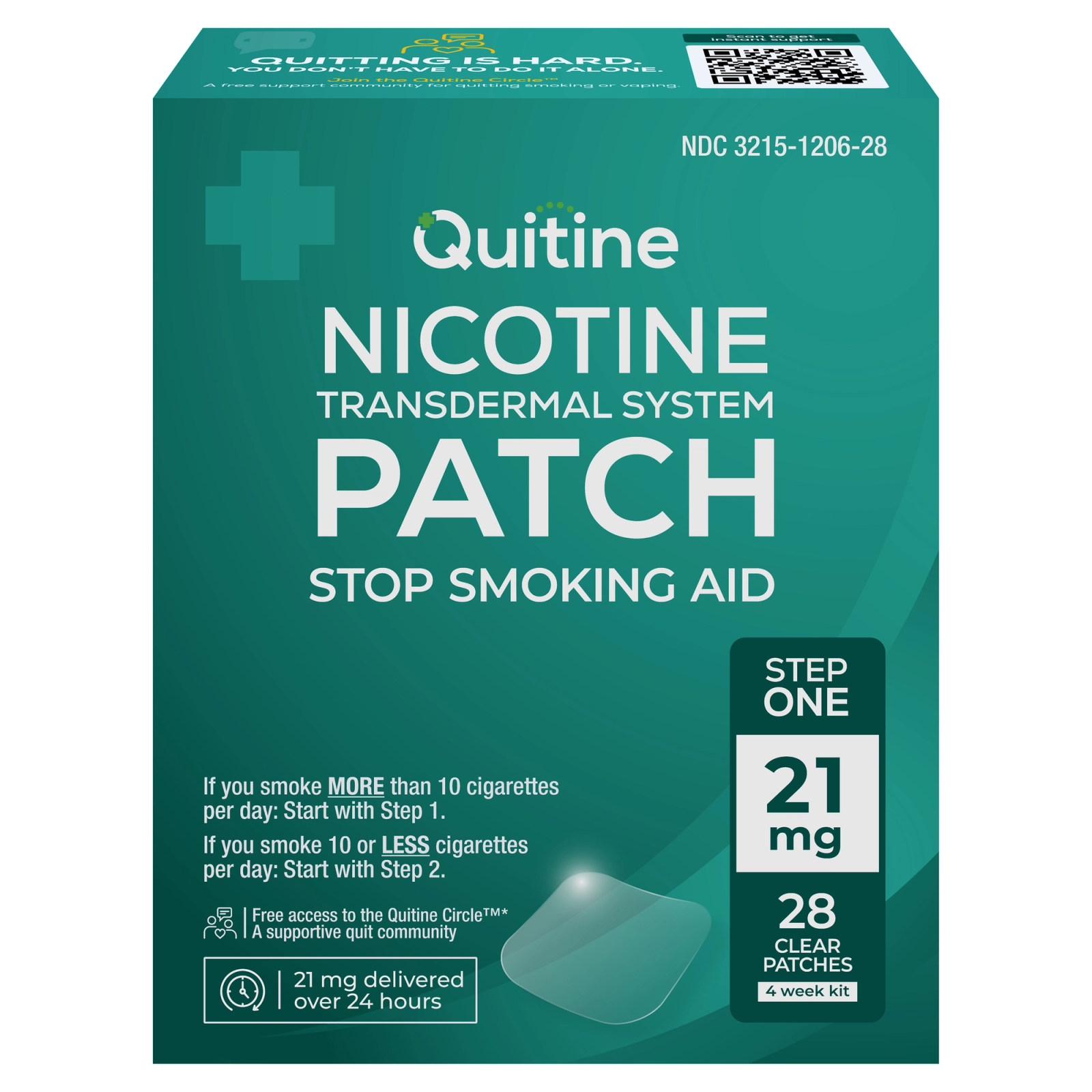
Description (Quitine Nicotine Patches Step 1 21mg 28 Pieces):
28 patches (4-week kit)
Start here if you smoke or vape within 30 minutes of waking, or if you smoke more than 10 cigarettes a day. You can combine the patches with 4 mg gum or lozenges when a craving breaks through.
Quitine nicotine patches are an FDA-regulated stop-smoking aid. Each patch delivers a steady amount of nicotine through the skin over a full 24 hours. You put one patch on in the morning on clean, dry skin. It stays in place through the day so the nicotine stays even while you work on the habits that go with smoking or vaping.
How to use
- Choose clean, dry, hairless skin on your upper arm, chest, or back. Skip lotions or oils before you apply the patch.
- Peel the liner and press the patch firmly for 10 to 20 seconds. Smooth the edges so it holds.
- Wear the patch for 24 hours. It is made for all-day use during regular activities.
- Remove the patch after 24 hours and put a new one on a different skin site. Rotate the spot each day to keep the skin comfortable.
Stop use if skin irritation occurs. See the package directions.
2) Quitine Nicotine Patches Step 2 14mg 14 Pieces
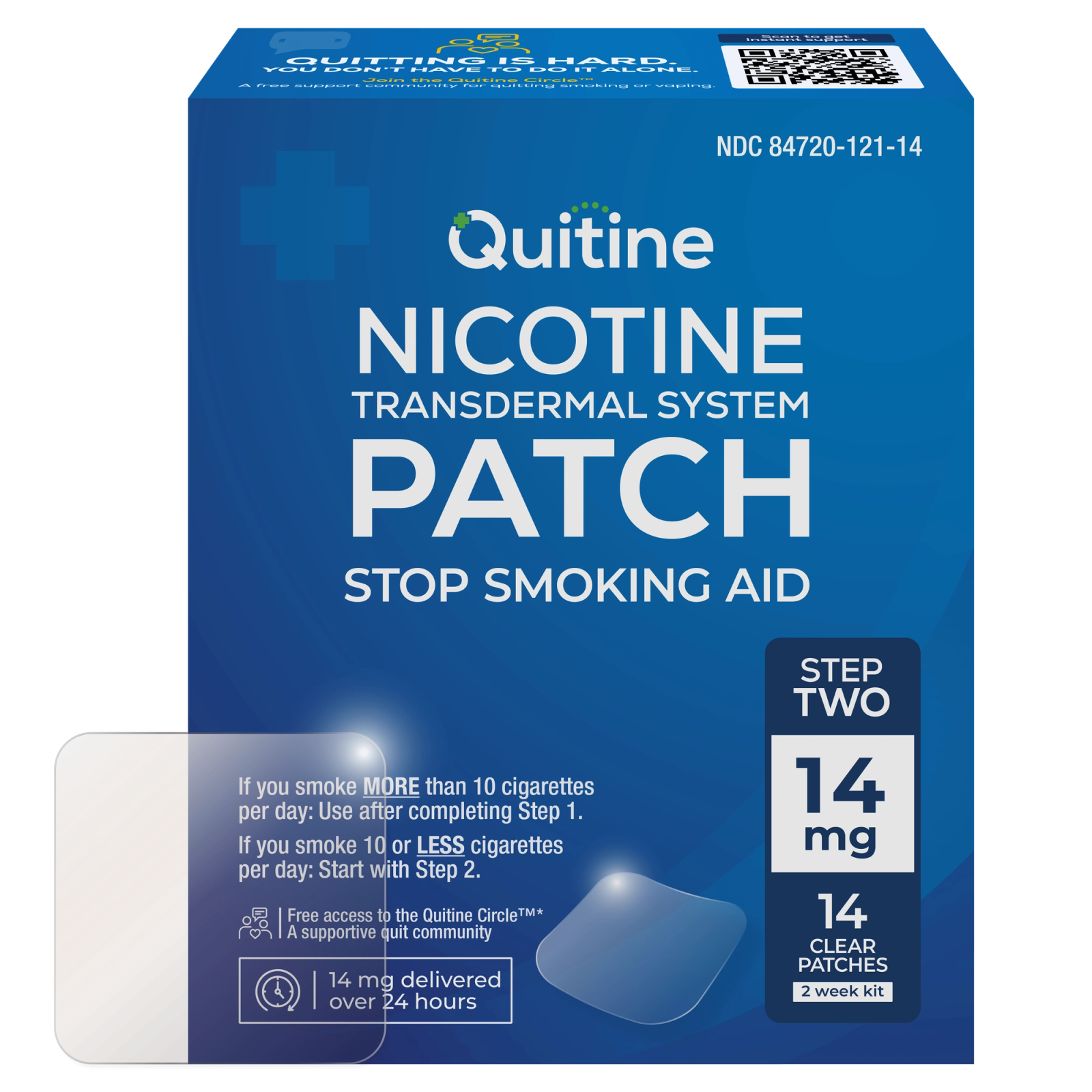
Description (Quitine Nicotine Patches Step 2 14mg 14 Pieces):
14 patches (2-week kit)
Start here if you smoke fewer than 10 cigarettes a day or vape lightly. You can also use these after you finish Step 1. Combine with 2 mg gum or lozenges if a craving breaks through.
Quitine nicotine patches are an FDA-regulated stop-smoking aid. Each patch delivers a steady amount of nicotine through the skin over 24 hours. You apply one patch each morning to clean, dry skin. It works in the background all day. There is no timing or counting required. You get consistent baseline support so you can focus on breaking the habit.
How to use
- Choose clean, dry, hairless skin on your upper arm, chest, or back. Skip lotions or oils before applying.
- Peel the liner and press the patch firmly for 10 to 20 seconds. Smooth the edges for a solid hold.
- Wear the patch for 24 hours. It is made for all-day wear, including everyday activities.
- Remove the patch after 24 hours and apply a new one to a different skin site. Rotate the site daily for comfort.
Stop use if skin irritation occurs. See the package directions for full details.
3) Quitine Nicotine Patches Step 3 7mg 14 Pieces
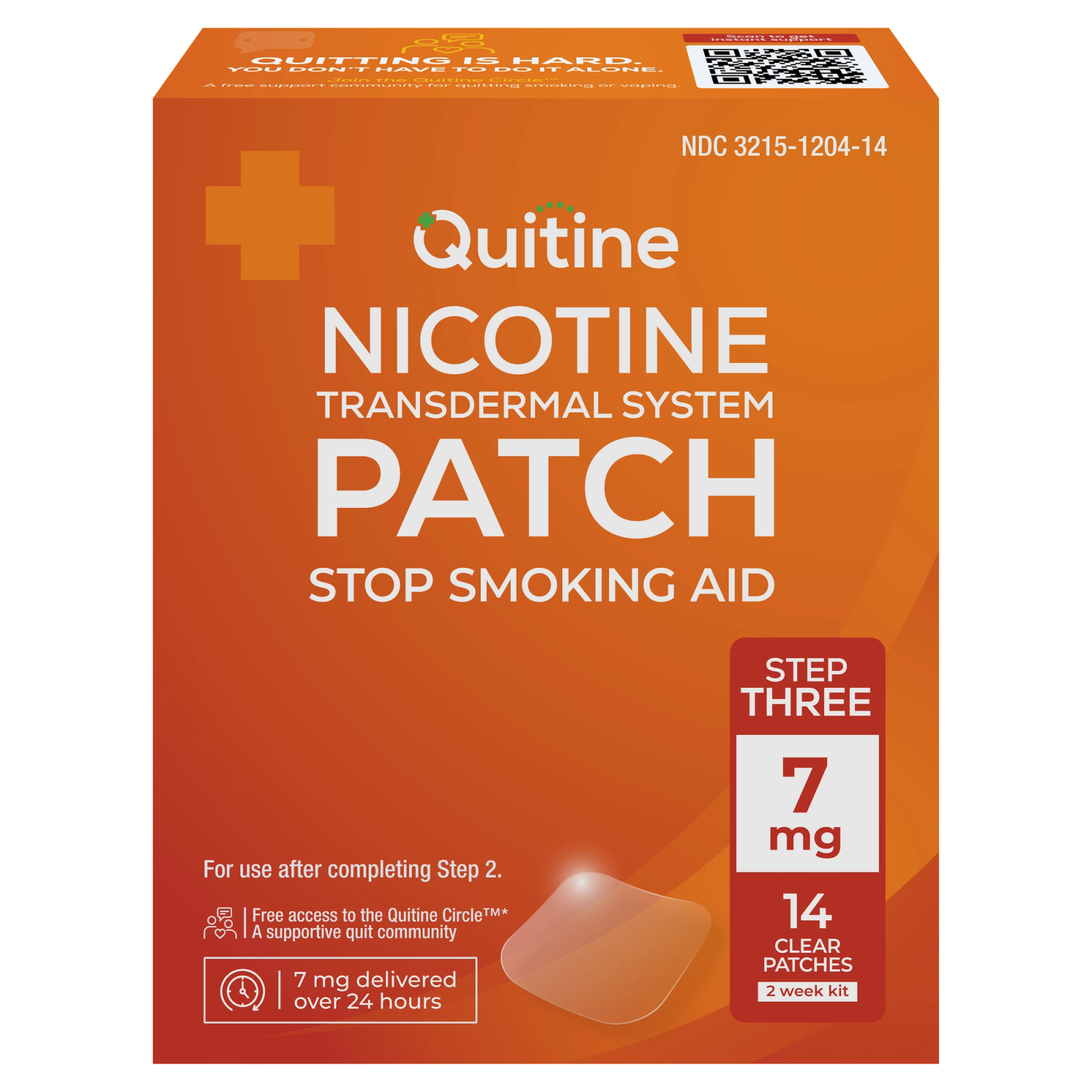
Description (Quitine Nicotine Patches Step 3 7mg 14 Pieces):
14 patches (2-week kit)
Use after you finish Step 2. This is the final taper. You can use the patches alone or add 2 mg gum or lozenges on harder days.
Quitine nicotine patches are an FDA-regulated stop-smoking aid. Each one delivers a steady amount of nicotine through the skin over 24 hours. You apply one patch every morning to clean, dry skin. The patch works in the background all day so you can focus on changing the habit itself.
How to use
- Choose a clean, dry, hairless area of skin on your upper arm, chest, or back. Skip any lotions or oils before you put the patch on.
- Peel the liner and press the patch firmly for 10 to 20 seconds. Smooth the edges so it stays in place.
- Wear the patch for a full 24 hours through everyday activities.
- After 24 hours, take it off and put a new patch on a different skin site. Rotate the location each day for comfort.
Stop use if skin irritation appears and follow the package directions.
Cost, access, and staying supplied
Patches often cost less per day than using many pieces of nicotine gum or nicotine lozenges, because one patch replaces a full day's baseline. Gum and lozenges cost more when you use them often, but they prevent the slip that wipes out a cheap patch week.
Generic and store brands use the same active nicotine forms as big labels. What you pay extra for, when you pay extra, is pack size, support, and whether you will still have product in week six.
Practical ways to keep cost down without cutting the dose:
- Start with the nicotine patch dosage that matches your habit, then step down. Starting too low and adding cigarettes back is more expensive than a correct first box
- Use the patch as the base and oral NRT as rescue, not the other way around, if you are a steady all-day user
- Set a delivery rhythm before you finish a pack. A gap of two days is where many quits break
If a product is not a fit, change the format. Switching from gum to a lozenge is normal. Quitting the quit because the first texture felt odd is not.
Safety notes people skip
Nicotine replacement is not smoke-free tobacco and it is not a flavor pouch sold as a lifestyle product. It is a stop-smoking medicine with directions.
- Keep all NRT away from children and pets. Used patches still hold nicotine
- Do not smoke or vape on top of a full-strength plan "just once" as a test. That stacks nicotine and teaches the old cue
- If you have chest pain, a severe rash, or swelling of the mouth or throat, stop and get medical help
- Oral NRT and patches are for adults as labeled. Teens need a clinician, not a guess from a blog
Pouches and vapes sit outside classic NRT in most clinic guides. They may cut smoke exposure for some users, but they are not the same as a labeled patch-plus-gum program with a step-down. If your goal is to stop nicotine, medical NRT with a plan is the format built for that job.
FAQ
Are nicotine patches better than nicotine gum for quitting?
Not as a rule. Used alone, patches and gum help many people at similar rates. Patches win on all-day convenience. Gum wins on speed and on replacing the oral habit. Many heavy users do best with both: a daily nicotine patch plus gum when a craving spikes. That pairing is the comparison that shows a real edge in research reviews.
Can I wear a nicotine patch and use a lozenge on the same day?
Yes. Nicotine patches and lozenges are the standard combination NRT. The patch holds your baseline. The lozenge treats a breakthrough urge. Stay inside labeled daily limits for the oral product. If you feel nauseous, wired, or dizzy, you may be stacking too much nicotine. Ease the oral dose first and ask a pharmacist if it continues.
How long should I stay on nicotine patches?
Most labeled programs run about 8 to 12 weeks across three strengths. Some people need longer in the middle dose if cravings stay loud. Stopping the patch the week you feel "fine" is a common mistake. Finish the step-down. If you still need an oral piece now and then after the last 7 mg week, that is a taper, not a failure.
What if the patch irritates my skin or keeps me awake?
Rotate the site every day and avoid lotion under the patch. If dreams or broken sleep bother you, take the patch off at night and put a new one on in the morning, as long as the label allows 16-hour wear. Persistent rash means stop that brand or that adhesive and get advice. You can keep using gum or lozenges while the skin calms down.
Is combination NRT safe compared with smoking?
For most adult smokers, combination NRT is far safer than keeping cigarettes. You still get nicotine, but you drop the combustion products that damage lungs, heart, and blood vessels. Follow package directions. People with recent heart problems, pregnancy, or complex prescriptions should check with a clinician before they start.
Read Also:

Ready to Quit or Just Cut Back?
If you're reading about nicotine, vaping, or smoking habits, chances are you're already thinking about making a change.
You don't have to figure it out alone. The Quitine Circle is our free support community, open to everyone quitting smoking or vaping. No purchase is required, and you do not need to use Quitine products to participate.
Inside the Quitine Circle you'll find:
The 90-Day Quit Program to guide your step down plan
A printable Quit Program Workbook to track progress
Practical tools for managing cravings and triggers
Support from others going through the same process
Quitting works best when you combine the right tools with the right structure. That's exactly what the Quitine system is built for.
Take our short quiz to see which Quitine Quit Kit fits your nicotine habits.

Not Sure Which Product Is Right for You?
Take our 2-minute Quit Quiz and get a personalized product recommendation and 90-day system based on your smoking or vaping habits.