
Nicotine patch placement: where to put it and why it matters

Nicotine patch placement comes down to the skin you choose on your upper body. Proper placement helps the nicotine patch stick and keeps the dose even all day. Put it on clean, dry, hair-free skin so the adhesive holds. Common spots include the upper arm, chest, shoulder, or back. Pairing a solid base patch with options like nicotine gum helps handle sudden urges.
Patch choice also varies by formulation and nicotine source, with differences in nicotine patch health benefits, risks, and side effects as well as between pure vs. synthetic nicotine patches.
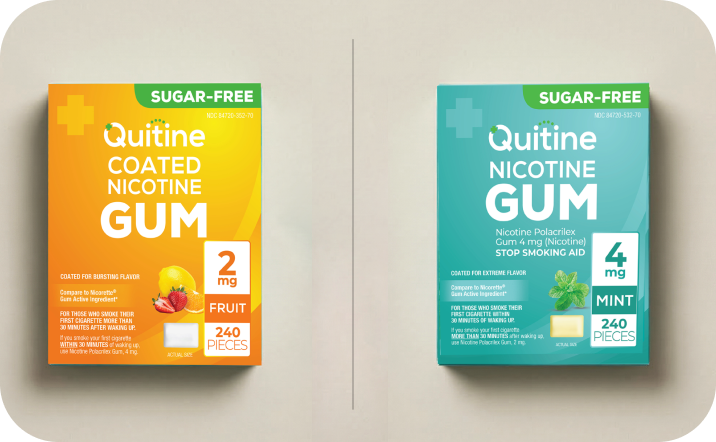
How Nicotine Gum Works
Nicotine gum delivers nicotine through the lining of your mouth as you chew. Unlike regular chewing gum, you need to use a specific "chew and park" technique to get the full effect.
Best for habit-triggered cravings
If you smoke or vape in response to specific triggers, after meals, during breaks, or when stressed, nicotine gum gives you something to do with your hands and mouth, which can help replace the physical habit.
Which Should You Choose?
The best choice depends on your personal preferences and smoking habits. If you miss the hand-to-mouth motion of smoking, gum might feel more natural. If you prefer something completely discreet, lozenges are a great option.Many people find that combining products, like using patches for all-day coverage and gum or lozenges for breakthrough cravings, gives them the best results.
Product Comparison
| Best For | Strength | |
|---|---|---|
| Nicotine Gum | Habit-triggered cravings | 2mg / 4mg |
| Nicotine Lozenges | Discreet craving relief | 2mg / 4mg |
| Nicotine Patches | All-day support | 21mg / 14mg / 7mg |
Best places for nicotine patch placement
Choose flat skin that stays mostly still and under clothing. These areas give good contact so the adhesive holds.
- The outer or inner side of the upper arm is easy to reach and usually protected by sleeves. The outer part often has less hair and less rubbing from movement.
- The upper chest is flat and discreet under a shirt. It stays away from heavy arm swings.
- The shoulder or upper back is out of sight for many people and less likely to catch on clothes or bags.
- The side of the torso or hip area is useful when arms or chest need a break. Keep it clear of waistbands so nothing pulls the edge.
The skin must be clean and dry. It should also be free of hair, oil, lotion, or powder. Wash the spot with mild soap and water, then pat it dry. Do not put lotion or sunscreen on the area first. Hair can lift the nicotine patches, so pick a smooth patch of skin. If needed, carefully trim hair, but skip shaving right before because that can irritate the surface.
Avoid skin that is oily, red, scarred, cut, or already itchy. Do not place the nicotine patch on the neck, face, hands, lower legs, or anywhere where skin folds a lot when you sit or bend. Those spots either hold the patch poorly or rub the patch loose.
Why nicotine patch placement matters
The right spot keeps the adhesive sealed so nicotine releases at the planned pace. A loose or wrinkled patch can deliver uneven amounts and leave you with stronger urges later in the day. Good contact also means the patch survives showers and light exercise as well as normal clothing, without falling off.
Skin health is the other big reason. Leaving nicotine patches on the same area day after day can cause redness or itching. A burning feeling can appear as well. Rotating sites gives each piece of skin time to recover. Many people notice less irritation simply by changing the location every 24 hours and waiting a full week before returning to any one spot.
Steady placement also supports the overall quit process. A reliable base dose reduces background withdrawal so you can focus on habits and triggers instead of constant physical discomfort.
How to apply the patch correctly
Follow these steps each morning or at the same time every day.
- Open the pouch carefully. Never cut the patch itself. Cutting changes how nicotine comes out and can cause extra side effects.
- Peel off the protective liner. Touch the sticky side as little as possible.
- Place the sticky side against the chosen skin right away.
- Press firmly with the palm of your hand for about 10 seconds. Smooth the edges so no air pockets remain.
- Wash your hands with soap and water (or water alone if the package says so) to remove any leftover nicotine.
The nicotine patch can stay on during short showers, baths, or swimming. Water does not ruin it. If it loosens, take it off, fold the sticky sides together, and put on a fresh one in a new spot.
Wear the patch for the full time listed on the package, usually 16 or 24 hours. If vivid dreams or restless sleep appear, remove it at bedtime and apply a new one the next morning.
When you take the old patch off, fold it sticky-side to sticky-side and put it back in the original pouch. Keep used nicotine patches away from children and pets. Even empty ones can still hold enough nicotine to cause harm if chewed or swallowed.
Daily rotation plan that protects your skin
Switch locations every day. A simple week looks like this:
- Day 1: outer right upper arm
- Day 2: outer left upper arm
- Day 3: upper chest
- Day 4: right shoulder or upper back
- Day 5: left shoulder or upper back
- Day 6: right side of torso or hip
- Day 7: left side of torso or hip
After that cycle, the first spots have had time to rest. Write the plan on a calendar or phone note if it helps you stay consistent. The goal is never to use the exact same square of skin more than once in seven days.
Common mistakes that reduce effectiveness
Many people lose the full benefit of the nicotine patch through small errors:
- They put the nicotine patches on damp or lotion-covered skin so it peels early.
- They choose a hairy or high-movement area that lifts the edges.
- They cut the patch to make it smaller.
- They leave the same spot in use for several days.
- They forget to press the edges firmly at the start.
- They wear more than one patch at a time without guidance from a healthcare professional.
Any of these can lead to uneven nicotine levels or skin trouble. Fixing placement solves most of the problems before they start.
Combining the patch with faster options
The nicotine patch gives a steady background level. Sudden strong cravings still appear for many people, especially after meals or during stress. Old smoking places can trigger them as well. That is when another form helps. Nicotine lozenges dissolve in the mouth. Nicotine gum works when you chew and park it between cheek and gum.
Using the patch as the base and another product only when needed is a common approach. It keeps overall nicotine control while helping with moments of stronger urge. Always follow package directions for both products and talk with a pharmacist or doctor if you have questions about dosing.
Skin care while using the patch
After you remove a used patch, gently clean the area with mild soap and water to clear any leftover adhesive. Let the skin air out. If mild redness appears, a thin layer of plain hydrocortisone cream after the patch is off can calm it. Stop use and contact a healthcare professional if the redness spreads, blisters, or lasts more than a few days. Keep the rest of your skin routine simple. Avoid heavy oils or new products right on the rotation sites. Stay hydrated and wear breathable clothing over the nicotine patch area when possible.
Special situations and extra tips
If you exercise a lot, the upper back often stays more secure because arm and leg movement affects it less. In hot weather, make sure the skin is fully cool and dry before applying. People with sensitive skin may prefer clear, thin patches that sit flat and cause less friction.
Start the nicotine patches on your planned quit day. Some begin a short time before to get used to the feeling. Lower the strength over weeks as directed so your body adjusts gradually. Never smoke or vape while the nicotine patch is on, because that can raise nicotine too high. Store unused patches in their pouches at room temperature, away from heat and moisture. Check expiration dates.
How Quitine supports steady placement and quitting
Quitine offers clear, thin nicotine patches designed to stick well through a full day of normal activity. Their Step 1 21 mg patches deliver a steady dose over 24 hours and form part of a structured step-down plan that also includes lower strengths. The company is pharmacist-led, with products made to work as a reliable base layer alongside their nicotine gum and nicotine lozenges for breakthrough moments.
Many people find the combination plus free tools such as the Quitine Circle community and video modules makes daily use simpler and more consistent. The progress tracker is available as well. The patches are HSA/FSA eligible and come with a money-back guarantee.
Discover Quitine and our best NRT products
Why Quitine?
Meet Mark and Oliver, the founders of Quitine. Mark has more than 40 years of experience as a pharmacist. His father’s long struggle with smoking shaped the work he does today. He has spent his career helping people leave cigarettes and vapes behind. Oliver brings deep experience in ecommerce, branding, product development, marketing, and logistics. Together they built Quitine to offer clear, practical nicotine replacement therapies that fit real daily life.
Our NRT products
Our pharmacist-formulated NRT products are made to support you while you change the habits that go with smoking or vaping.
Combination therapy for higher quit success
Research shows that combining a long-acting nicotine patch with a faster-acting form of NRT such as nicotine gum or nicotine lozenges can raise the chance of quitting smoking by 17 to 37 percent compared with using one product alone. At Quitine our nicotine patches deliver a steady amount of nicotine through the skin all day. Our nicotine gum and lozenges give you something to use when a craving hits. This dual approach, called NRT combination therapy, gives you more flexibility so you can stay comfortable while you change the habit.
Accessible pricing
We believe quitting should be within reach for everyone. We keep our therapies priced so more people can start without cutting corners on quality.
Personalized support
Quitting is personal, and so is the way we work with you. From the customer service team to the way each product is formulated, we stay with you through the process.
The Quitine Circle
The Quitine Circle is our free 90-day guided quit program and private support community. It is open to anyone quitting smoking or vaping and requires no purchase. It follows the same structured, pharmacist-backed approach that shapes our NRT products. You get short training modules, a practical quit workbook, weekly live Q and A sessions, and a moderated space with other people who are quitting, so you do not have to rely on willpower alone.
Discover which NRT is right for you
Not sure which product suits you best? Take our personalized quiz to find the NRT product that fits your needs. Take the Quiz
Real quitters. Real success.
See what our customers are saying about Quitine nicotine replacement therapy. Read Case Studies
The Quitine guarantee
Your satisfaction is covered. Learn more about our 30-day money-back promise. Learn More About Our Guarantee
Discover our best nicotine patches - Quitine
1) Quitine Nicotine Patches Step 1 21mg 28 Pieces
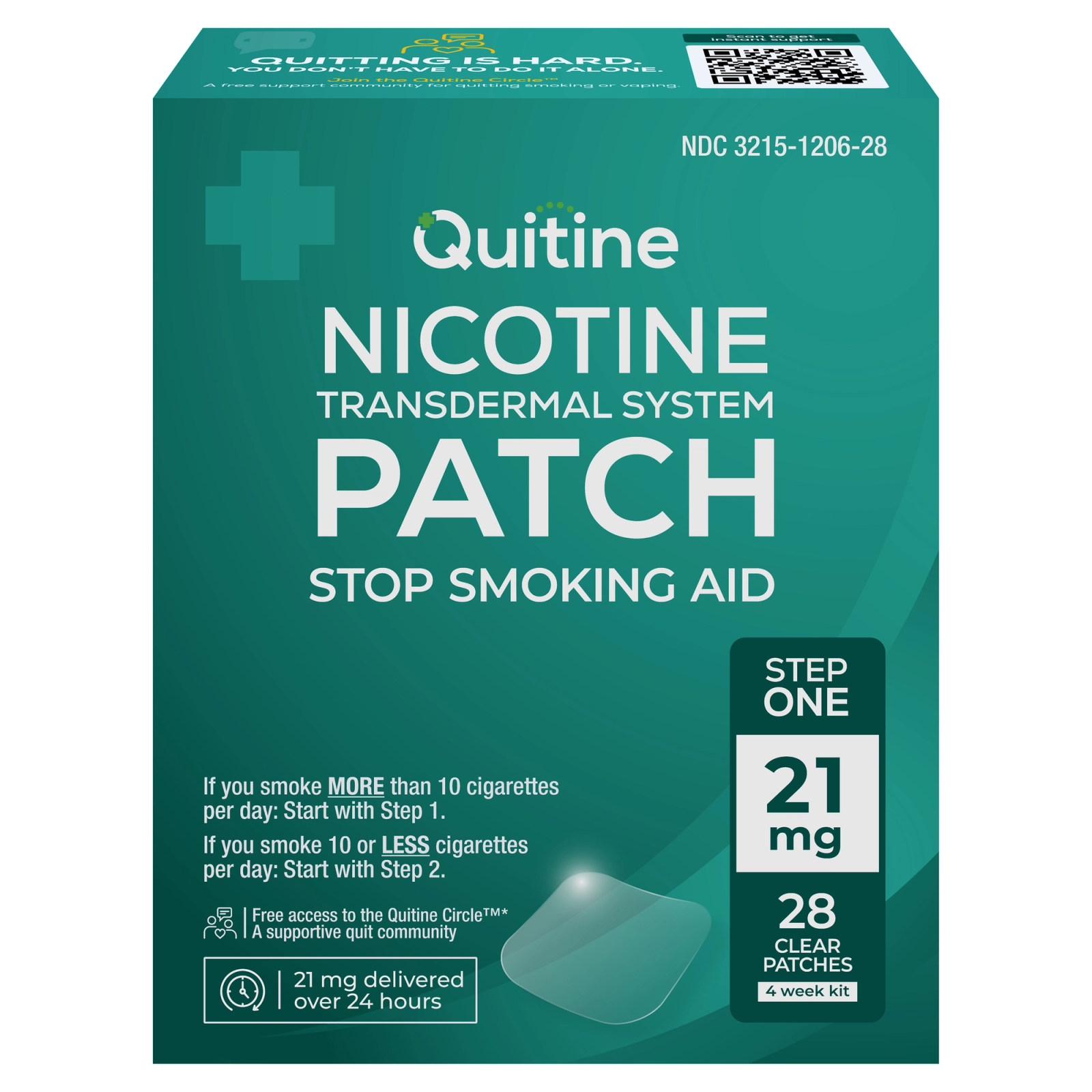
Description (Quitine Nicotine Patches Step 1 21mg 28 Pieces):
28 patches (4-week kit)
Start here if you smoke or vape within 30 minutes of waking, or if you smoke more than 10 cigarettes a day. You can combine the patches with 4 mg gum or lozenges when a craving breaks through.
Quitine nicotine patches are an FDA-regulated stop-smoking aid. Each patch delivers a steady amount of nicotine through the skin over a full 24 hours. You put one patch on in the morning on clean, dry skin. It stays in place through the day so the nicotine stays even while you work on the habits that go with smoking or vaping.
How to use
- Choose clean, dry, hairless skin on your upper arm, chest, or back. Skip lotions or oils before you apply the patch.
- Peel the liner and press the patch firmly for 10 to 20 seconds. Smooth the edges so it holds.
- Wear the patch for 24 hours. It is made for all-day use during regular activities.
- Remove the patch after 24 hours and put a new one on a different skin site. Rotate the spot each day to keep the skin comfortable.
Stop use if skin irritation occurs. See the package directions.
2) Quitine Nicotine Patches Step 2 14mg 14 Pieces
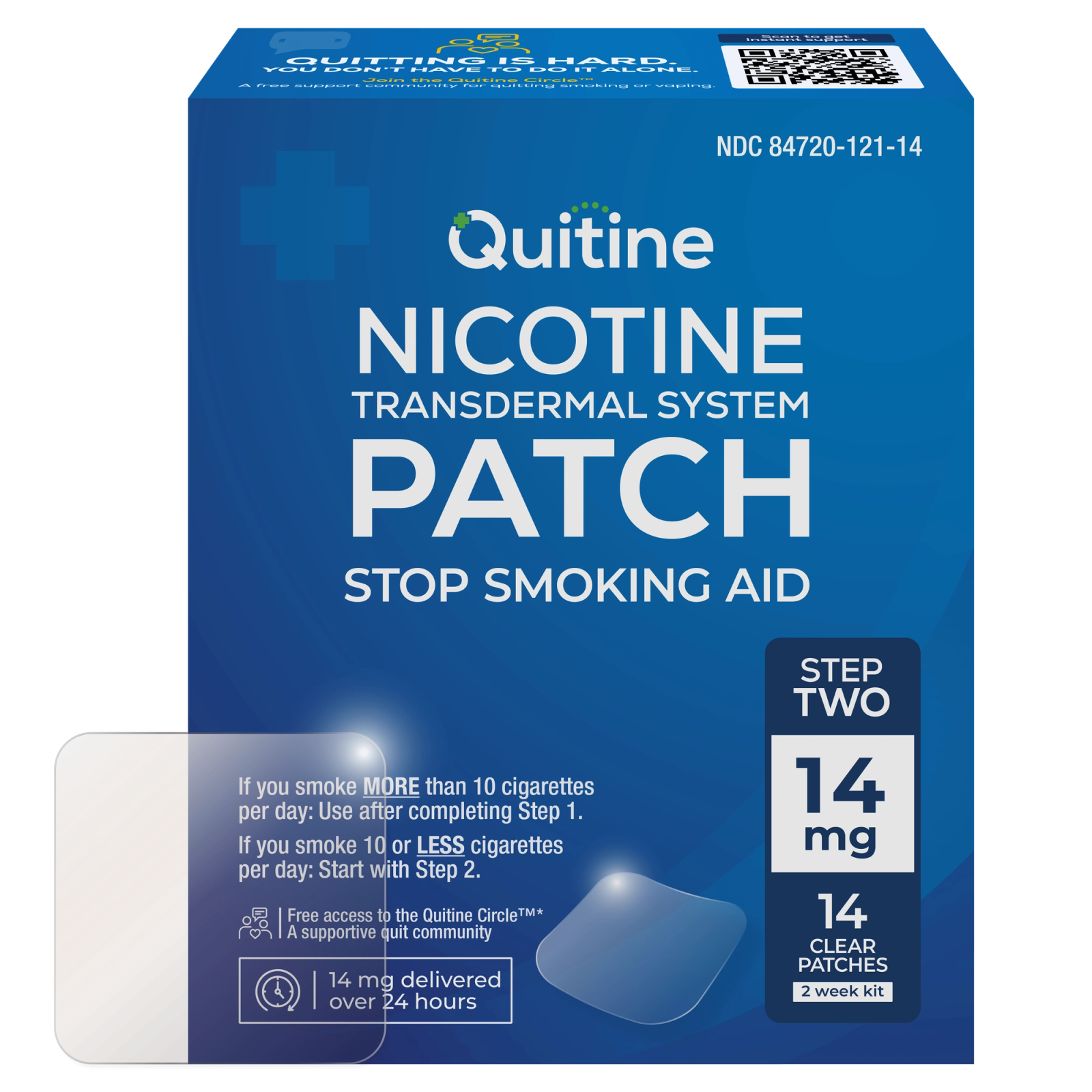
Description (Quitine Nicotine Patches Step 2 14mg 14 Pieces):
14 patches (2-week kit)
Start here if you smoke fewer than 10 cigarettes a day or vape lightly. You can also use these after you finish Step 1. Combine with 2 mg gum or lozenges if a craving breaks through.
Quitine nicotine patches are an FDA-regulated stop-smoking aid. Each patch delivers a steady amount of nicotine through the skin over 24 hours. You apply one patch each morning to clean, dry skin. It works in the background all day. There is no timing or counting required. You get consistent baseline support so you can focus on breaking the habit.
How to use
- Choose clean, dry, hairless skin on your upper arm, chest, or back. Skip lotions or oils before applying.
- Peel the liner and press the patch firmly for 10 to 20 seconds. Smooth the edges for a solid hold.
- Wear the patch for 24 hours. It is made for all-day wear, including everyday activities.
- Remove the patch after 24 hours and apply a new one to a different skin site. Rotate the site daily for comfort.
Stop use if skin irritation occurs. See the package directions for full details.
3) Quitine Nicotine Patches Step 3 7mg 14 Pieces
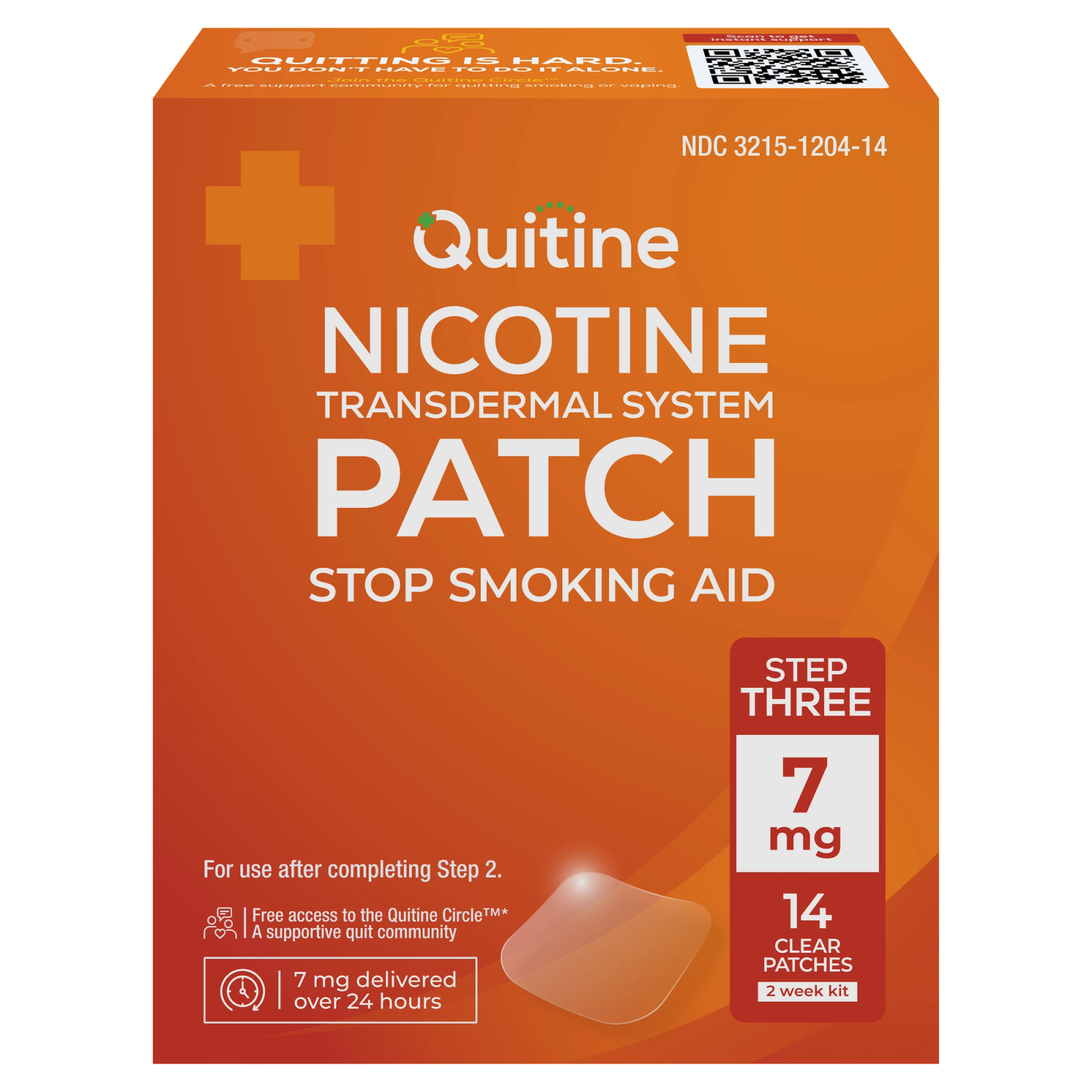
Description (Quitine Nicotine Patches Step 3 7mg 14 Pieces):
14 patches (2-week kit)
Use after you finish Step 2. This is the final taper. You can use the patches alone or add 2 mg gum or lozenges on harder days.
Quitine nicotine patches are an FDA-regulated stop-smoking aid. Each one delivers a steady amount of nicotine through the skin over 24 hours. You apply one patch every morning to clean, dry skin. The patch works in the background all day so you can focus on changing the habit itself.
How to use
- Choose a clean, dry, hairless area of skin on your upper arm, chest, or back. Skip any lotions or oils before you put the patch on.
- Peel the liner and press the patch firmly for 10 to 20 seconds. Smooth the edges so it stays in place.
- Wear the patch for a full 24 hours through everyday activities.
- After 24 hours, take it off and put a new patch on a different skin site. Rotate the location each day for comfort.
Stop use if skin irritation appears and follow the package directions.
Frequently asked questions
Abdominal skin shifts with breathing and changes in posture, which can gradually lift the edges of a nicotine patch during ordinary movement. Clothing seams or waistbands in that region often create repeated friction that shortens wear time. Upper-body sites between the neck and waist generally offer flatter surfaces with fewer daily flex points. The same clean-and-dry preparation rules apply wherever the patch is placed. Nicotine patches are designed for consistent contact on those preferred areas.
Sweat, humidity, or residual lotion left on the skin can weaken the adhesive once any edge begins to lift. Folding the used patch sticky-side inward contains any remaining nicotine and keeps it from contacting other surfaces. Applying a fresh patch to a different clean site restores the intended daily schedule without interruption. Checking the previous area for leftover adhesive residue prepares the skin for the next application. Package directions list the exact wear duration that guides replacement timing.
A 24-hour nicotine patch maintains overnight levels that can ease early-morning urges for some users. Certain people notice more vivid dreams or lighter sleep when the dose continues through the night. Switching to removal at bedtime and a new patch in the morning creates a 16-hour option that still covers the bulk of waking hours. Personal sensitivity to nighttime delivery varies and is best matched to the product labeling for the chosen strength. Either schedule keeps the overall step-down plan intact.
Skin needs time for the outer layer to settle after each 24-hour exposure before the same square is used again. When mild redness lingers longer than expected, extending the rest interval past seven days gives the area extra recovery. Tracking previous locations on a simple calendar prevents accidental overlap during multi-week courses. Nicotine patch therapy typically continues across several strength reductions, and the rotation cycle supports comfortable wear the entire way. The principle stays the same from the first day through the final lower-dose week.
FDA-regulated nicotine patches share the same core guidelines for clean, dry, hair-free skin on the upper body. Differences in adhesive composition or overall thickness can change how the material feels under clothing or during light activity. Clear, thinner designs often sit less noticeably beneath lighter fabrics compared with thicker styles. The zone between the neck and waist remains the recommended region for every product. Daily site changes protect the skin no matter which patch is selected.

Ready to Quit or Just Cut Back?
If you're reading about nicotine, vaping, or smoking habits, chances are you're already thinking about making a change.
You don't have to figure it out alone. The Quitine Circle is our free support community, open to everyone quitting smoking or vaping. No purchase is required, and you do not need to use Quitine products to participate.
Inside the Quitine Circle you'll find:
The 90-Day Quit Program to guide your step down plan
A printable Quit Program Workbook to track progress
Practical tools for managing cravings and triggers
Support from others going through the same process
Quitting works best when you combine the right tools with the right structure. That's exactly what the Quitine system is built for.
Take our short quiz to see which Quitine Quit Kit fits your nicotine habits.

Not Sure Which Product Is Right for You?
Take our 2-minute Quit Quiz and get a personalized product recommendation and 90-day system based on your smoking or vaping habits.