
Nicotine patches and medication interactions: key facts for safe quitting

Thinking about nicotine patches while taking other medicines? Many people wonder how nicotine patches and medication interactions work when they decide to quit smoking or vaping. The patch delivers steady nicotine through the skin to ease cravings and withdrawal.
Cigarettes contain chemicals in the smoke that change how your body handles certain drugs. The patch does not. Quitting itself can still shift medicine levels, and nicotine has its own effects on the body. Talk with your doctor or pharmacist about your full list of medicines before starting.
Understanding how nicotine patches work also means knowing how to use them safely. Learn about 16-hour vs 24-hour nicotine patches, nicotine patch overdose signs, nicotine patches and weight rebound, and nicotine patch absorption in hot weather.
Become Part of the Quitine Circle.
How nicotine patches work and why interactions matter
A nicotine patch sticks to clean, dry skin and slowly releases nicotine over many hours. This keeps a steady level in your blood so strong nicotine cravings stay under control. You change the patch once a day. Higher strength patches suit people who used more nicotine before. Lower strengths help as you step down.
The main reason to watch interactions is simple. Smoking changes how the liver breaks down some medicines. When you stop smoking, even while using a patch, those changes reverse. Medicine levels can rise. Nicotine itself can raise heart rate or blood pressure a bit. That may affect how some heart or blood pressure medicines work. Always share every prescription, over-the-counter product, and supplement with your healthcare provider. They can adjust doses if needed and keep you safe.
The difference between tobacco smoke and nicotine patch interactions
Tobacco smoke contains polycyclic aromatic hydrocarbons. These chemicals speed up certain liver enzymes, mainly CYP1A2. Smokers often need higher doses of medicines broken down by those enzymes. When smoking stops, the enzymes slow down. Medicine levels can climb, sometimes quickly.
Nicotine from a patch does not contain those smoke chemicals. Pure nicotine does not induce the same liver enzymes in a meaningful way. Research from sources such as the Smoking Cessation Leadership Center shows most pharmacokinetic interactions come from the smoke, not the nicotine. That is good news for patch users. You avoid the toxic chemicals while still managing withdrawal.
Nicotine can still cause pharmacodynamic effects. It stimulates the nervous system and can release stress hormones. This may change how your body responds to blood pressure medicines or stimulants. The patch itself has few direct drug-to-drug clashes, but the act of quitting requires careful monitoring of other medicines.
Common medications that may need adjustment when using nicotine patches
When people stop smoking, several medicines often need dose changes. The patch does not create the problem. The absence of smoke does. Here are key groups:
- Theophylline (used for breathing problems): Levels can rise after quitting. Doctors often lower the dose and check blood levels.
- Caffeine: Your usual coffee or tea may feel stronger. Many people cut back on caffeine to avoid jitteriness or sleep trouble.
- Clozapine and olanzapine (certain mental health medicines): Blood levels can increase. Close monitoring helps avoid side effects.
- Warfarin: Quitting can affect how the body handles this blood thinner. INR checks become more important.
- Insulin: Absorption of injected insulin can change. Blood sugar needs closer watching.
- Some tricyclic antidepressants and other CYP1A2 substrates: Levels may rise, so dose reviews help.
These shifts happen whether or not you use a nicotine patch. The patch simply helps you stay quit while your doctor fine-tunes other treatments. Information from Drugs.com and clinical monographs confirms that nicotine replacement itself rarely causes major direct clashes.
Nicotine patches and blood pressure or heart medications
Nicotine can tighten blood vessels and raise heart rate or blood pressure slightly. People on beta-blockers, ACE inhibitors, or other blood pressure medicines may notice their current dose works differently at first. Some need a small adjustment once smoking stops and nicotine levels stabilize with the patch.
Sympathomimetic drugs (ones that mimic stress hormones) and certain heart medicines also deserve attention. Your doctor may change the dose of adrenergic agonists or antagonists after you quit. The patch is generally safer than continued smoking for people with heart concerns, but medical guidance remains essential. Apply the patch to clean skin and rotate sites to avoid irritation that could affect absorption.
Interactions with antidepressants and mental health drugs
Some antidepressants and antipsychotics are affected mainly by the loss of smoke-induced enzyme activity. Fluvoxamine, duloxetine, and certain older antidepressants may need lower doses after quitting. Bupropion is sometimes used with nicotine patches to support quitting. The combination can raise blood pressure in some people, so monitoring is wise.
Nicotine’s mild stimulating effect can also reduce the sedating feel of some benzodiazepines. That does not mean the combination is unsafe, but awareness helps. Always tell your prescriber you are starting nicotine replacement products so they can watch for changes in mood or side effects.
Asthma, diabetes, and other conditions
People with asthma or COPD who take theophylline need extra care when they stop smoking. Levels can climb and cause side effects if the dose stays the same. Insulin users should check blood sugar more often because quitting can improve insulin sensitivity and change absorption. Hormonal contraceptives already carry higher heart risks for smokers. Quitting with a patch removes the smoke-related risk, which is a clear benefit.
Disease interactions listed for nicotine include caution in people with recent heart events, uncontrolled high blood pressure, or certain skin conditions that make patch wear difficult. None of these rule out the patch for most people, but they call for medical advice first.
Combining nicotine patches with other quit aids
Many people get better results by pairing a long-acting patch with short-acting options for sudden cravings. Nicotine gum or nicotine lozenges work well this way. The combination is considered safe by public health sources and does not create major new interactions. The patch handles baseline needs while the oral nicotine products cover breakthrough urges.
Prescription options like varenicline or bupropion are sometimes added too. Combined use with a patch can increase certain side effects such as nausea or blood pressure changes, so a doctor should guide the plan. Structured step-down quit nicotine programs that move from higher to lower patch strengths help the body adjust gradually.
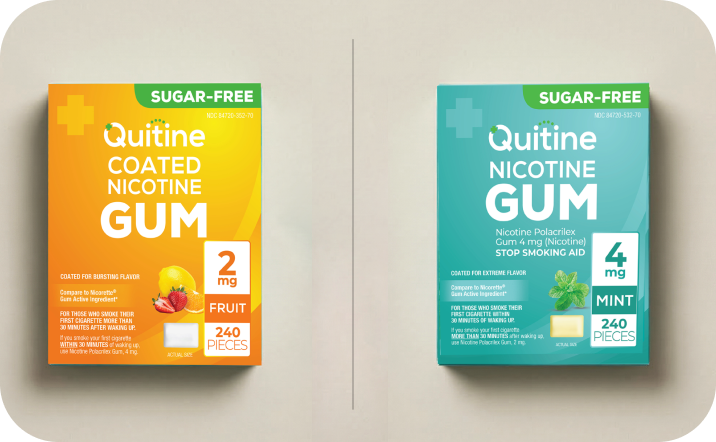
How Nicotine Gum Works
Nicotine gum delivers nicotine through the lining of your mouth as you chew. Unlike regular chewing gum, you need to use a specific "chew and park" technique to get the full effect.
Best for habit-triggered cravings
If you smoke or vape in response to specific triggers, after meals, during breaks, or when stressed, nicotine gum gives you something to do with your hands and mouth, which can help replace the physical habit.
Which Should You Choose?
The best choice depends on your personal preferences and smoking habits. If you miss the hand-to-mouth motion of smoking, gum might feel more natural. If you prefer something completely discreet, lozenges are a great option.Many people find that combining products, like using patches for all-day coverage and gum or lozenges for breakthrough cravings, gives them the best results.
Product Comparison
| Best For | Strength | |
|---|---|---|
| Nicotine Gum | Habit-triggered cravings | 2mg / 4mg |
| Nicotine Lozenges | Discreet craving relief | 2mg / 4mg |
| Nicotine Patches | All-day support | 21mg / 14mg / 7mg |
Tips for safe use of nicotine patches while on medications
- Tell every healthcare provider and pharmacist about the patch and all other medicines.
- Keep a written list of everything you take and update it when doses change.
- Start the patch on a planned quit day and follow the strength schedule that matches your past use.
- Watch for new symptoms in the first weeks after quitting, such as stronger medicine effects or unusual tiredness.
- Apply the patch to clean, dry, hairless skin and change the nicotine patch placement each day.
- Avoid cutting patches. Use the full strength as directed.
- If you take medicines that affect skin blood flow, ask whether absorption of nicotine could change.
These steps keep the focus on safety while the patch supports your quit effort. A personalized quit plan based on how much nicotine you used before works best.
Quality nicotine patches that support a full quit plan
Quitine offers pharmacist-developed nicotine patches in stepped strengths that deliver steady nicotine over 24 hours. The clear, thin design stays discreet and holds well. Step 1 provides higher strength for people who used more nicotine daily. Later steps lower the dose as the body adapts. These patches pair easily with nicotine gum or nicotine lozenges for cravings.
The full collection of nicotine replacement products gives flexibility while keeping the focus on finishing. Free tools such as the Quitine Circle and the personalized quit smoking quiz help users stay consistent until they reach zero nicotine. The 30-day money-back guarantee removes financial pressure during the early stages.
Discover Quitine and our best NRT products
Why Quitine?
Meet Mark and Oliver, the founders of Quitine. Mark has more than 40 years of experience as a pharmacist. His father’s long struggle with smoking shaped the work he does today. He has spent his career helping people leave cigarettes and vapes behind. Oliver brings deep experience in ecommerce, branding, product development, marketing, and logistics. Together they built Quitine to offer clear, practical nicotine replacement therapies that fit real daily life.
Our NRT products
Our pharmacist-formulated NRT products are made to support you while you change the habits that go with smoking or vaping.
Combination therapy for higher quit success
Research shows that combining a long-acting nicotine patch with a faster-acting form of NRT such as nicotine gum or nicotine lozenges can raise the chance of quitting smoking by 17 to 37 percent compared with using one product alone. At Quitine our nicotine patches deliver a steady amount of nicotine through the skin all day. Our nicotine gum and lozenges give you something to use when a craving hits. This dual approach, called NRT combination therapy, gives you more flexibility so you can stay comfortable while you change the habit.
Accessible pricing
We believe quitting should be within reach for everyone. We keep our therapies priced so more people can start without cutting corners on quality.
Personalized support
Quitting is personal, and so is the way we work with you. From the customer service team to the way each product is formulated, we stay with you through the process.
The Quitine Circle
The Quitine Circle is our free 90-day guided quit program and private support community. It is open to anyone quitting smoking or vaping and requires no purchase. It follows the same structured, pharmacist-backed approach that shapes our NRT products. You get short training modules, a practical quit workbook, weekly live Q and A sessions, and a moderated space with other people who are quitting, so you do not have to rely on willpower alone.
Discover which NRT is right for you
Not sure which product suits you best? Take our personalized quiz to find the NRT product that fits your needs. Take the Quiz
Real quitters. Real success.
See what our customers are saying about Quitine nicotine replacement therapy. Read Case Studies
The Quitine guarantee
Your satisfaction is covered. Learn more about our 30-day money-back promise. Learn More About Our Guarantee
Discover our best nicotine patches - Quitine
1) Quitine Nicotine Patches Step 1 21mg 28 Pieces
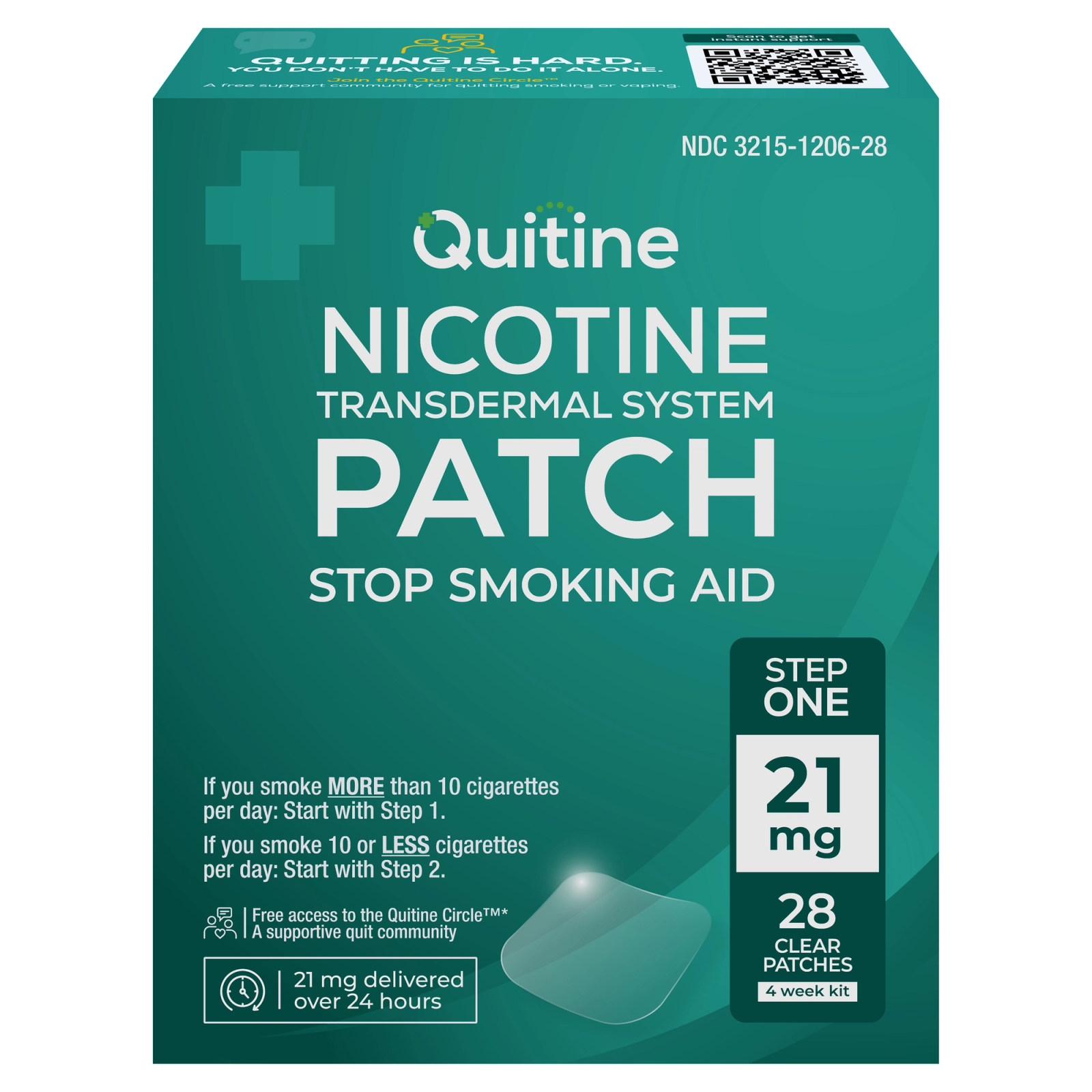
Description (Quitine Nicotine Patches Step 1 21mg 28 Pieces):
28 patches (4-week kit)
Start here if you smoke or vape within 30 minutes of waking, or if you smoke more than 10 cigarettes a day. You can combine the patches with 4 mg gum or lozenges when a craving breaks through.
Quitine nicotine patches are an FDA-regulated stop-smoking aid. Each patch delivers a steady amount of nicotine through the skin over a full 24 hours. You put one patch on in the morning on clean, dry skin. It stays in place through the day so the nicotine stays even while you work on the habits that go with smoking or vaping.
How to use
- Choose clean, dry, hairless skin on your upper arm, chest, or back. Skip lotions or oils before you apply the patch.
- Peel the liner and press the patch firmly for 10 to 20 seconds. Smooth the edges so it holds.
- Wear the patch for 24 hours. It is made for all-day use during regular activities.
- Remove the patch after 24 hours and put a new one on a different skin site. Rotate the spot each day to keep the skin comfortable.
Stop use if skin irritation occurs. See the package directions.
2) Quitine Nicotine Patches Step 2 14mg 14 Pieces
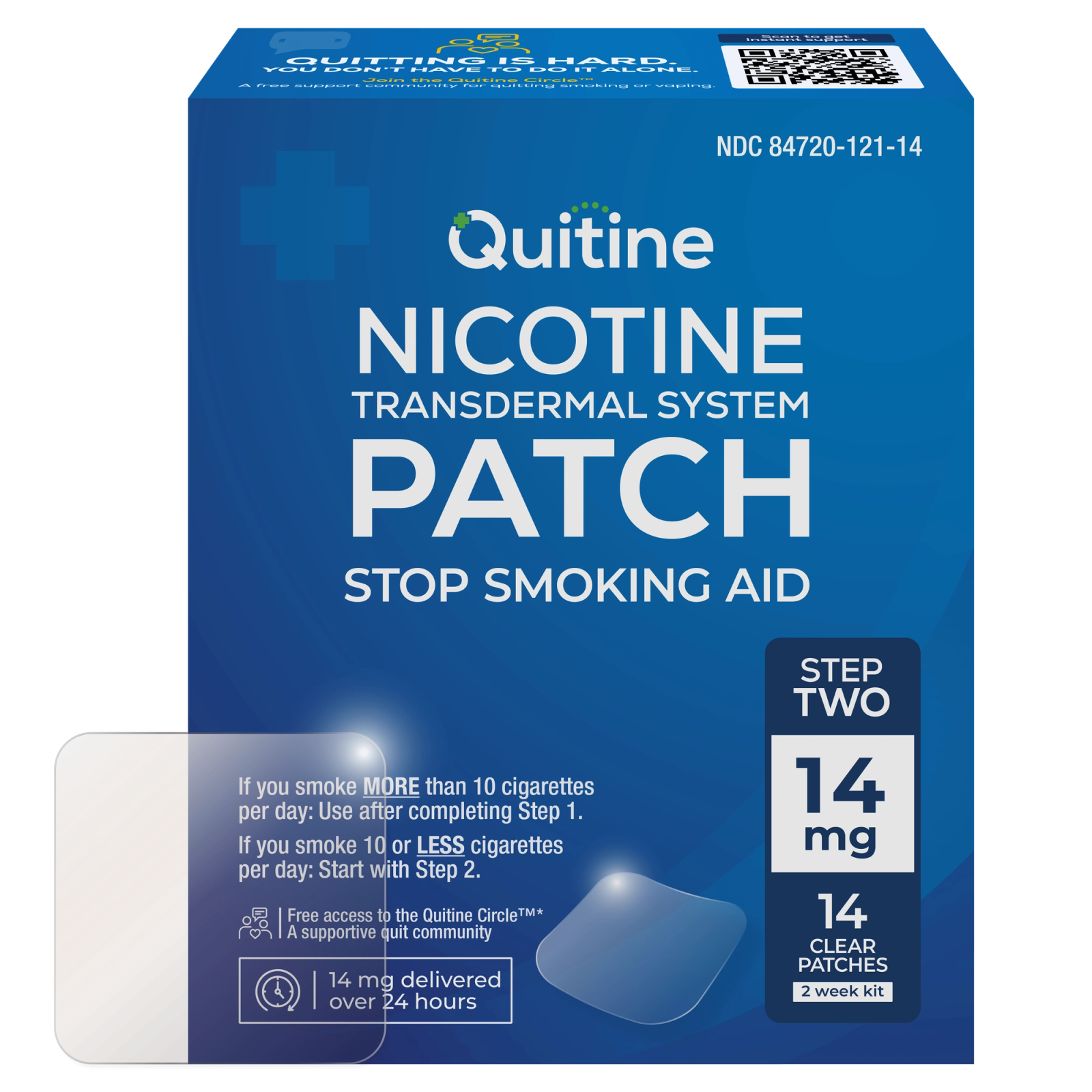
Description (Quitine Nicotine Patches Step 2 14mg 14 Pieces):
14 patches (2-week kit)
Start here if you smoke fewer than 10 cigarettes a day or vape lightly. You can also use these after you finish Step 1. Combine with 2 mg gum or lozenges if a craving breaks through.
Quitine nicotine patches are an FDA-regulated stop-smoking aid. Each patch delivers a steady amount of nicotine through the skin over 24 hours. You apply one patch each morning to clean, dry skin. It works in the background all day. There is no timing or counting required. You get consistent baseline support so you can focus on breaking the habit.
How to use
- Choose clean, dry, hairless skin on your upper arm, chest, or back. Skip lotions or oils before applying.
- Peel the liner and press the patch firmly for 10 to 20 seconds. Smooth the edges for a solid hold.
- Wear the patch for 24 hours. It is made for all-day wear, including everyday activities.
- Remove the patch after 24 hours and apply a new one to a different skin site. Rotate the site daily for comfort.
Stop use if skin irritation occurs. See the package directions for full details.
3) Quitine Nicotine Patches Step 3 7mg 14 Pieces
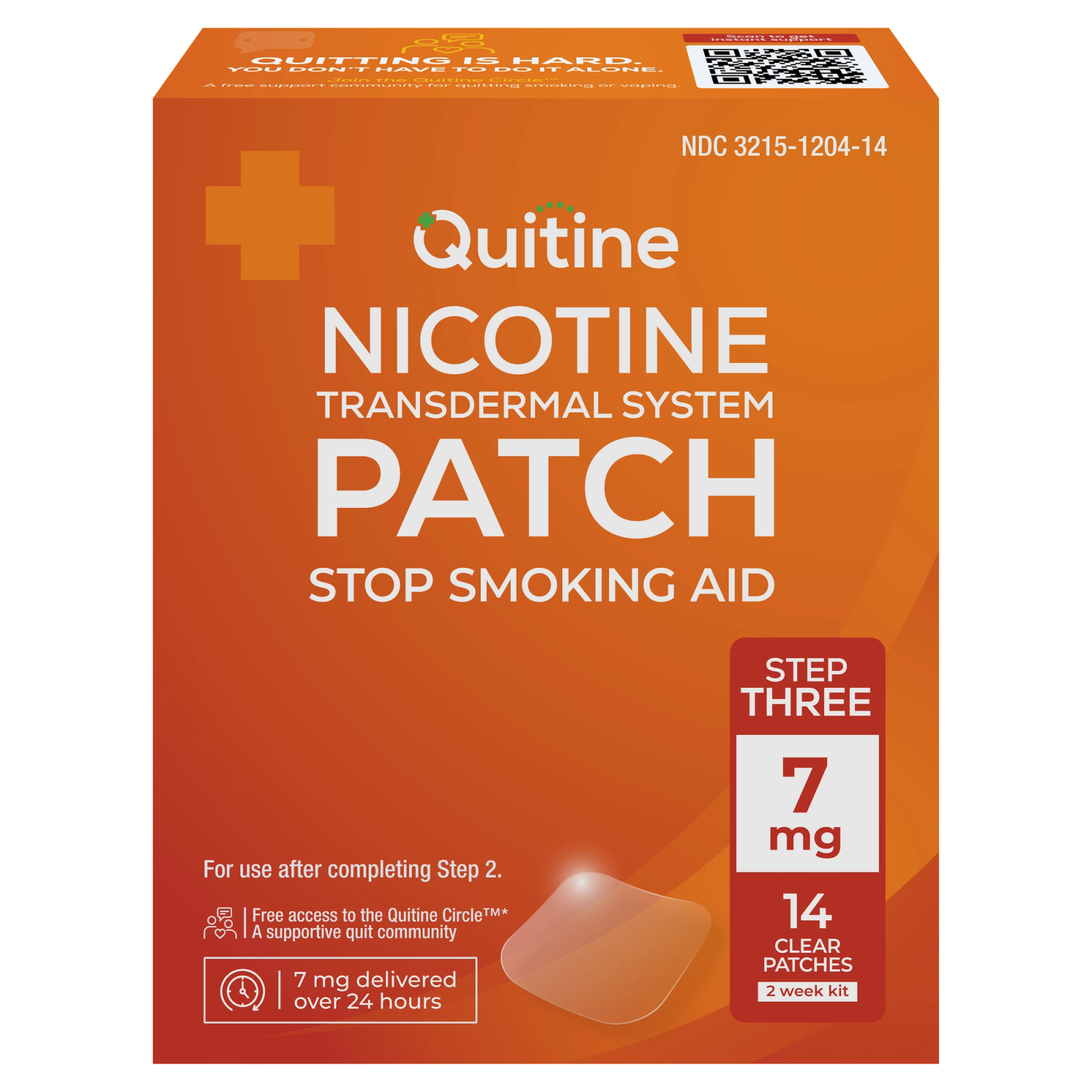
Description (Quitine Nicotine Patches Step 3 7mg 14 Pieces):
14 patches (2-week kit)
Use after you finish Step 2. This is the final taper. You can use the patches alone or add 2 mg gum or lozenges on harder days.
Quitine nicotine patches are an FDA-regulated stop-smoking aid. Each one delivers a steady amount of nicotine through the skin over 24 hours. You apply one patch every morning to clean, dry skin. The patch works in the background all day so you can focus on changing the habit itself.
How to use
- Choose a clean, dry, hairless area of skin on your upper arm, chest, or back. Skip any lotions or oils before you put the patch on.
- Peel the liner and press the patch firmly for 10 to 20 seconds. Smooth the edges so it stays in place.
- Wear the patch for a full 24 hours through everyday activities.
- After 24 hours, take it off and put a new patch on a different skin site. Rotate the location each day for comfort.
Stop use if skin irritation appears and follow the package directions.
FAQ
Can I use a nicotine patch if I take blood pressure medicine?
Yes, many people do. Nicotine can have mild effects on heart rate and blood pressure, so your doctor may watch those numbers closely at the start. Quitting smoking usually improves long-term heart health. Share your full medicine list so any needed dose changes happen safely.
Do nicotine patches interact with antidepressants?
Direct clashes are uncommon. The bigger issue is that stopping smoking can raise levels of some antidepressants broken down by liver enzymes. Your prescriber may lower the dose of certain medicines after you quit. Combinations with bupropion are used by some, but blood pressure checks help.
What happens to my other medicines when I stop smoking with a patch?
Levels of medicines affected by smoke can rise once the smoke is gone. Common examples include theophylline, caffeine, and some mental health drugs. The patch itself does not cause those rises. Regular follow-up lets your doctor adjust doses as your body settles into the new routine.
Is it safe to combine nicotine patches with gum or lozenges while on other medications?
Yes. Many quit nicotine plans use a patch for steady coverage and gum or lozenges for sudden urges. This approach does not create major new interactions with other medicines. It often improves success rates. Confirm the plan with your pharmacist if you take several prescriptions.
Should I tell my doctor before starting nicotine patches?
Absolutely. Bring a complete list of prescriptions, over-the-counter products, vitamins, and supplements. Your doctor can check for any needed changes and confirm the right starting strength. This simple step keeps the focus on a safe and successful quit.
Start the 90-Day Quit Challenge.
Read Also:

Ready to Quit or Just Cut Back?
If you're reading about nicotine, vaping, or smoking habits, chances are you're already thinking about making a change.
You don't have to figure it out alone. The Quitine Circle is our free support community, open to everyone quitting smoking or vaping. No purchase is required, and you do not need to use Quitine products to participate.
Inside the Quitine Circle you'll find:
The 90-Day Quit Program to guide your step down plan
A printable Quit Program Workbook to track progress
Practical tools for managing cravings and triggers
Support from others going through the same process
Quitting works best when you combine the right tools with the right structure. That's exactly what the Quitine system is built for.
Take our short quiz to see which Quitine Quit Kit fits your nicotine habits.

Not Sure Which Product Is Right for You?
Take our 2-minute Quit Quiz and get a personalized product recommendation and 90-day system based on your smoking or vaping habits.