Nicotine patches and sweating: does it change the dosage?

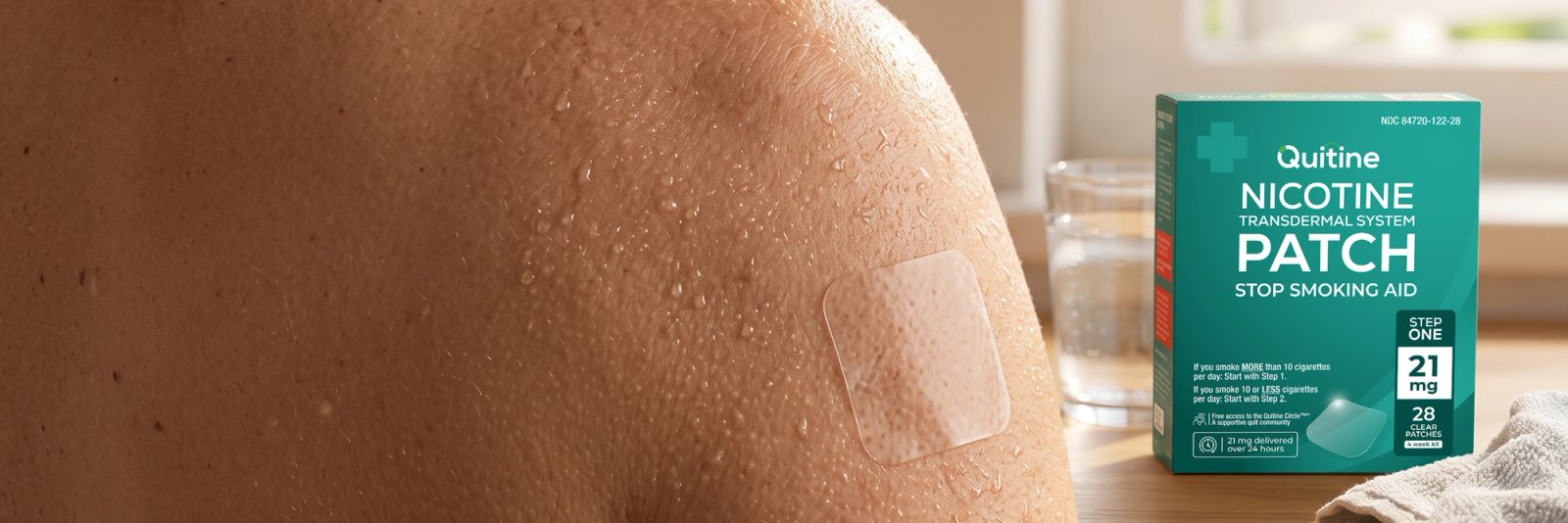
Sweating on a nicotine patch is a common daily problem. A hot commute, a workout, or a fever can loosen the adhesive. Extra heat can also change how the patch feels on your skin. That is still not a reason to change the printed dose on your own.
You keep the same step strength and fix the wear problem instead. A daily nicotine patch gives all-day baseline coverage. Nicotine gum or a nicotine lozenge can cover a sudden craving if heat or activity leaves you feeling off.
Sweating and heat can affect how a nicotine patch feels throughout the day, alongside other factors such as nicotine patches and alcohol consumption, nicotine patches and mental fatigue, and nicotine patches and emotional regulation.
How Nicotine Gum Works
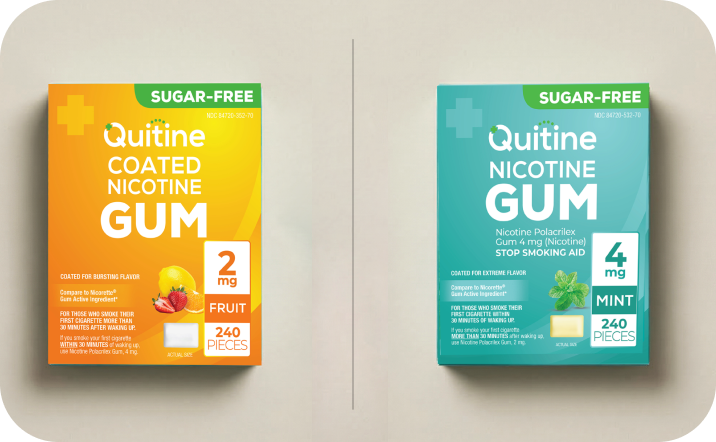
Nicotine gum delivers nicotine through the lining of your mouth as you chew. Unlike regular chewing gum, you need to use a specific "chew and park" technique to get the full effect.
Best for habit-triggered cravings
If you smoke or vape in response to specific triggers, after meals, during breaks, or when stressed, nicotine gum gives you something to do with your hands and mouth, which can help replace the physical habit.
Which Should You Choose?
The best choice depends on your personal preferences and smoking habits. If you miss the hand-to-mouth motion of smoking, gum might feel more natural. If you prefer something completely discreet, lozenges are a great option.Many people find that combining products, like using patches for all-day coverage and gum or lozenges for breakthrough cravings, gives them the best results.
Product Comparison
| Best For | Strength | |
|---|---|---|
| Nicotine Gum | Habit-triggered cravings | 2mg / 4mg |
| Nicotine Lozenges | Discreet craving relief | 2mg / 4mg |
| Nicotine Patches | All-day support | 21mg / 14mg / 7mg |
Does sweating change your nicotine patch dosage?
No. Sweat does not rewrite the milligram number printed on the box. A 21 mg, 14 mg, or 7 mg nicotine patch is still that patch. You do not cut it, stack two patches, or skip ahead to a lower step just because you got damp.
Sweat can change two other things: how well the patch stays stuck, and how the patch feels when the skin under it is hot. Those are wear problems. They are not a reason to invent a new dose. The printed step still follows how much you smoked or vaped, not how much you perspired that afternoon.
If the patch peels, replace it with a fresh one of the same strength and keep your schedule. If heat makes you feel sick, dizzy, or shaky, take the patch off and cool down. That is a safety pause. It is not a new nicotine patch dosing plan.
People often mix these two problems together. The patch sliding off can look like the dose failed. Feeling flushed after a sauna can look like the dose is too high. Both can happen. Neither one is a reason to change the labeled step without guidance from a clinician or pharmacist.
How heat, not sweat itself, can change how a patch feels
Sweat is water and salt on the skin. Nicotine patches and heat is the bigger driver of how the patch behaves.
A nicotine patch is built to release a steady amount through the skin at normal skin temperature. When the skin under the patch gets hotter, blood vessels near the surface open wider. More blood flowing under the patch can pull nicotine into the body faster than the patch was designed to deliver.
Lab work on nicotine transdermal systems found that raising skin surface temperature from a normal range into the low 40s °C range can raise average nicotine movement through the skin, with the biggest jump early after heat is applied. Separate permeation work also found higher nicotine movement through skin at the higher temperature, even when the patch itself did not dump a huge extra amount into a dish. The skin barrier opened more. Flag for Mark: this heat-and-flux language is based on published permeation work. Keep it conservative and do not treat it as a Quitine-specific performance claim.
Everyday heat sources that can do this include:
- A long, hot shower or bath
- A heating pad, electric blanket, or hot water bottle over the patch
- A sauna, hot tub, or steam room
- Direct sun baking the patch site
- A high fever
- Hard exercise that heats the skin under the patch
Light sweat from a short walk is not the same as a heating pad taped over the site. Mild activity can raise plasma nicotine a little because skin blood flow rises. That bump is usually small. Heavy, local heat is the riskier pattern.
This is why product leaflets tell you to apply the patch to clean, dry skin and to wait after a hot shower. Skin can keep sweating after you towel off. Wet, warm skin is a poor surface for adhesive and a faster path for nicotine.
Sweating from nicotine is not the same as sweat lifting the patch
Two different sweat stories show up with nicotine patches. Mixing them up leads people to change the dose when they should not.
The first story is adhesion. Sweat sits between the adhesive and the skin. Edges lift. The patch folds. You lose contact time. That can lower the nicotine you actually get that day, even if the box still says 21 mg.
The second story is how nicotine can feel on the body. Nicotine can widen skin blood vessels and trigger sweat glands. Package information for several nicotine patches lists increased sweating as an uncommon effect. Cold sweats, with nausea, dizziness, or a racing heart, can also show up when too much nicotine is in the system at once. That cluster is a nicotine overdose warning. It is not a reason to keep working out with the same patch still on.
Quitting can also change how hot you feel. After you stop smoking, circulation and temperature control start to recover. Some people feel warmer or notice night sweats while they adjust. That is not proof the patch strength is wrong.
Use the company you keep around the sweat:
- Sweat plus a peeling edge: adhesion problem
- Sweat plus nausea, drooling, stomach pain, tremor, or confusion: too much nicotine, remove the patch
- Sweat plus only a damp shirt and a patch that is still flat: keep the same dose
- Cold sweat with vomiting or weakness: take the patch off and get medical help if symptoms are strong
Wash the site with water after you remove a patch (no soap on the skin under the old patch). Nicotine can keep entering the blood for a while after removal because some of it is already in the skin.
How to keep a nicotine patch on when you sweat
The nicotine patch dose on the box only reaches you if the patch stays flat on skin. Water itself does not ruin most modern patches. The CDC notes you can shower or bathe while wearing one. Heat, long soaks, towel drag, and pooled sweat are what lift the edges.
Practical steps that protect the same dose:
- Wash the site with mild soap and water. Pat it fully dry. Wait if you just stepped out of a hot shower.
- Place the patch on the upper arm, shoulder, upper chest, or back. Skip the belt line, bra strap, and spots that rub.
- Press the whole patch for about 10 seconds, especially the corners.
- Rotate the site every day. Give each spot about a week before you use it again. Rotation also cuts redness that people blame on too high a dose.
- After a shower or workout, pat the area dry. Do not rub the patch with the towel. Press the edges again.
- If an edge lifts, press it back. If most of the patch is off, put on a new patch of the same strength and stay on your original change time.
- Do not put lotion, oil, or sunscreen under the patch. Those block the glue.
If you are a heavy sweater, pick a slightly less damp zone. The inner upper arm or high chest often holds better than the lower back on a hot day. Tight sports tape over a nicotine patch is not a default plan. Ask a pharmacist before you cover a patch, because extra occlusion can change how the adhesive and heat behave. A patch that falls off at the gym does not mean you need a stronger step. It means the next patch needs a drier site and less friction.
When extra heat means you pause, not a new printed strength
People often ask if they should drop from a 21 mg step 1 nicotine patch to a 14 mg step 2 nicotine patch because they felt awful after a hot yoga class. That is the wrong lever.
Drop the heat first. Keep the step that matches your habit.
Take the patch off and cool the skin if you have:
- Sudden nausea or vomiting
- A pounding or irregular heartbeat
- Cold, clammy sweat
- A bad headache, ringing ears, or blurred vision
- Weakness or confusion
Those signs can mean the body took in nicotine faster than planned. A fever works the same way. Tell a clinician you are wearing a nicotine patch if you spike a high temperature.
Do not:
- Cut the patch to make a half dose
- Wear two patches to make up for one that fell off in sweat
- Park a heating pad on the site to help it absorb when cravings hit
- Change steps in the middle of a hot week just because you feel flushed
Standard step-down still follows time and cigarette or vape history. People who smoked more than about 10 cigarettes a day often start on a 21 mg nicotine patch. Lighter use often starts on 14 mg. Then you move to 7 mg on the schedule on the pack or in your smoking quit plan. Heat does not rewrite that calendar.
If vivid dreams are the only complaint, many people take the patch off at night and put a new one on in the morning. That is a wear-time tweak, not a milligram change, and it is a common fix listed by public health guidance.
Workouts, hot weather, and cravings that feel like a dose problem
A hard session can do several things at once. Skin under the patch gets warmer. The patch may slip. Habit cues still shout for a cigarette at the usual time, like after the workout or with coffee. That mix can feel like the patch stopped working, or like the patch is too strong. Split the problem.
If you feel overstimulated (sick, shaky, too hot), cool down and check the patch site. If you feel under-covered (irritable, focused only on smoking), the baseline patch may still be right, and you may need a short-acting nicotine product for that spike.
This is where combination nicotine replacement therapy helps without touching the printed patch strength. The patch holds a steady floor. Nicotine gum or a nicotine lozenge covers the craving that breaks through after exercise, a meal, or a stressful call.
Public health advice supports using the patch with gum or a lozenge for strong urges. The patch is the all-day layer. The nicotine oral product is the one you reach for when a nicotine craving shows up. You do not raise the patch milligrams to chase a 10-minute craving.
A simple way to think about a sweaty day:
- Patch still stuck and you feel fine: stay on the same step
- Patch peeled: replace same strength
- You feel nicotine-sick: remove patch, cool off
- You feel a sharp craving only: keep the patch, add gum or a lozenge
People comparing formats often look at nicotine lozenges vs. the nicotine patch because one is all-day and one is on demand. Sweat does not retire either tool. It just means the all-day tool needs dry skin.
What a full day on a patch looks like when you perspire
Morning: apply one patch to dry skin after you wash. Press it on. Wash your hands.
Day: you can shower. Keep the water reasonable. After you dry off, check the corners.
Work or gym: place the patch where a strap will not peel it. If you overheat, do not add a second patch. Drink water. If you feel unwell, remove it.
Evening: if sleep is rough, take it off before bed. Put a new one on at the usual time tomorrow. Used patches still hold nicotine. Fold them sticky sides together and keep them away from kids and pets.
Through the week: rotate the nicotine patch placement. Do not chase a better dose by moving to a sweaty crease. Move to a clean, dry, low-rub spot.
If you are building a longer plan, a 90-day quit smoking structure keeps the patch as the base layer and oral NRT as the rescue layer. Sweat days fit inside that plan. They do not reset it.
Some people also ask about patches during fasting windows or other routines that change how the body feels. The same rule holds. The patch dose follows the label and your habit, not the extra sensation that shows up when you are hot, hungry, or both.
Quitine patches when heat and sweat are part of real life
Quitine makes pharmacist-founded nicotine patches meant to sit in the background while you deal with the day you actually have, including heat and movement.
The line uses a clear step-down: Step 1 at 21 mg for heavier daily use, Step 2 at 14 mg, and Step 3 at 7 mg. Each patch is a thin, clear film that you wear on the skin over 24 hours. You put one on clean, dry skin and leave it. The adhesive is built to stay put through normal activity, including a regular shower.
If you are not sure which step matches your habit, the quit quiz places you on a 90-day path instead of guessing from how much you sweat in July. A full NRT product collection keeps patches, gum, and lozenges in one place so the baseline and the rescue product come from the same plan.
Support sits next to the box. The Quitine Circle is a free community with tracking and live help. Purchases are backed by the 30-day money-back guarantee. None of that changes the science of heat and skin. It does stop you from standing in a pharmacy aisle trying to treat perspiration with the wrong step.
Discover Quitine and our best NRT products
Why Quitine?
Meet Mark and Oliver, the founders of Quitine. Mark has more than 40 years of experience as a pharmacist. His father’s long struggle with smoking shaped the work he does today. He has spent his career helping people leave cigarettes and vapes behind. Oliver brings deep experience in ecommerce, branding, product development, marketing, and logistics. Together they built Quitine to offer clear, practical nicotine replacement therapies that fit real daily life.
Our NRT products
Our pharmacist-formulated NRT products are made to support you while you change the habits that go with smoking or vaping.
Combination therapy for higher quit success
Research shows that combining a long-acting nicotine patch with a faster-acting form of NRT such as nicotine gum or nicotine lozenges can raise the chance of quitting smoking by 17 to 37 percent compared with using one product alone. At Quitine our nicotine patches deliver a steady amount of nicotine through the skin all day. Our nicotine gum and lozenges give you something to use when a craving hits. This dual approach, called NRT combination therapy, gives you more flexibility so you can stay comfortable while you change the habit.
Accessible pricing
We believe quitting should be within reach for everyone. We keep our therapies priced so more people can start without cutting corners on quality.
Personalized support
Quitting is personal, and so is the way we work with you. From the customer service team to the way each product is formulated, we stay with you through the process.
The Quitine Circle
The Quitine Circle is our free 90-day guided quit program and private support community. It is open to anyone quitting smoking or vaping and requires no purchase. It follows the same structured, pharmacist-backed approach that shapes our NRT products. You get short training modules, a practical quit workbook, weekly live Q and A sessions, and a moderated space with other people who are quitting, so you do not have to rely on willpower alone.
Discover which NRT is right for you
Not sure which product suits you best? Take our personalized quiz to find the NRT product that fits your needs. Take the Quiz
Real quitters. Real success.
See what our customers are saying about Quitine nicotine replacement therapy. Read Case Studies
The Quitine guarantee
Your satisfaction is covered. Learn more about our 30-day money-back promise. Learn More About Our Guarantee
Discover our best nicotine patches - Quitine
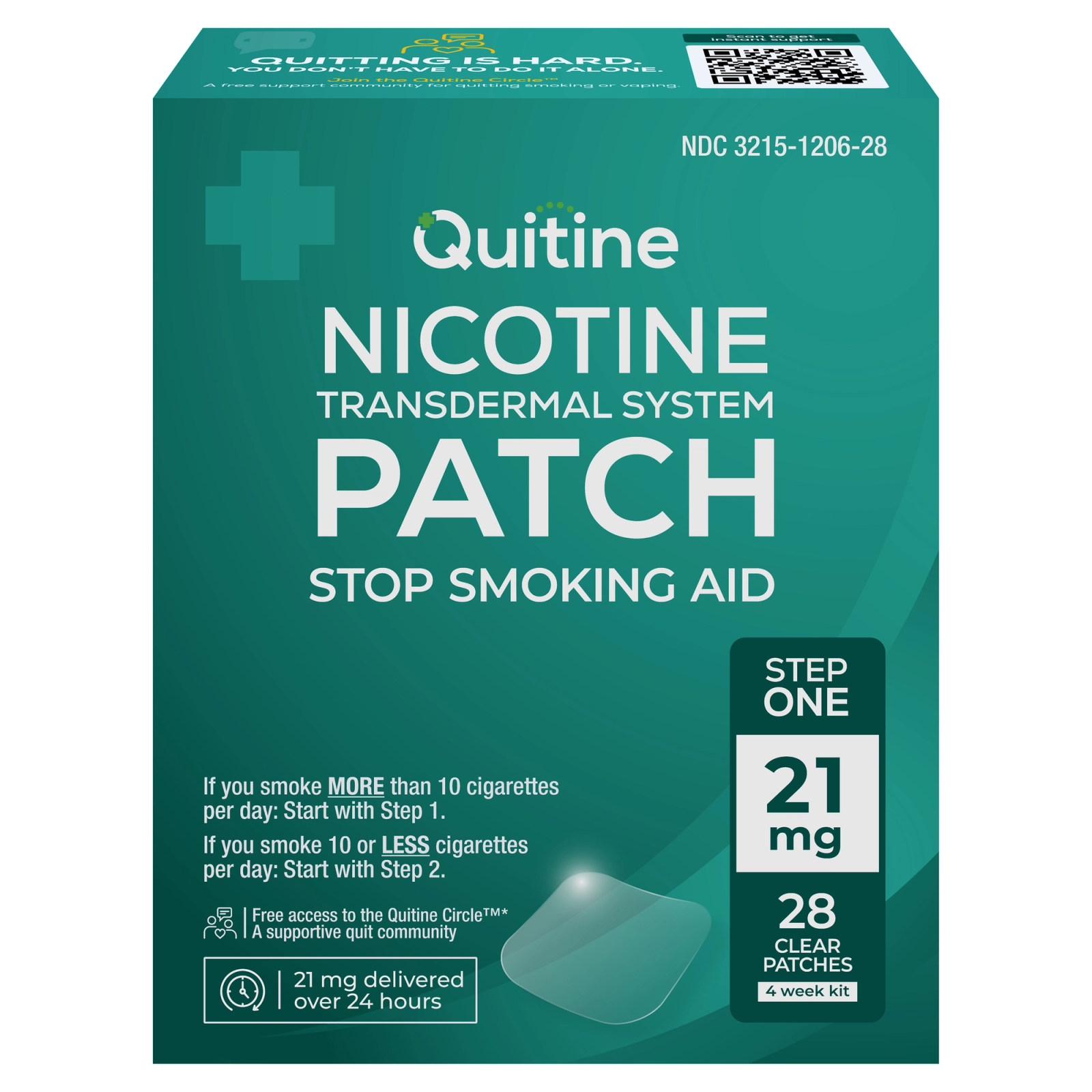
1) Quitine Nicotine Patches Step 1 21mg 28 Pieces
Description (Quitine Nicotine Patches Step 1 21mg 28 Pieces):
28 patches (4-week kit)
Start here if you smoke or vape within 30 minutes of waking, or if you smoke more than 10 cigarettes a day. You can combine the patches with 4 mg gum or lozenges when a craving breaks through.
Quitine nicotine patches are an FDA-regulated stop-smoking aid. Each patch delivers a steady amount of nicotine through the skin over a full 24 hours. You put one patch on in the morning on clean, dry skin. It stays in place through the day so the nicotine stays even while you work on the habits that go with smoking or vaping.
How to use
- Choose clean, dry, hairless skin on your upper arm, chest, or back. Skip lotions or oils before you apply the patch.
- Peel the liner and press the patch firmly for 10 to 20 seconds. Smooth the edges so it holds.
- Wear the patch for 24 hours. It is made for all-day use during regular activities.
- Remove the patch after 24 hours and put a new one on a different skin site. Rotate the spot each day to keep the skin comfortable.
Stop use if skin irritation occurs. See the package directions.
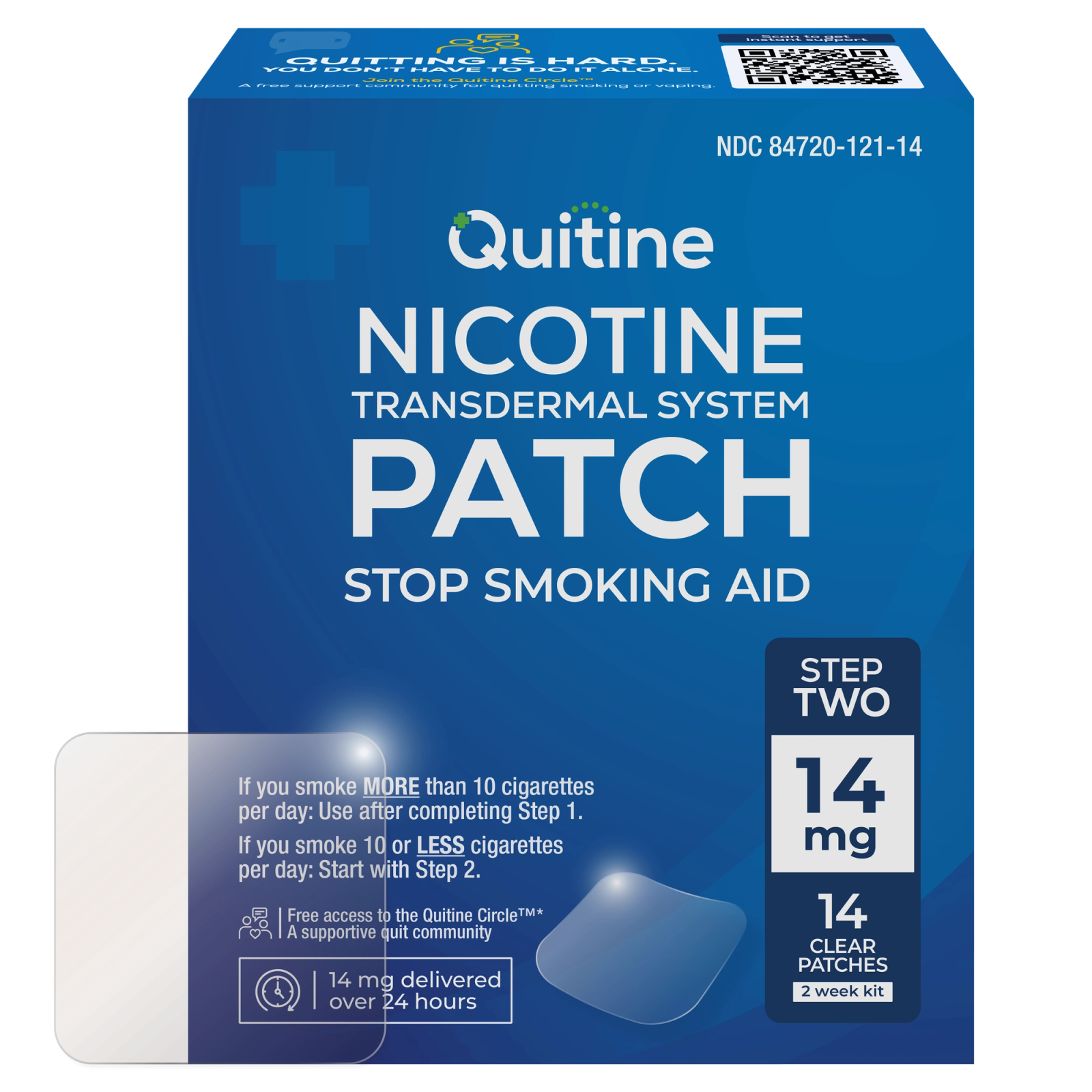
2) Quitine Nicotine Patches Step 2 14mg 14 Pieces
Description (Quitine Nicotine Patches Step 2 14mg 14 Pieces):
14 patches (2-week kit)
Start here if you smoke fewer than 10 cigarettes a day or vape lightly. You can also use these after you finish Step 1. Combine with 2 mg gum or lozenges if a craving breaks through.
Quitine nicotine patches are an FDA-regulated stop-smoking aid. Each patch delivers a steady amount of nicotine through the skin over 24 hours. You apply one patch each morning to clean, dry skin. It works in the background all day. There is no timing or counting required. You get consistent baseline support so you can focus on breaking the habit.
How to use
- Choose clean, dry, hairless skin on your upper arm, chest, or back. Skip lotions or oils before applying.
- Peel the liner and press the patch firmly for 10 to 20 seconds. Smooth the edges for a solid hold.
- Wear the patch for 24 hours. It is made for all-day wear, including everyday activities.
- Remove the patch after 24 hours and apply a new one to a different skin site. Rotate the site daily for comfort.
Stop use if skin irritation occurs. See the package directions for full details.
3) Quitine Nicotine Patches Step 3 7mg 14 Pieces
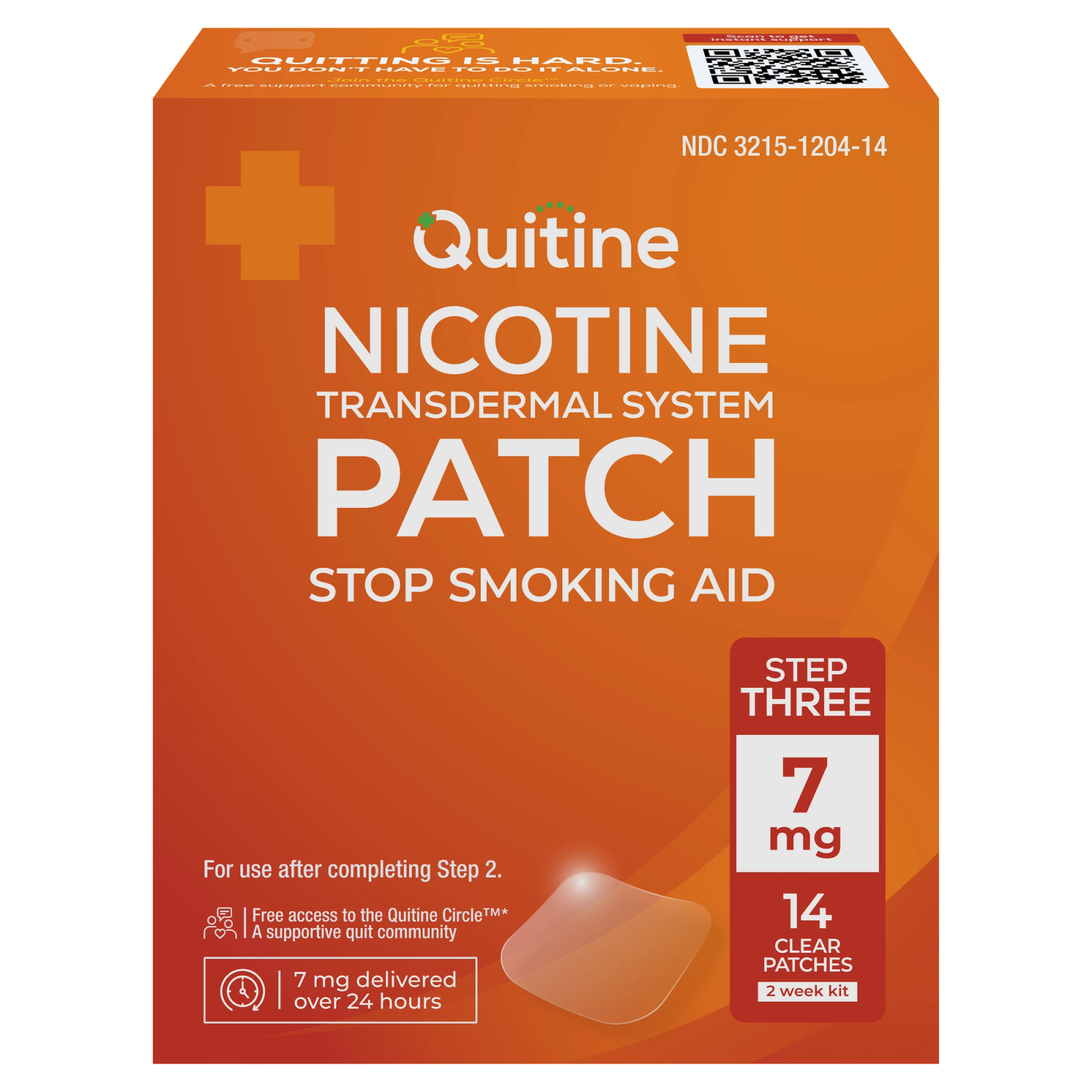
Description (Quitine Nicotine Patches Step 3 7mg 14 Pieces):
14 patches (2-week kit)
Use after you finish Step 2. This is the final taper. You can use the patches alone or add 2 mg gum or lozenges on harder days.
Quitine nicotine patches are an FDA-regulated stop-smoking aid. Each one delivers a steady amount of nicotine through the skin over 24 hours. You apply one patch every morning to clean, dry skin. The patch works in the background all day so you can focus on changing the habit itself.
How to use
- Choose a clean, dry, hairless area of skin on your upper arm, chest, or back. Skip any lotions or oils before you put the patch on.
- Peel the liner and press the patch firmly for 10 to 20 seconds. Smooth the edges so it stays in place.
- Wear the patch for a full 24 hours through everyday activities.
- After 24 hours, take it off and put a new patch on a different skin site. Rotate the location each day for comfort.
Stop use if skin irritation appears and follow the package directions.
FAQ
Can I shower or work out with a nicotine patch on?
Yes. Most patches tolerate a normal shower and daily movement. Apply to dry skin, press the edges, and pat the area dry after water. Long hot soaks, saunas, and heavy towel rubbing are more likely to lift the patch than a short warm shower. If it peels off, put on a new patch of the same strength and keep your usual change time.
Should I use a lower dose patch in summer?
Not because of the season alone. Summer heat can change how the patch feels for a short time and can weaken the glue. That is a reason to keep the patch off heating sources and on a dry site. It is not a reason to skip from 21 mg to 7 mg in week one. Change steps when your program says to, or when a clinician tells you the current strength is too strong even in cool conditions.
Why do I smell something odd when I sweat on the patch?
Some people notice a sharp or earthy smell when they perspire with a patch on. Sweat can mix with nicotine and adhesive on the skin surface. It is uncomfortable for some users, but it is not a signal to raise or cut the printed dose. Wash around the site, rotate placement, and replace a patch that has been sitting in heavy sweat if the edges are already loose.
Is night sweating a sign the patch dose is too high?
Not by itself. Quitting smoking can change sleep and body temperature. The patch can also disturb sleep or cause vivid dreams if you wear it overnight. If night sweats come with nausea, a racing heart, or feeling poisoned, remove the patch. If the only issue is odd dreams, many people take the patch off at bedtime and apply a new one in the morning without changing milligrams.
Can I tape a sweating patch back down and keep the same dose?
Pressing a clean, mostly attached patch back down is fine. Soaking-wet skin under a half-off patch is not a good seal. Replace that patch with a fresh one at the same strength. Do not add tape as a habit unless a pharmacist says your product can be covered. Extra covering can trap heat, which is the thing that changes how the patch behaves on skin.
Get Your Personalized Quit Plan.
Read Also:

Ready to Quit or Just Cut Back?
If you're reading about nicotine, vaping, or smoking habits, chances are you're already thinking about making a change.
You don't have to figure it out alone. The Quitine Circle is our free support community, open to everyone quitting smoking or vaping. No purchase is required, and you do not need to use Quitine products to participate.
Inside the Quitine Circle you'll find:
The 90-Day Quit Program to guide your step down plan
A printable Quit Program Workbook to track progress
Practical tools for managing cravings and triggers
Support from others going through the same process
Quitting works best when you combine the right tools with the right structure. That's exactly what the Quitine system is built for.
Take our short quiz to see which Quitine Quit Kit fits your nicotine habits.

Not Sure Which Product Is Right for You?
Take our 2-minute Quit Quiz and get a personalized product recommendation and 90-day system based on your smoking or vaping habits.