
Nicotine patches and habit-replacement psychology for a lasting quit

Quitting asks for two jobs from you at once. A nicotine patch keeps a steady dose in your system so withdrawal stays quieter. That quieter baseline gives you room to change the daily script that still points toward a cigarette or a vape.
Coffee, driving, stress, and the pause after a meal still call for the old move. The patch does not do that move for you. You still need a new action for each cue. A 90-day quit program pairs the patch with oral support and a step-down plan so both jobs get attention. Use nicotine patches with habit-replacement support built for real daily cues.
Understanding what a nicotine patch is helps explain its role in managing withdrawal, while nicotine patch compliance and relapse prevention strategies remain key factors in long-term smoking cessation.
Join the 90-Day Quit Challenge.
Why smoking and vaping are two habits, not one
Your body still expects nicotine. Your day still expects the script.
Nicotine binds to receptors in the brain and releases dopamine. Over time the brain expects that hit on a schedule. When the hit stops, nicotine withdrawal can show up as restlessness, fog, irritability, and a sharp urge. That is the chemical side.
The learned side is separate. Lighting up with coffee, stepping outside after a meeting, holding something between two fingers, drawing a breath on a balcony. Those acts get glued to places, people, times, and feelings. After enough repeats, the cue fires the action before you decide. Researchers call this conditioning. You can feel it as “I need a smoke” even when a patch has already covered the nicotine.
The CDC explains that a nicotine patch is meant to control withdrawal through the day, and that a faster oral nicotine product can sit beside it when a strong urge hits. That split matches how the two habits work. The patch steadies the chemistry. The nicotine replacement action rewrites the script.
Treat only the nicotine, and the coffee cup can still feel unfinished. Swap only the ritual and go cold turkey, and withdrawal shouts over the new plan. Both layers need a job.
What nicotine patches change, and what they leave alone
A patch sits on clean, dry skin and lets nicotine pass through slowly. Blood levels rise over a few hours and stay fairly even for the wear time. A cigarette or many vapes do the opposite. They spike, then drop. The drop is part of why the next use feels urgent.
Because the patch is slow and passive, it does not copy the hand-to-mouth act, the puff, or the two-minute pause. People who want wear-and-forget coverage like the once-a-day rhythm. People whose nicotine craving is also a fidget often need a second tool.
Work from the University of Oxford on patch preloading (wearing a patch before the quit day) points to a useful idea. When nicotine is already in the system, a cigarette can feel less rewarding. The learned loop loses some of its punch. You still have to change the loop. The patch just stops the chemistry from yanking you back every hour.
Skin redness, odd dreams on a 24-hour patch, and mild headache can show up for some users. Rotate the nicotine patch placement. If sleep feels off, some people remove the patch at night and put a new one on in the morning. Do not cut a patch. If you have a skin condition, heart questions, or you are pregnant, talk with a clinician first.
Habit-replacement psychology in everyday language
Habit-replacement psychology is simple. You do not only stop a behavior. You give the cue a new ending.
A habit starts with a trigger. Coffee. The car. A stress text. The end of a meal. Then comes the old act: a cigarette, a vape, or the walk to the door. Then comes the feeling you were chasing. A pause. A hit of nicotine. A way to handle nerves. A reason to step away.
The patch covers a large share of the nicotine reward. It does not cover the pause, the hands, or the social beat. That is why “just wear the patch” often fails after the first calm week. The cue is still there. The brain still wants a closing move.
Useful replacements start in the same second as the old act. They use the same body part when they can (hands, mouth, or breath). They end with a small, honest reward such as fresh air, a sip, a check-in, or a short walk.
Chewing nicotine gum after lunch is a matched replacement. The mouth is busy. The chew-and-park method gives you something to do while the meal cue gets a new finish. A nicotine lozenge does the same job with less chewing. It sits between cheek and gum and dissolves over about 20 to 30 minutes, which helps in meetings or on calls.
Identity work helps too. Many people who quit without a formal quit smoking program talk to themselves as a non-smoker in the moment of the cue, not after a perfect month. “I am a person who walks after dinner” beats “I am trying not to smoke.” The patch makes that sentence easier to keep because the body is not in free fall.
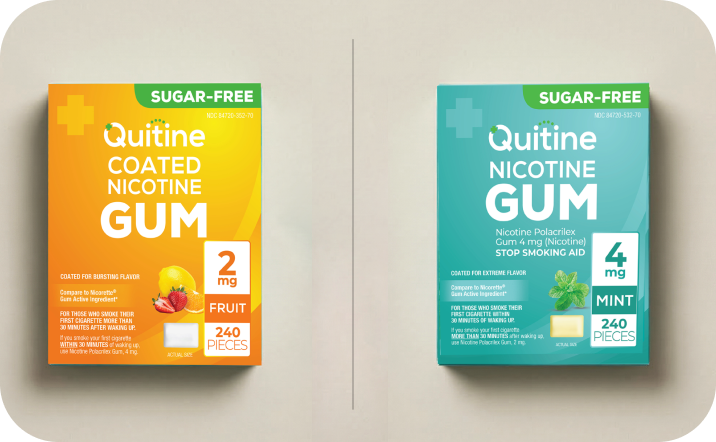
How Nicotine Gum Works
Nicotine gum delivers nicotine through the lining of your mouth as you chew. Unlike regular chewing gum, you need to use a specific "chew and park" technique to get the full effect.
Best for habit-triggered cravings
If you smoke or vape in response to specific triggers, after meals, during breaks, or when stressed, nicotine gum gives you something to do with your hands and mouth, which can help replace the physical habit.
Which Should You Choose?
The best choice depends on your personal preferences and smoking habits. If you miss the hand-to-mouth motion of smoking, gum might feel more natural. If you prefer something completely discreet, lozenges are a great option.Many people find that combining products, like using patches for all-day coverage and gum or lozenges for breakthrough cravings, gives them the best results.
Product Comparison
| Best For | Strength | |
|---|---|---|
| Nicotine Gum | Habit-triggered cravings | 2mg / 4mg |
| Nicotine Lozenges | Discreet craving relief | 2mg / 4mg |
| Nicotine Patches | All-day support | 21mg / 14mg / 7mg |
Why combination therapy fits habit psychology better than a patch alone
The patch is a base layer. Oral NRT is a cue tool. A nicotine patch step system (21mg, then 14mg, then 7mg) keeps the day even while you practice new endings. Lozenges help when you need to stay quiet. Gum helps when you need something to do with your mouth. Many people use both styles across different cues.
A simple quit smoking quiz can point to a starting strength. If you smoke more than ten cigarettes a day, or you reach for nicotine within thirty minutes of waking, Step 1 is the usual start. Pair it with 4mg oral NRT for breakthrough urges. Later steps drop the patch dose and often drop oral strength to 2mg.
Side-by-side notes on nicotine gum vs. the nicotine patch are useful if you are choosing a first oral form. Gum wins for the oral habit because you chew and park it. The patch wins for consistency because you apply it once and leave it.
How to wear the patch so the psychology can work
Technique is part of the habit.
Put the patch on at the same hour each morning. Use clean, dry skin between the neck and waist. The upper arm, chest, or back work well. Press for 10 to 20 seconds. Change the site each day. Give a used spot about a week before you return to it. Shower with it on if it is a 24-hour patch. Fold used patches in half before you throw them away, away from kids and pets.
The same hour matters more than people think. The brain likes a clock. A sloppy patch routine recreates the old chaos in a new form. Use oral NRT at the cue, not after you have already bargained with yourself for ten minutes. The replacement has to beat the old script to the finish line.
If a patch peels, press it back. If it will not stay, replace it and note the spot. Lotion, hair, and folds of skin are common reasons it lifts. A full set of nicotine replacement products in the house beats a single box you ration. Running out midweek is how many people return to the old cue.
A 90-day replacement plan that matches how habits fade
Habits do not vanish on quit day. They fade when the new ending is repeated in the same places.
A structured window helps.
Phase 1, stabilize. Wear the higher-strength patch every day. Use oral NRT at known cues even if the urge feels small. You are teaching the cue a new finish, not waiting for heroics. Clear ashtrays, leftover pods, and the jacket that still smells like smoke.
Phase 2, step down. Move to the mid-strength patch. Keep the same nicotine replacements. Some cues will feel quieter. Keep doing the new act anyway. This is where people drop the plan because they “feel fine.” Feeling fine is the training period, not the finish.
Phase 3, lock the new script. Lowest patch strength. Oral NRT only on hard days for many people. Test the old danger rooms on purpose: a long drive, a dinner out, a stressful call. Walk in with a plan, not a hope.
The structured 90-day quit smoking program on the site walks through this pacing in more detail. The point is time. Your brain needs repeats in real settings, not one perfect Monday.
How Quitine pairs nicotine patches with habit work
Quitine was built by a pharmacist who spent decades watching people buy a box of patches, feel better for a week, then slide back into the same coffee-and-smoke loop. The box was only half the story. The ritual kept running.
A Step 1 21mg nicotine patch covers the baseline. It goes on once in the morning and holds nicotine through the day. That is the chemical half. The habit is planned on purpose. When a craving still breaks through after a meal or during a work break, nicotine gum or nicotine lozenges give your hands and mouth a job. That pairing sits at the center of the brand’s 90-day structure.
Discover Quitine and our best NRT products
Why Quitine?
Meet Mark and Oliver, the founders of Quitine. Mark has more than 40 years of experience as a pharmacist. His father’s long struggle with smoking shaped the work he does today. He has spent his career helping people leave cigarettes and vapes behind. Oliver brings deep experience in ecommerce, branding, product development, marketing, and logistics. Together they built Quitine to offer clear, practical nicotine replacement therapies that fit real daily life.
Our NRT products
Our pharmacist-formulated NRT products are made to support you while you change the habits that go with smoking or vaping.
Combination therapy for higher quit success
Research shows that combining a long-acting nicotine patch with a faster-acting form of NRT such as nicotine gum or nicotine lozenges can raise the chance of quitting smoking by 17 to 37 percent compared with using one product alone. At Quitine our nicotine patches deliver a steady amount of nicotine through the skin all day. Our nicotine gum and lozenges give you something to use when a craving hits. This dual approach, called NRT combination therapy, gives you more flexibility so you can stay comfortable while you change the habit.
Accessible pricing
We believe quitting should be within reach for everyone. We keep our therapies priced so more people can start without cutting corners on quality.
Personalized support
Quitting is personal, and so is the way we work with you. From the customer service team to the way each product is formulated, we stay with you through the process.
The Quitine Circle
The Quitine Circle is our free 90-day guided quit program and private support community. It is open to anyone quitting smoking or vaping and requires no purchase. It follows the same structured, pharmacist-backed approach that shapes our NRT products. You get short training modules, a practical quit workbook, weekly live Q and A sessions, and a moderated space with other people who are quitting, so you do not have to rely on willpower alone.
Discover which NRT is right for you
Not sure which product suits you best? Take our personalized quiz to find the NRT product that fits your needs. Take the Quiz
Real quitters. Real success.
See what our customers are saying about Quitine nicotine replacement therapy. Read Case Studies
The Quitine guarantee
Your satisfaction is covered. Learn more about our 30-day money-back promise. Learn More About Our Guarantee
Discover our best nicotine patches - Quitine
1) Quitine Nicotine Patches Step 1 21mg 28 Pieces
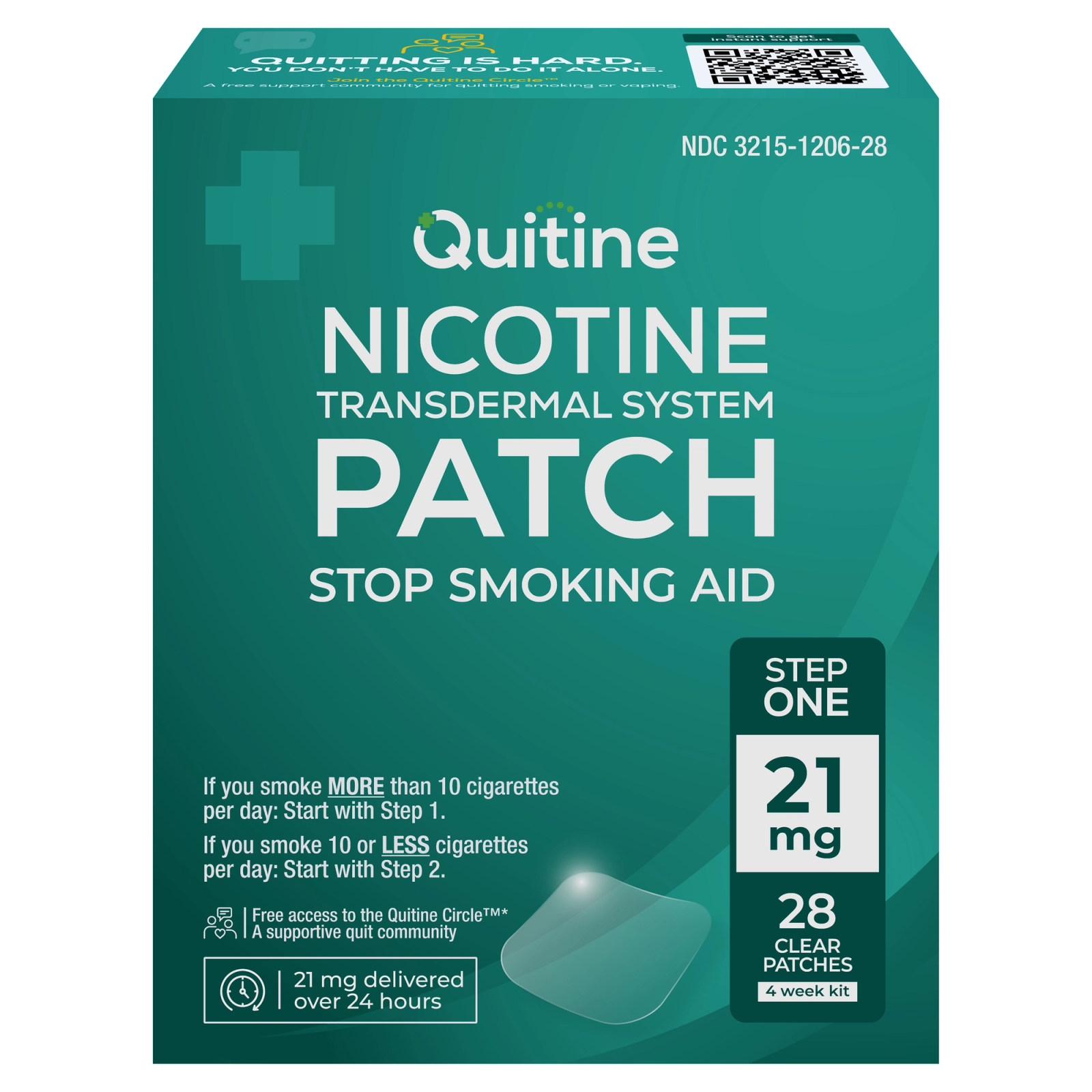
Description (Quitine Nicotine Patches Step 1 21mg 28 Pieces):
28 patches (4-week kit)
Start here if you smoke or vape within 30 minutes of waking, or if you smoke more than 10 cigarettes a day. You can combine the patches with 4 mg gum or lozenges when a craving breaks through.
Quitine nicotine patches are an FDA-regulated stop-smoking aid. Each patch delivers a steady amount of nicotine through the skin over a full 24 hours. You put one patch on in the morning on clean, dry skin. It stays in place through the day so the nicotine stays even while you work on the habits that go with smoking or vaping.
How to use
- Choose clean, dry, hairless skin on your upper arm, chest, or back. Skip lotions or oils before you apply the patch.
- Peel the liner and press the patch firmly for 10 to 20 seconds. Smooth the edges so it holds.
- Wear the patch for 24 hours. It is made for all-day use during regular activities.
- Remove the patch after 24 hours and put a new one on a different skin site. Rotate the spot each day to keep the skin comfortable.
Stop use if skin irritation occurs. See the package directions.
2) Quitine Nicotine Patches Step 2 14mg 14 Pieces
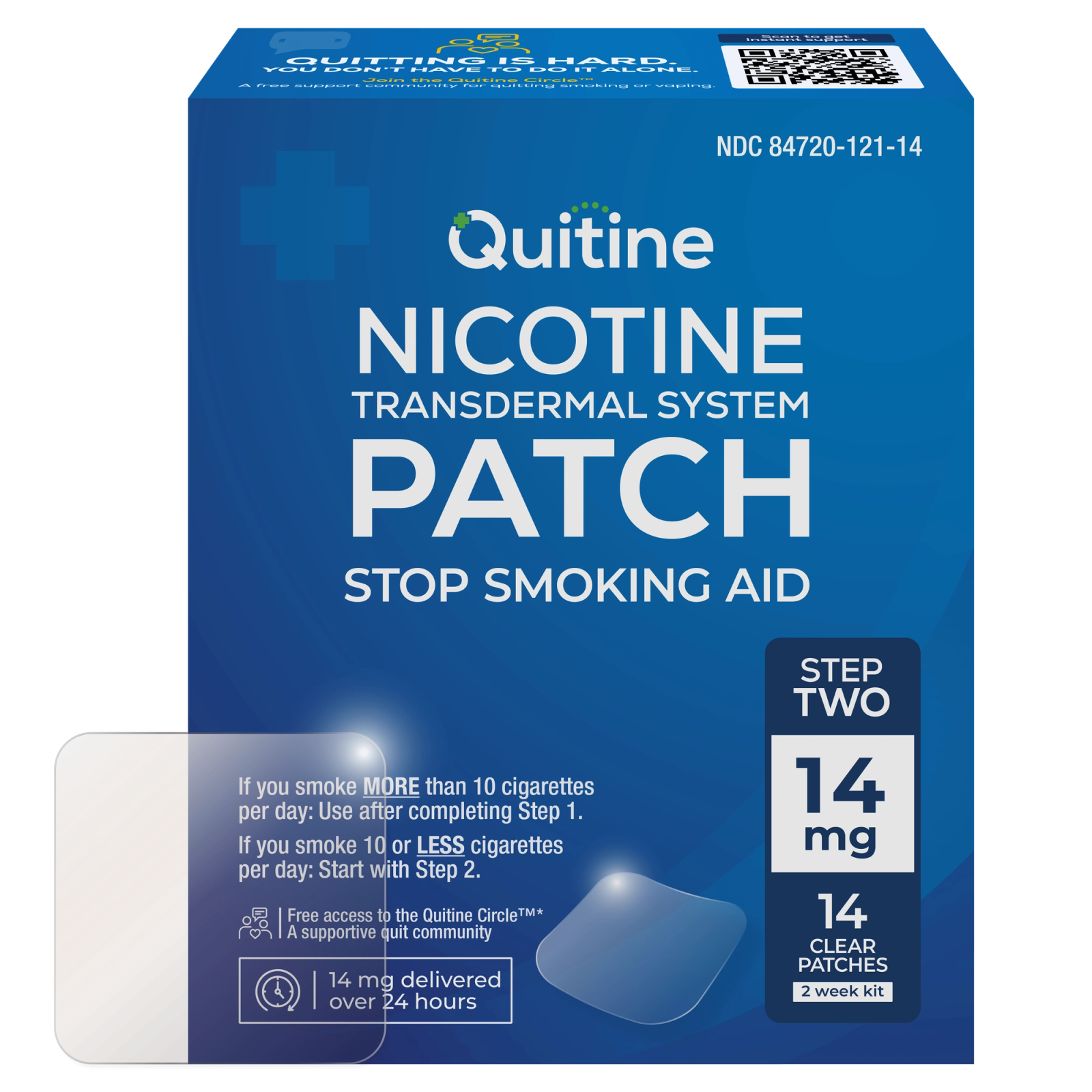
Description (Quitine Nicotine Patches Step 2 14mg 14 Pieces):
14 patches (2-week kit)
Start here if you smoke fewer than 10 cigarettes a day or vape lightly. You can also use these after you finish Step 1. Combine with 2 mg gum or lozenges if a craving breaks through.
Quitine nicotine patches are an FDA-regulated stop-smoking aid. Each patch delivers a steady amount of nicotine through the skin over 24 hours. You apply one patch each morning to clean, dry skin. It works in the background all day. There is no timing or counting required. You get consistent baseline support so you can focus on breaking the habit.
How to use
- Choose clean, dry, hairless skin on your upper arm, chest, or back. Skip lotions or oils before applying.
- Peel the liner and press the patch firmly for 10 to 20 seconds. Smooth the edges for a solid hold.
- Wear the patch for 24 hours. It is made for all-day wear, including everyday activities.
- Remove the patch after 24 hours and apply a new one to a different skin site. Rotate the site daily for comfort.
Stop use if skin irritation occurs. See the package directions for full details.
3) Quitine Nicotine Patches Step 3 7mg 14 Pieces
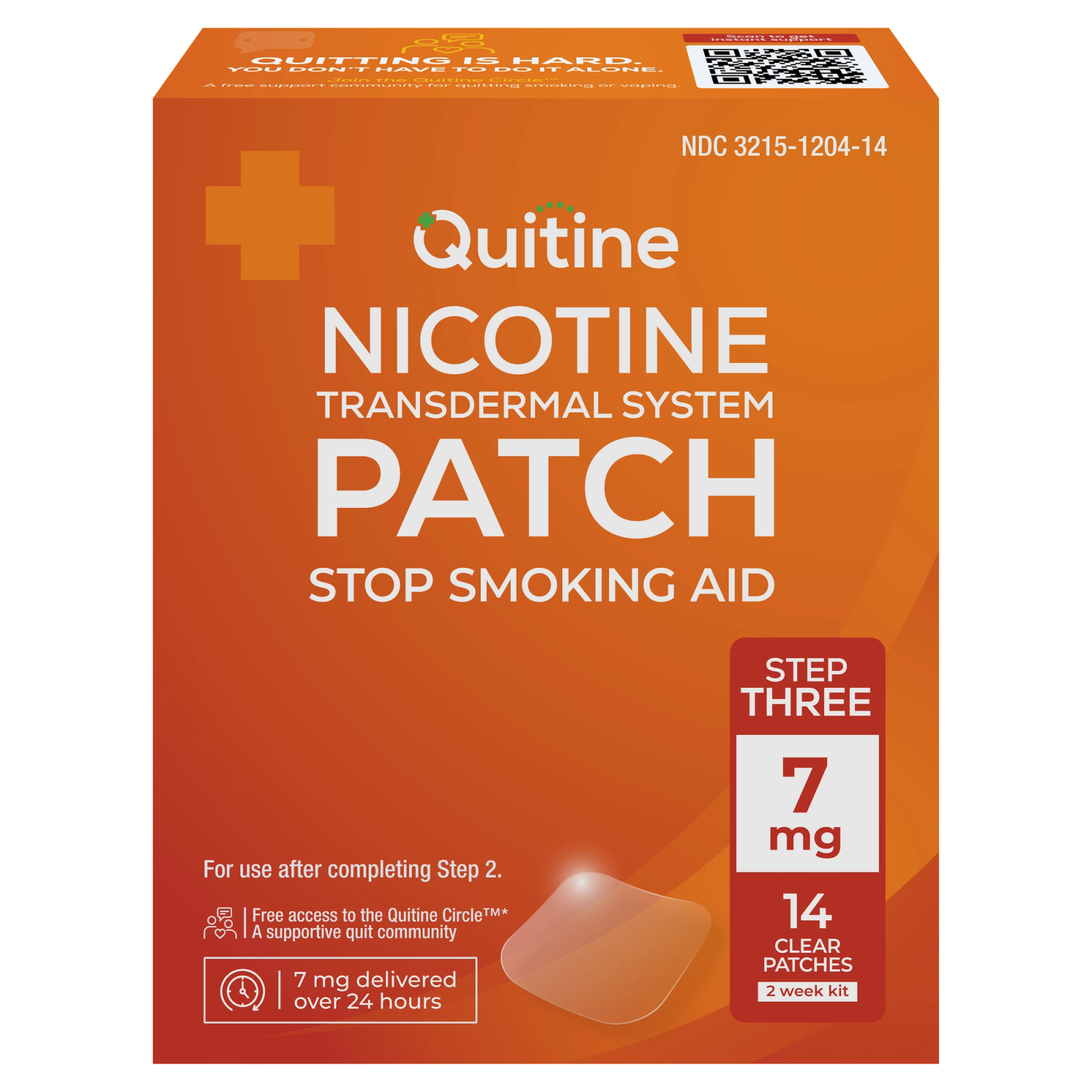
Description (Quitine Nicotine Patches Step 3 7mg 14 Pieces):
14 patches (2-week kit)
Use after you finish Step 2. This is the final taper. You can use the patches alone or add 2 mg gum or lozenges on harder days.
Quitine nicotine patches are an FDA-regulated stop-smoking aid. Each one delivers a steady amount of nicotine through the skin over 24 hours. You apply one patch every morning to clean, dry skin. The patch works in the background all day so you can focus on changing the habit itself.
How to use
- Choose a clean, dry, hairless area of skin on your upper arm, chest, or back. Skip any lotions or oils before you put the patch on.
- Peel the liner and press the patch firmly for 10 to 20 seconds. Smooth the edges so it stays in place.
- Wear the patch for a full 24 hours through everyday activities.
- After 24 hours, take it off and put a new patch on a different skin site. Rotate the location each day for comfort.
Stop use if skin irritation appears and follow the package directions.
What to do when a lapse hits
A slip is a cue that won one round. It is not a reset of your identity.
Stay on the patch. Research on continued patch use after a lapse found that people who kept wearing an active patch were more likely to get back to not smoking than people who stopped treatment. The chemistry still needs cover while you repair the script.
Then treat the slip like data.
- Where were you?
- What was in your hands?
- What feeling showed up ten seconds before the old act?
- What replacement was missing?
Put a better closer in that exact slot. If the slip was in the car, the next drive starts with gum already unwrapped. If it was after a fight, the next hard talk ends with a walk, not a doorway cigarette.
Talk to someone the same day. Do not punish yourself with a cold-turkey swing after a lapse. That bounce is how the two-habit problem takes over again. Patch on. Cue named. New ending practiced tomorrow at the same hour.
FAQ
Do nicotine patches replace the hand-to-mouth habit on their own?
No. Patches deliver nicotine through the skin. They leave the hands, mouth, and pause unused. That is why many people pair a daily patch with nicotine gum or lozenge at cue times. The oral form is the replacement move. The patch is the even baseline that makes that move easier to keep.
How long should habit-replacement work run next to the patch?
Give the new endings a full step-down window, not a long weekend. Cues fade when you meet them the new way in the same places, many times. A 90-day frame gives morning coffee, work breaks, and late stress more than one chance to learn a different close. Stay on each patch step for the planned stretch even when you feel steady.
Can I use habit swaps without any nicotine replacement?
Some people do. Many find the cues louder when withdrawal is also shouting. A patch lowers that noise so a walk, a chew, or a lozenge can actually land. If you have tried willpower-only swaps and the same times of day keep winning, add the chemical layer back in and keep the swaps.
What if my strongest cue is stress, not a place?
Stress is still a cue with a body. Slow the breath first, then use oral NRT if the urge stays high. The patch may take the edge off background tension for some users, but a spike still needs a fast closer. Practice the breath-plus-lozenge pair on a calm day so it is ready when a hard message arrives.
Should I take the patch off if I slip and smoke or vape?
Keep the patch on unless a clinician tells you otherwise. Stopping treatment after one slip often returns you to the old spike-and-drop pattern. Name the cue, fix the replacement for that slot, and stay on the step-down calendar. If skin irritation with nicotine patches or other effects worry you, get medical advice and keep the habit plan in place while you sort the product question.
Join the 90-Day Quit Challenge.
Read Also:

Ready to Quit or Just Cut Back?
If you're reading about nicotine, vaping, or smoking habits, chances are you're already thinking about making a change.
You don't have to figure it out alone. The Quitine Circle is our free support community, open to everyone quitting smoking or vaping. No purchase is required, and you do not need to use Quitine products to participate.
Inside the Quitine Circle you'll find:
The 90-Day Quit Program to guide your step down plan
A printable Quit Program Workbook to track progress
Practical tools for managing cravings and triggers
Support from others going through the same process
Quitting works best when you combine the right tools with the right structure. That's exactly what the Quitine system is built for.
Take our short quiz to see which Quitine Quit Kit fits your nicotine habits.

Not Sure Which Product Is Right for You?
Take our 2-minute Quit Quiz and get a personalized product recommendation and 90-day system based on your smoking or vaping habits.