
What is a nicotine patch?

A nicotine patch is a thin sticker you wear on your skin to help you quit smoking or vaping. It is a form of nicotine replacement therapy. The patch feeds a slow, even amount of nicotine into your blood so withdrawal feels less sharp than quitting with nothing.
You put one nicotine patch on clean skin in the morning and leave it in place through the day. That steady flow covers baseline need. A faster product, such as nicotine gum or a nicotine lozenge, can sit on top when a sudden nicotine craving breaks through.
For a clearer overview of what nicotine patches are used for, it also helps to understand how to use a nicotine patch correctly and how long a nicotine patch lasts, since these factors shape how nicotine is delivered throughout the day.
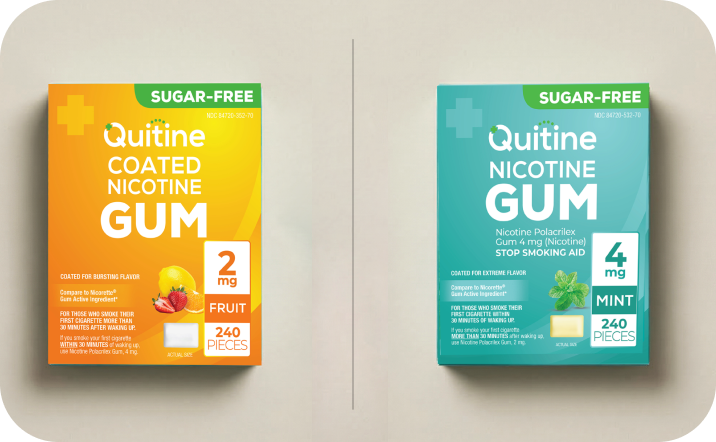
How Nicotine Gum Works
Nicotine gum delivers nicotine through the lining of your mouth as you chew. Unlike regular chewing gum, you need to use a specific "chew and park" technique to get the full effect.
Best for habit-triggered cravings
If you smoke or vape in response to specific triggers, after meals, during breaks, or when stressed, nicotine gum gives you something to do with your hands and mouth, which can help replace the physical habit.
Which Should You Choose?
The best choice depends on your personal preferences and smoking habits. If you miss the hand-to-mouth motion of smoking, gum might feel more natural. If you prefer something completely discreet, lozenges are a great option.Many people find that combining products, like using patches for all-day coverage and gum or lozenges for breakthrough cravings, gives them the best results.
Product Comparison
| Best For | Strength | |
|---|---|---|
| Nicotine Gum | Habit-triggered cravings | 2mg / 4mg |
| Nicotine Lozenges | Discreet craving relief | 2mg / 4mg |
| Nicotine Patches | All-day support | 21mg / 14mg / 7mg |
How a nicotine patch works in your body
A cigarette or vape hits fast. Nicotine spikes, then drops. That drop is what makes you reach for the next one. Nicotine patches work the other way. It sits on the skin like a bandage. Under the sticky layer is a reservoir or matrix that holds nicotine. Skin takes the nicotine in slowly. Blood levels rise over a few hours, then stay fairly even for the rest of the wear time. The CDC explains that you put one patch on in the morning and leave it in place so nicotine is absorbed through the skin all day.
That even level matters. Your brain still gets nicotine at the same receptors smoking used to hit. Dopamine does not crash as hard. Irritability and that "I need one now" feeling often eases. You are not getting tar, carbon monoxide, or the other chemicals in smoke.
The patch is slow on purpose. It can take a couple of hours to settle. That is why many people add a faster nicotine product for the first hours of the day or for a hard moment after a meal.
What a nicotine patch is made of
Most patches use the same idea. An outer backing keeps the dose from leaking out the wrong way. A middle layer holds the nicotine. An adhesive layer touches the skin.
The active ingredient is nicotine. Inactive parts on a Quitine nicotine patch are acrylate adhesive, polyester, and silicone adhesive. The patch is meant to stay thin and clear so it sits under a shirt without drawing attention.
You do not cut a patch. Cutting changes how the dose leaves the pad and can leave sticky residue or an uneven flow. Used patches still hold leftover nicotine. Fold the sticky sides together and throw the patch where kids and pets cannot reach it. A used patch can make a child or animal sick.
How to use a nicotine patch the right way
Good use is simple. Miss the basics and the patch may itch, peel, or leave you under-dosed.
- Wash the spot with water. Dry it well. Skip lotion, oil, or powder on that area.
- Pick clean, dry, mostly hair-free skin between the neck and waist. Upper arm, shoulder, chest, hip, or upper back work well.
- Peel the liner. Press the patch with your palm for 10 to 20 seconds. Smooth the edges.
- Wash your hands with water after you stick it on.
- Wear one patch at a time. Change it about every 24 hours, or as the pack says.
- Change the nicotine patch placement each day. Do not use the same site again for about a week.
- If the patch loosens, press it back. If it will not stay, put on a new one.
You can shower or swim with many 24 hour nicotine patches. Pat the area dry after. Do not scrub the patch. Apply it at the same time each day. Morning is the usual pick so the dose is already moving before the first hard craving.
Nicotine patch strengths and who starts where
The right first nicotine patch dose depends on how much you smoke or vape and how soon after waking you need nicotine. Many people who smoke more than 10 cigarettes a day start on the 21 mg nicotine patch. People with lighter use often start on a 14 mg nicotine patch. The last phase uses a 7 mg nicotine patch so the body can adjust before the patch comes off.
Mayo Clinic notes that the amount of nicotine is decreased over time until use is stopped. That step-down is the point. You are not meant to stay on the highest patch forever. A short quit smoking quiz can match the first step to your habit.
How long you wear a nicotine patch
Most plans run several weeks, then step down. A common pattern is weeks on the high patch, then a shorter stretch on the middle patch, then a final stretch on the low patch. Some labels run about 8 to 12 weeks. Some structured kits stretch the last phase so you are not yanked off support too soon.
Wear time each day is usually 16 or 24 hours.
- A 24-hour patch stays on overnight. That can help morning nicotine cravings, which hit many people hard.
- If vivid dreams or poor sleep show up, take the patch off at bedtime and put a fresh one on in the morning.
Do not stack two patches unless a clinician tells you to. More patch is not always more help. It can raise side effects. If you slip and smoke one cigarette, keep the patch on and get back to your plan. Stopping the patch after one slip often sends people right back to the pack.
Why many people pair a patch with gum or a lozenge
The patch is the baseline. It is not a rescue tool.
A cigarette craving can still spike after lunch, in the car, or when stress hits. Nicotine gum and lozenges act faster because nicotine goes through the lining of the mouth.
That mix is called combination nicotine replacement. The CDC says the patch can be used by itself or with nicotine gum or lozenge taken as needed for strong cravings. MedlinePlus lists the skin patch as one of several NRT forms that work when used the right way.
A simple split looks like this:
- Patch on in the morning for all-day cover
- Nicotine gum when you want something to chew and park
- Nicotine lozenges when you need a quiet, no-chew option
- Lower oral doses later, once the first hard weeks have passed
If you want a side-by-side of oral vs skin dosing, the nicotine gum vs nicotine patch guide lays out speed, habit fit, and common tradeoffs.
Side effects, skin care, and when to call a clinician
Most people tolerate the patch. The usual complaints are local.
- Skin redness or itch. Rotate sites. Avoid broken skin, rashes, and heavy hair. If a spot stays angry, skip that area.
- Odd dreams or poor sleep. Take the patch off at night.
- Headache, nausea, or a racing heart. That can mean the dose is high for you, or you are still smoking on top of the patch. Talk with a pharmacist or clinician before you change the plan.
- Dizziness or feeling wired. Same advice. Do not guess a second patch.
Ask a clinician first if you had a recent heart attack, a serious heart rhythm problem, worsening chest pain, a strong tape allergy, or a serious skin condition. The same pause applies in pregnancy, while breastfeeding, or if you are under 18. Proof of age is required for over-the-counter nicotine products.
Keep patches in the child-resistant pack. Used and unused patches both need to stay away from kids and pets. If one is swallowed, call Poison Control.
Quitting itself can stir low mood or anxiety. If that lasts more than a couple of weeks, get help. The patch treats the nicotine gap. It does not treat every feeling that shows up when the habit ends.
Who a nicotine patch fits, and who may want another form
A patch fits people who:
- Smoke or vape through the day, not just once in a while
- Want one action in the morning instead of dosing all day
- Need cover at work or in places where chewing is awkward
- Keep forgetting gum or lozenges
A patch may be a weaker fit if your skin hates adhesives, or if you only want nicotine for a short craving. Some people still need a hand-to-mouth action to stay calm. In those cases, gum or a lozenge can be the main tool, or they can sit beside the patch.
Patches also help many people who are quitting vaping, not only cigarettes. The delivery method changes. The nicotine receptors do not. Steady cover still takes the edge off the physical part while you change the routine.
Discover Quitine and our best NRT products
Why Quitine?
Meet Mark and Oliver, the founders of Quitine. Mark has more than 40 years of experience as a pharmacist. His father’s long struggle with smoking shaped the work he does today. He has spent his career helping people leave cigarettes and vapes behind. Oliver brings deep experience in ecommerce, branding, product development, marketing, and logistics. Together they built Quitine to offer clear, practical nicotine replacement therapies that fit real daily life.
Our NRT products
Our pharmacist-formulated NRT products are made to support you while you change the habits that go with smoking or vaping.
Combination therapy for higher quit success
Research shows that combining a long-acting nicotine patch with a faster-acting form of NRT such as nicotine gum or nicotine lozenges can raise the chance of quitting smoking by 17 to 37 percent compared with using one product alone. At Quitine our nicotine patches deliver a steady amount of nicotine through the skin all day. Our nicotine gum and lozenges give you something to use when a craving hits. This dual approach, called NRT combination therapy, gives you more flexibility so you can stay comfortable while you change the habit.
Accessible pricing
We believe quitting should be within reach for everyone. We keep our therapies priced so more people can start without cutting corners on quality.
Personalized support
Quitting is personal, and so is the way we work with you. From the customer service team to the way each product is formulated, we stay with you through the process.
The Quitine Circle
The Quitine Circle is our free 90-day guided quit program and private support community. It is open to anyone quitting smoking or vaping and requires no purchase. It follows the same structured, pharmacist-backed approach that shapes our NRT products. You get short training modules, a practical quit workbook, weekly live Q and A sessions, and a moderated space with other people who are quitting, so you do not have to rely on willpower alone.
Discover which NRT is right for you
Not sure which product suits you best? Take our personalized quiz to find the NRT product that fits your needs. Take the Quiz
Real quitters. Real success.
See what our customers are saying about Quitine nicotine replacement therapy. Read Case Studies
The Quitine guarantee
Your satisfaction is covered. Learn more about our 30-day money-back promise. Learn More About Our Guarantee
Discover our best nicotine patches - Quitine
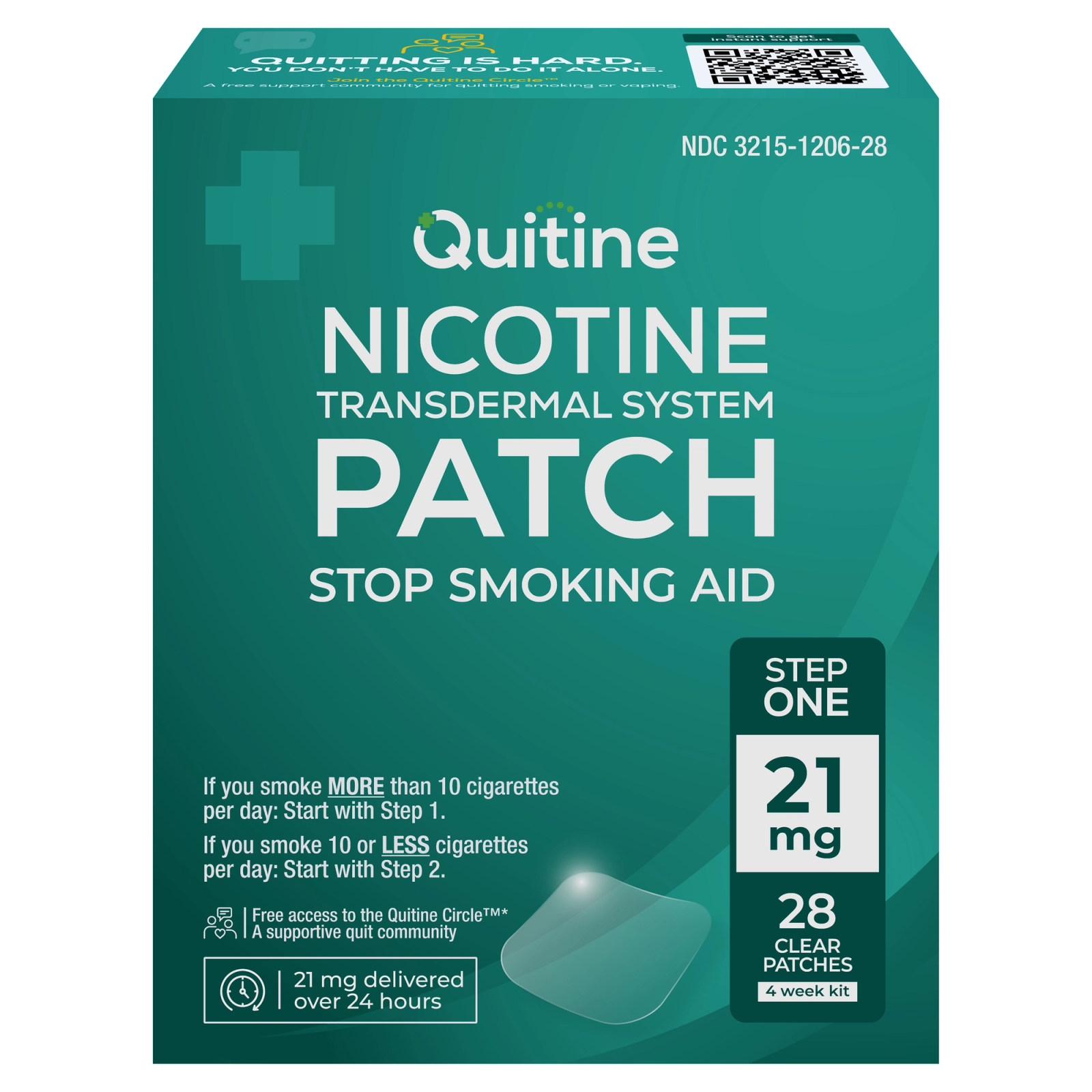
1) Quitine Nicotine Patches Step 1 21mg 28 Pieces
Description (Quitine Nicotine Patches Step 1 21mg 28 Pieces):
28 patches (4-week kit)
Start here if you smoke or vape within 30 minutes of waking, or if you smoke more than 10 cigarettes a day. You can combine the patches with 4 mg gum or lozenges when a craving breaks through.
Quitine nicotine patches are an FDA-regulated stop-smoking aid. Each patch delivers a steady amount of nicotine through the skin over a full 24 hours. You put one patch on in the morning on clean, dry skin. It stays in place through the day so the nicotine stays even while you work on the habits that go with smoking or vaping.
How to use
- Choose clean, dry, hairless skin on your upper arm, chest, or back. Skip lotions or oils before you apply the patch.
- Peel the liner and press the patch firmly for 10 to 20 seconds. Smooth the edges so it holds.
- Wear the patch for 24 hours. It is made for all-day use during regular activities.
- Remove the patch after 24 hours and put a new one on a different skin site. Rotate the spot each day to keep the skin comfortable.
Stop use if skin irritation occurs. See the package directions.
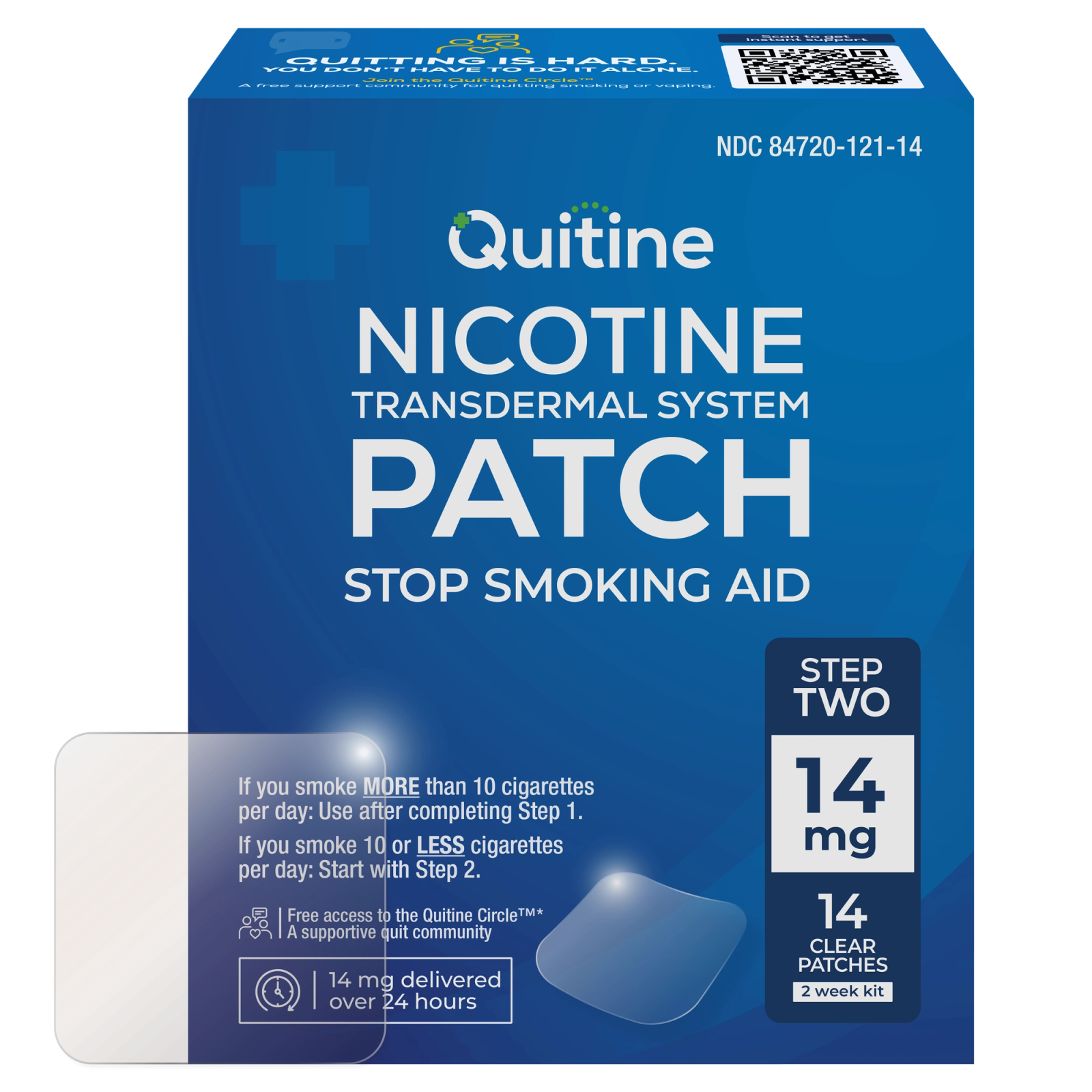
2) Quitine Nicotine Patches Step 2 14mg 14 Pieces
Description (Quitine Nicotine Patches Step 2 14mg 14 Pieces):
14 patches (2-week kit)
Start here if you smoke fewer than 10 cigarettes a day or vape lightly. You can also use these after you finish Step 1. Combine with 2 mg gum or lozenges if a craving breaks through.
Quitine nicotine patches are an FDA-regulated stop-smoking aid. Each patch delivers a steady amount of nicotine through the skin over 24 hours. You apply one patch each morning to clean, dry skin. It works in the background all day. There is no timing or counting required. You get consistent baseline support so you can focus on breaking the habit.
How to use
- Choose clean, dry, hairless skin on your upper arm, chest, or back. Skip lotions or oils before applying.
- Peel the liner and press the patch firmly for 10 to 20 seconds. Smooth the edges for a solid hold.
- Wear the patch for 24 hours. It is made for all-day wear, including everyday activities.
- Remove the patch after 24 hours and apply a new one to a different skin site. Rotate the site daily for comfort.
Stop use if skin irritation occurs. See the package directions for full details.
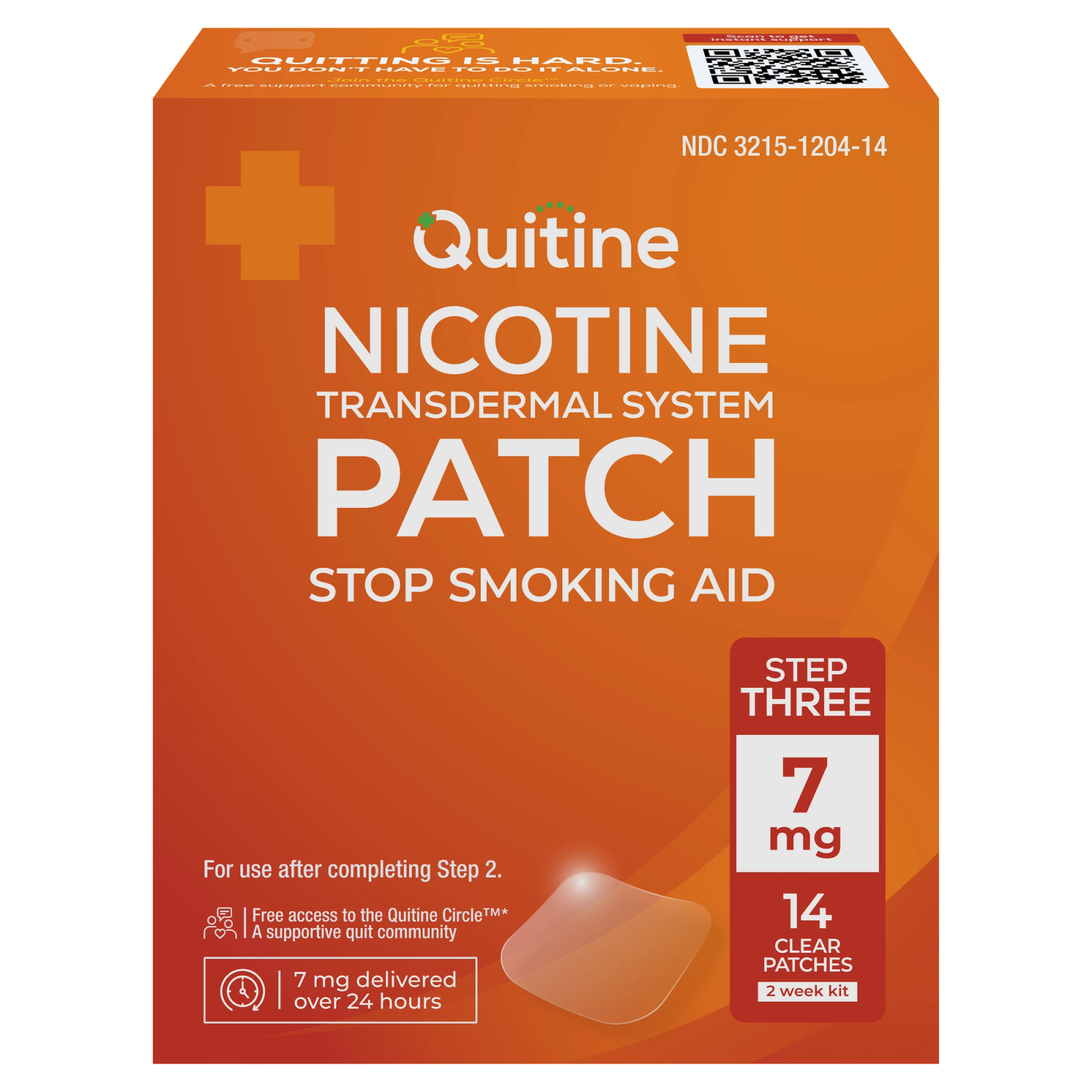
3) Quitine Nicotine Patches Step 3 7mg 14 Pieces
Description (Quitine Nicotine Patches Step 3 7mg 14 Pieces):
14 patches (2-week kit)
Use after you finish Step 2. This is the final taper. You can use the patches alone or add 2 mg gum or lozenges on harder days.
Quitine nicotine patches are an FDA-regulated stop-smoking aid. Each one delivers a steady amount of nicotine through the skin over 24 hours. You apply one patch every morning to clean, dry skin. The patch works in the background all day so you can focus on changing the habit itself.
How to use
- Choose a clean, dry, hairless area of skin on your upper arm, chest, or back. Skip any lotions or oils before you put the patch on.
- Peel the liner and press the patch firmly for 10 to 20 seconds. Smooth the edges so it stays in place.
- Wear the patch for a full 24 hours through everyday activities.
- After 24 hours, take it off and put a new patch on a different skin site. Rotate the location each day for comfort.
Stop use if skin irritation appears and follow the package directions.
Nicotine patch vs gum, lozenge, and going without NRT
Going without any nicotine product is possible. It is also the path that leaves the sharpest physical nicotine withdrawal. NRT does not make quitting "easy." It makes the body part quieter so you can change the habit part.
Compared with gum:
- The patch wins on memory. One stick. Done.
- Gum wins on speed and on replacing the chew.
Compared with a lozenge:
- The patch wins on all-day cover.
- A lozenge wins when you need a quiet dose at a desk or in a meeting.
Compared with a prescription inhaler or nasal spray:
- The patch is over the counter.
- Those other forms act faster but need more frequent use and a prescription in many cases.
No single form is magic. The form you will actually use every day is the form that helps. For all-day smokers and vapers, that is often the patch plus a small oral nicotine product backup.
Practical habits that make a nicotine patch work harder
The patch handles chemistry. You still handle cues.
- Put the patch on before coffee if mornings are your weak spot.
- Keep gum or a lozenge in the same pocket where the lighter used to live.
- Change the route you walk at break time for the first two weeks.
- Tell one person you are on a patch so you are not white-knuckling in silence.
- Track "hard hours," not only smoke-free days. The hard hour is where the extra lozenge belongs.
- Do not save patches "for later." Gaps in wear bring the old swing back.
If skin gets angry, switch to a new site sooner and keep the area dry before you apply. If the patch peels at the edge, press it again after a shower and avoid fabric that rubs that exact spot.
FAQ
Can you wear a nicotine patch in the shower or while you exercise?
Yes, most 24-hour patches are made to stay on through a shower, sweat, and normal activity. Dry the skin before you put a new one on. After a shower, pat the patch dry. Do not peel the edge to "check" it. If sweat lifts a corner, press it flat with a dry palm. If it will not hold, replace it. Swimming for a long stretch can loosen some adhesives, so pack a spare if you will be in water for hours.
Can you use a nicotine patch if you still vape or smoke sometimes?
The goal is to stop the cigarette or vape and let the patch cover the nicotine gap. Using both on purpose keeps the habit alive and can push nicotine side effects up. If you slip, keep the patch on, throw out the leftover cigarettes or pods you can control, and use gum or a lozenge for the next wave. Talk with a clinician if slips keep stacking. The patch is still useful while you reset. It is not a green light to dual-use all day.
What should you do if a nicotine patch will not stick?
Start over on fresh skin. Wash with water only, then dry. Skip lotion in that area. Press for a full 20 seconds. Pick a spot clothes do not rub, such as the upper back or the outer upper arm. Body hair, sweat, and leftover soap are the usual reasons a patch lifts. If one brand of adhesive always fails on you, ask a pharmacist about a different backing rather than taping extra products over the patch.
Do you need to wean off a nicotine patch, or can you stop on the last high-dose day?
Wean. Your brain got used to a steady incoming dose. Jumping from a high patch to zero recreates the same crash you were trying to avoid. Move from the high patch to the mid patch, then to the low patch, on the schedule in the pack or in your quit smoking plan. If cravings roar when you drop a step, stay on that step a little longer and use a lower-dose lozenge on hard days rather than jumping back to cigarettes.
Is a nicotine patch safe to use next to other medicines?
Many people use a patch while taking everyday medicines. Still, nicotine can affect heart rate and how you feel if you also take medicines for blood pressure, depression, or asthma, because quitting itself changes how some drugs work. Share the patch with your pharmacist when you pick up other scripts. Do not mix the patch with another nicotine product beyond the planned gum or lozenge backup unless a clinician set that plan with you.
Join the 90-Day Quit Challenge.
Read Also:

Ready to Quit or Just Cut Back?
If you're reading about nicotine, vaping, or smoking habits, chances are you're already thinking about making a change.
You don't have to figure it out alone. The Quitine Circle is our free support community, open to everyone quitting smoking or vaping. No purchase is required, and you do not need to use Quitine products to participate.
Inside the Quitine Circle you'll find:
The 90-Day Quit Program to guide your step down plan
A printable Quit Program Workbook to track progress
Practical tools for managing cravings and triggers
Support from others going through the same process
Quitting works best when you combine the right tools with the right structure. That's exactly what the Quitine system is built for.
Take our short quiz to see which Quitine Quit Kit fits your nicotine habits.

Not Sure Which Product Is Right for You?
Take our 2-minute Quit Quiz and get a personalized product recommendation and 90-day system based on your smoking or vaping habits.