
Nicotine patches and relapse prevention strategies

Nicotine patches and relapse prevention strategies work as a pair. The patch gives a steady dose through the skin so background cravings stay quieter. That helps, but coffee, stress, alcohol, and old routines can still spark a slip. Pair the patch with a simple plan for those spikes.
Keep the patch on after one cigarette. Add nicotine gum or a nicotine lozenge when a sudden urge hits. That mix covers the body and the habit at the same time, which is what most people need after the first hard weeks. Build a patch-based quit smoking plan that covers daily cravings and helps you stay smoke-free.
Understanding what a nicotine patch is also helps explain the role of habit replacement psychology and why nicotine patch compliance can influence long-term relapse prevention.
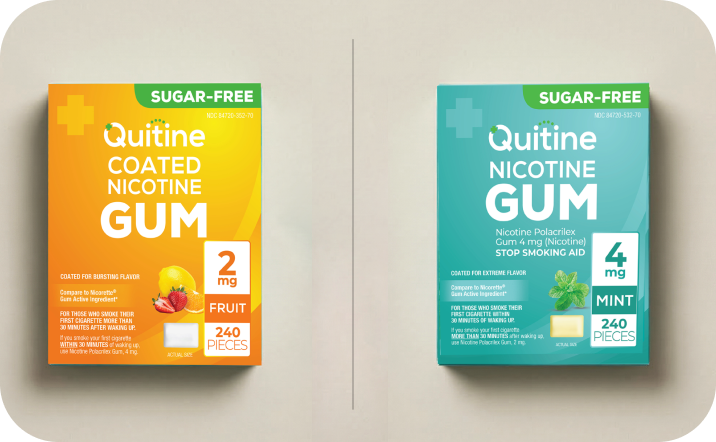
How Nicotine Gum Works
Nicotine gum delivers nicotine through the lining of your mouth as you chew. Unlike regular chewing gum, you need to use a specific "chew and park" technique to get the full effect.
Best for habit-triggered cravings
If you smoke or vape in response to specific triggers, after meals, during breaks, or when stressed, nicotine gum gives you something to do with your hands and mouth, which can help replace the physical habit.
Which Should You Choose?
The best choice depends on your personal preferences and smoking habits. If you miss the hand-to-mouth motion of smoking, gum might feel more natural. If you prefer something completely discreet, lozenges are a great option.Many people find that combining products, like using patches for all-day coverage and gum or lozenges for breakthrough cravings, gives them the best results.
Product Comparison
| Best For | Strength | |
|---|---|---|
| Nicotine Gum | Habit-triggered cravings | 2mg / 4mg |
| Nicotine Lozenges | Discreet craving relief | 2mg / 4mg |
| Nicotine Patches | All-day support | 21mg / 14mg / 7mg |
How nicotine patches support relapse prevention
A nicotine patch is a thin film you press onto clean, dry skin once a day. Nicotine moves through the skin into the blood over many hours. Blood levels rise slowly and stay fairly even. A cigarette or vape spikes nicotine fast, then drops it. That drop is when the next urge often arrives.
The patch lowers the baseline so you can work on the daily habits to quit smoking. You still need a plan for sudden cues. The American Cancer Society draws a clear line here. A slip is one cigarette or one vape that you correct. A relapse is going back to regular use. The patch helps most when you treat a slip as a warning, and then get back to zero smoke.
Wear the patch on a hairless spot between the neck and the waist. Upper arm, chest, or back works well. Press it with your palm for 10 to 20 seconds. Change the nicotine patch placement at the same time each day. Move the spot so the same skin is not used again for about a week. Fold used patches sticky sides together and keep them away from children and pets.
If mornings are your weak point, a 24-hour wear schedule can help. If vivid dreams bother you, take the patch off at night and put a fresh one on at wake-up. The goal is a nicotine patch dose you can live with, because a patch you stop using cannot protect you.
Why people relapse while the patch is on
Many slips start with a cue. Common cues include:
- The first coffee
- A work break that used to include a smoke
- Alcohol
- An argument or a tight deadline
- Being around people who still smoke or vape
- Driving the same route
- The hour after dinner
The patch covers the slow, all-day ache. A cigarette still hits faster than a patch, so a sudden spike can get through on its own. That gap is why people say the patch is not working when the real issue is an unplanned trigger.
Another trap is stopping the patch after one slip. Some people worry that wearing a patch and smoking at the same time is unsafe. Guidance from groups such as the RACGP is the opposite for a lapse: keep the patch on, do not use that one cigarette as a reason to throw the box away, and get back to zero smoke as soon as you can. Research published in Addiction found that people who kept wearing an active nicotine patch after a lapse were more likely to get back to not smoking than people who wore a dummy patch.
Shame also drives relapse. One puff can feel like failure. Most people who quit for good had earlier tries that did not last. What changes the next week is whether you stay on the patch, name the trigger, and add an oral nicotine product for the next time that cue shows up.
Keep wearing the patch after a slip
Treat the next 24 hours as a reset.
- Leave the current patch on unless it is time to change it.
- Do not smoke just one more to finish the pack.
- Write down what happened in one line: time, place, mood, who was there.
- Use a piece of nicotine gum or nicotine lozenge if another wave hits.
- Tell one person you trust that you slipped and that you are still quitting.
The patch after a lapse keeps blood nicotine from crashing while you close the door on cigarettes again. That crash is what turns a slip into a full week of smoking.
If you smoked a lot during the lapse, talk with a pharmacist or clinician before you change strength. Do not stack two patches. Do not cut a patch. Cutting changes how the dose leaves the film.
Combination NRT for the cravings a patch cannot catch
Combination NRT means a long-acting patch plus an oral nicotine product you use when a cue hits. The patch is the floor. Nicotine gum or nicotine lozenge is what you reach for in the moment.
This pairing shows up again and again in clinical guidance because cue cravings are short and sharp. You use the oral product when you know a trigger is coming, or right as the urge starts. You do not wait until you are already reaching for a cigarette.
Use the chew-and-park method with gum. Chew slowly until you feel a tingle, then rest it between cheek and gum. Repeat until the piece is done. Do not chew it like regular gum. For a lozenge, park it and let it dissolve. Do not swallow it whole.
Match oral strength to how soon you used nicotine after waking. People who reached for a cigarette or vape within 30 minutes of waking often need the stronger oral option for spikes, on top of a Step 1 patch. People who waited longer can often start lighter. A short quiz inside a 90-day quit kit can sort that without guesswork.
A daily plan for high-risk moments
Write the plan before the week gets busy. Keep it short enough to read on a phone.
Morning: Put the patch on after you wash. Pair it with a new first drink if coffee used to mean a smoke. Walk, shower, or start a task before you sit with the mug.
Work or school breaks: Change the place. If the old spot is the loading dock or the parking lot, pick a different door. Keep gum or a lozenge in the same pocket every day so you do not hunt for it while the urge peaks.
Meals: Stand up when you finish. Brush your teeth or step outside without a cigarette. Many people relapse in the 20 minutes after eating because the body expects nicotine with the last bite.
Alcohol: Decide the rule before the first drink. Some people skip alcohol for the first stretch of a quit. Others limit the number of drinks and leave early. Oral NRT belongs in the bag, not at home.
Stress: Use a 5-minute delay. Drink water. Breathe out longer than you breathe in. Then use the nicotine lozenge or gum if the urge is still there. Urges rise and fall. They rarely stay at peak for long.
Night: If you wear the patch to bed and sleep is rough, switch to daytime-only wear. If evenings are your danger zone, keep the 24-hour schedule and protect sleep in other ways: dim lights, no one last vape bargain. The 4 Ds still help when a wave hits: delay, deep breath, drink water, do something else with your hands.
Step down on purpose so the last weeks do not surprise you
A common patch path for people who smoke more than 10 cigarettes a day, or who use nicotine soon after waking, looks like this:
- Step 1: 21 mg nicotine patch for the first stretch
- Step 2: 14 mg nicotine patch as cravings ease
- Step 3: 7 mg nicotine patch as the last taper
People who smoke less, or who already cut down, may start at 14 mg. The point is a planned drop, not an accidental one because the box ran out.
Running out is a relapse risk of its own. A subscription that ships on a schedule keeps Step 2 in the house before Step 1 ends. Pause or cancel if you need to. Gaps in supply are how "I will buy more tomorrow" turns into a weekend of smoking.
Stay on each step long enough that nights and weekends feel manageable before you drop. If cravings roar back after a drop, hold the current strength a bit longer and use oral NRT instead of jumping back to cigarettes. Talk with a clinician if you have heart disease, are pregnant, or take other medicines.
Discover Quitine and our best NRT products
Why Quitine?
Meet Mark and Oliver, the founders of Quitine. Mark has more than 40 years of experience as a pharmacist. His father’s long struggle with smoking shaped the work he does today. He has spent his career helping people leave cigarettes and vapes behind. Oliver brings deep experience in ecommerce, branding, product development, marketing, and logistics. Together they built Quitine to offer clear, practical nicotine replacement therapies that fit real daily life.
Our NRT products
Our pharmacist-formulated NRT products are made to support you while you change the habits that go with smoking or vaping.
Combination therapy for higher quit success
Research shows that combining a long-acting nicotine patch with a faster-acting form of NRT such as nicotine gum or nicotine lozenges can raise the chance of quitting smoking by 17 to 37 percent compared with using one product alone. At Quitine our nicotine patches deliver a steady amount of nicotine through the skin all day. Our nicotine gum and lozenges give you something to use when a craving hits. This dual approach, called NRT combination therapy, gives you more flexibility so you can stay comfortable while you change the habit.
Accessible pricing
We believe quitting should be within reach for everyone. We keep our therapies priced so more people can start without cutting corners on quality.
Personalized support
Quitting is personal, and so is the way we work with you. From the customer service team to the way each product is formulated, we stay with you through the process.
The Quitine Circle
The Quitine Circle is our free 90-day guided quit program and private support community. It is open to anyone quitting smoking or vaping and requires no purchase. It follows the same structured, pharmacist-backed approach that shapes our NRT products. You get short training modules, a practical quit workbook, weekly live Q and A sessions, and a moderated space with other people who are quitting, so you do not have to rely on willpower alone.
Discover which NRT is right for you
Not sure which product suits you best? Take our personalized quiz to find the NRT product that fits your needs. Take the Quiz
Real quitters. Real success.
See what our customers are saying about Quitine nicotine replacement therapy. Read Case Studies
The Quitine guarantee
Your satisfaction is covered. Learn more about our 30-day money-back promise. Learn More About Our Guarantee
Discover our best nicotine patches - Quitine
1) Quitine Nicotine Patches Step 1 21mg 28 Pieces
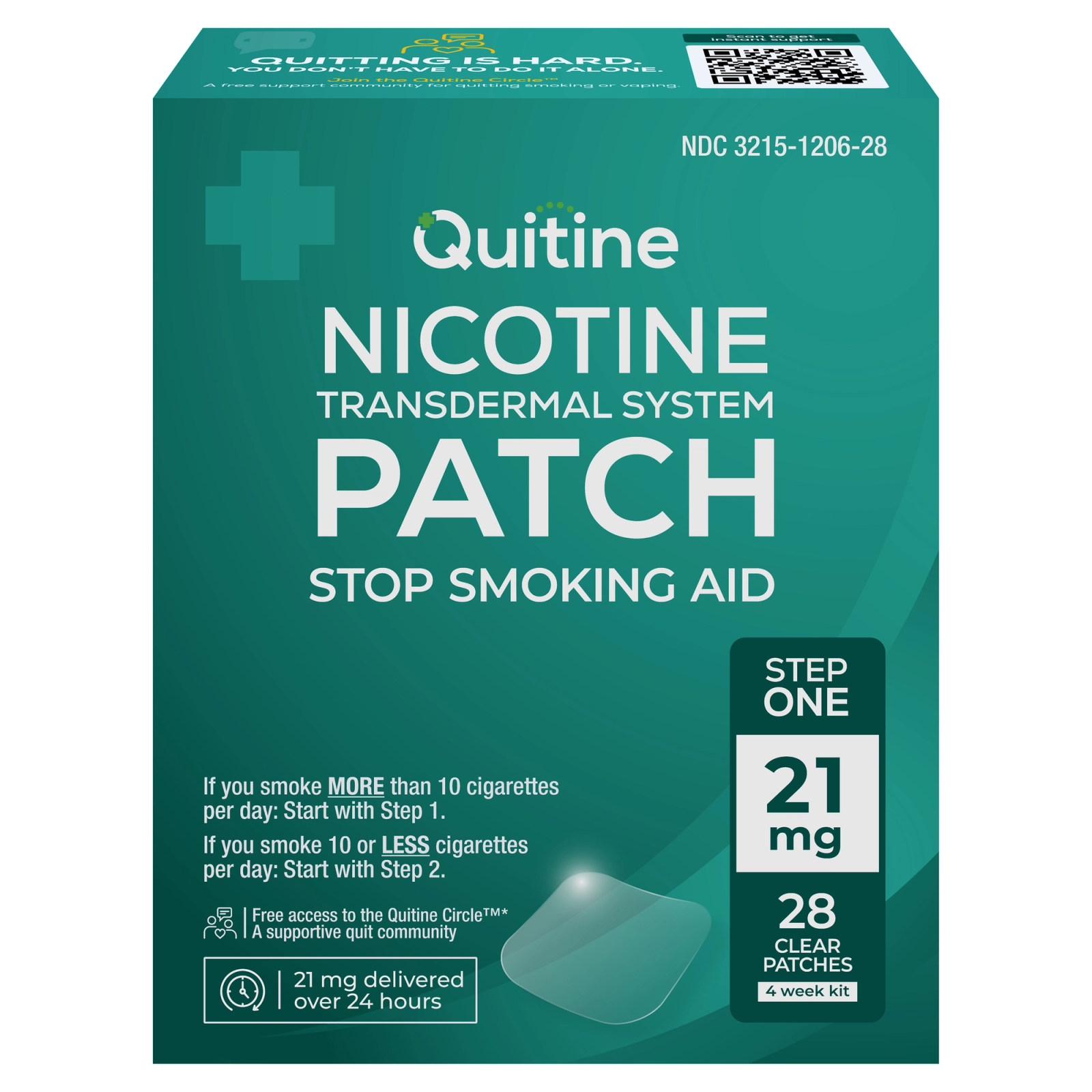
Description (Quitine Nicotine Patches Step 1 21mg 28 Pieces):
28 patches (4-week kit)
Start here if you smoke or vape within 30 minutes of waking, or if you smoke more than 10 cigarettes a day. You can combine the patches with 4 mg gum or lozenges when a craving breaks through.
Quitine nicotine patches are an FDA-regulated stop-smoking aid. Each patch delivers a steady amount of nicotine through the skin over a full 24 hours. You put one patch on in the morning on clean, dry skin. It stays in place through the day so the nicotine stays even while you work on the habits that go with smoking or vaping.
How to use
- Choose clean, dry, hairless skin on your upper arm, chest, or back. Skip lotions or oils before you apply the patch.
- Peel the liner and press the patch firmly for 10 to 20 seconds. Smooth the edges so it holds.
- Wear the patch for 24 hours. It is made for all-day use during regular activities.
- Remove the patch after 24 hours and put a new one on a different skin site. Rotate the spot each day to keep the skin comfortable.
Stop use if skin irritation occurs. See the package directions.
2) Quitine Nicotine Patches Step 2 14mg 14 Pieces
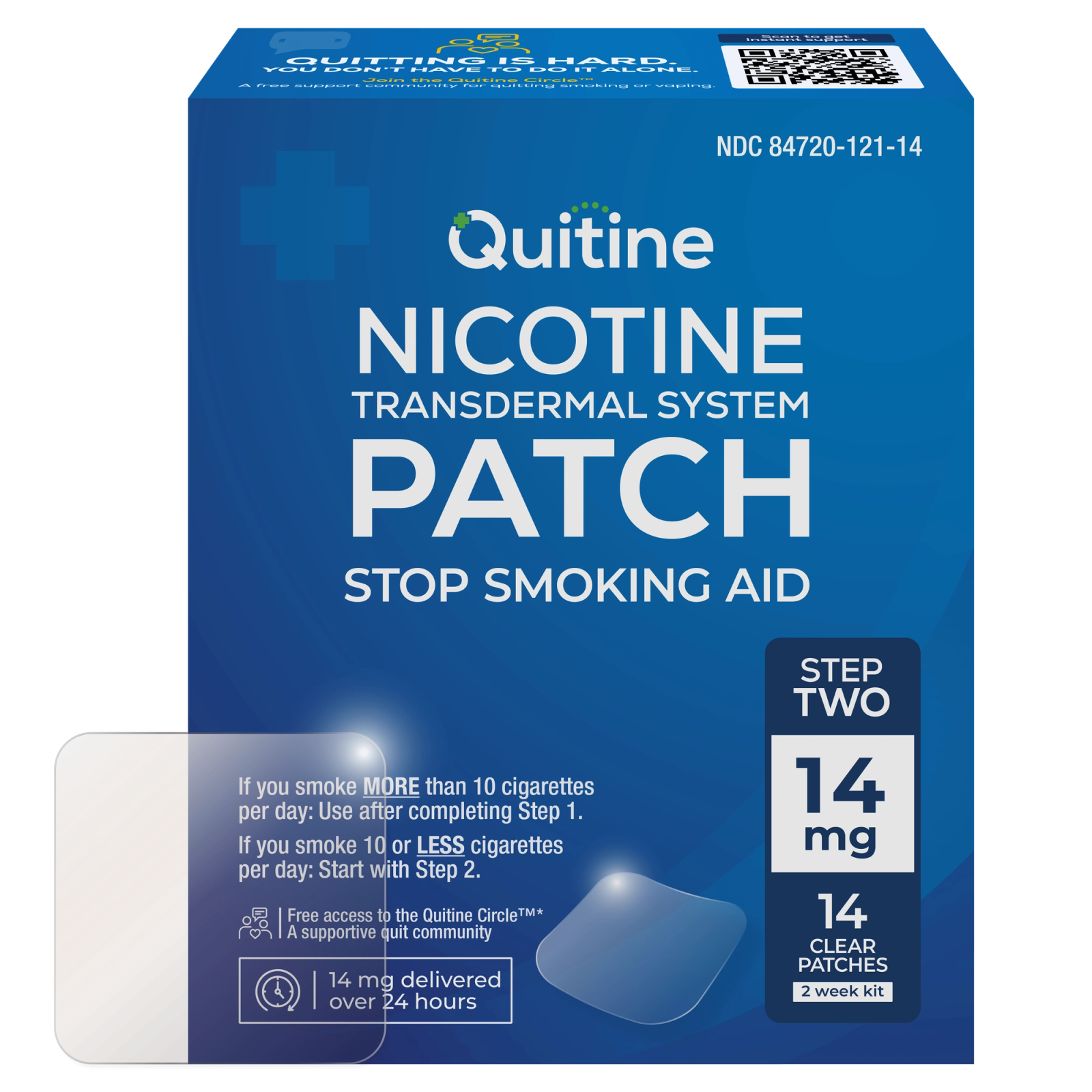
Description (Quitine Nicotine Patches Step 2 14mg 14 Pieces):
14 patches (2-week kit)
Start here if you smoke fewer than 10 cigarettes a day or vape lightly. You can also use these after you finish Step 1. Combine with 2 mg gum or lozenges if a craving breaks through.
Quitine nicotine patches are an FDA-regulated stop-smoking aid. Each patch delivers a steady amount of nicotine through the skin over 24 hours. You apply one patch each morning to clean, dry skin. It works in the background all day. There is no timing or counting required. You get consistent baseline support so you can focus on breaking the habit.
How to use
- Choose clean, dry, hairless skin on your upper arm, chest, or back. Skip lotions or oils before applying.
- Peel the liner and press the patch firmly for 10 to 20 seconds. Smooth the edges for a solid hold.
- Wear the patch for 24 hours. It is made for all-day wear, including everyday activities.
- Remove the patch after 24 hours and apply a new one to a different skin site. Rotate the site daily for comfort.
Stop use if skin irritation occurs. See the package directions for full details.
3) Quitine Nicotine Patches Step 3 7mg 14 Pieces
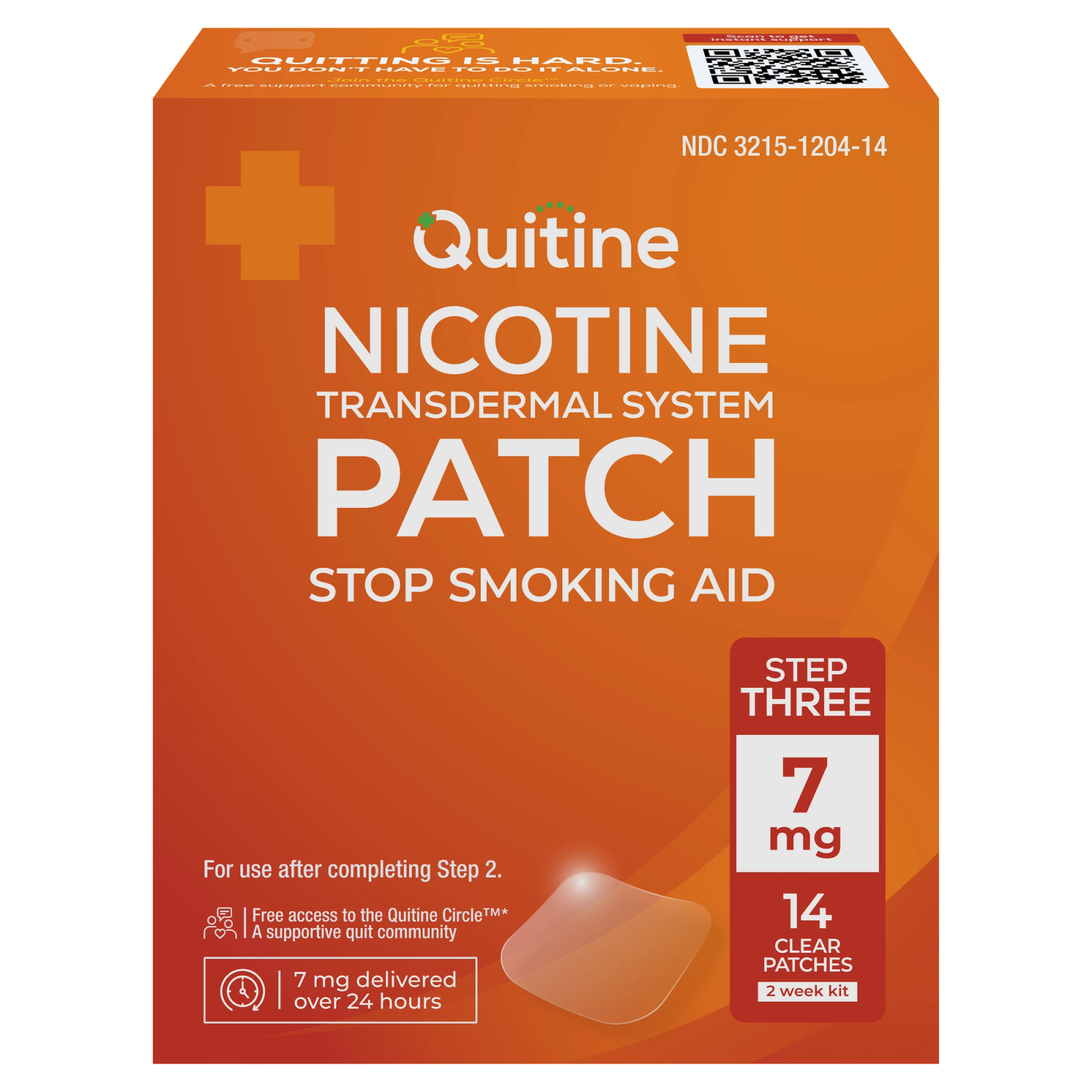
Description (Quitine Nicotine Patches Step 3 7mg 14 Pieces):
14 patches (2-week kit)
Use after you finish Step 2. This is the final taper. You can use the patches alone or add 2 mg gum or lozenges on harder days.
Quitine nicotine patches are an FDA-regulated stop-smoking aid. Each one delivers a steady amount of nicotine through the skin over 24 hours. You apply one patch every morning to clean, dry skin. The patch works in the background all day so you can focus on changing the habit itself.
How to use
- Choose a clean, dry, hairless area of skin on your upper arm, chest, or back. Skip any lotions or oils before you put the patch on.
- Peel the liner and press the patch firmly for 10 to 20 seconds. Smooth the edges so it stays in place.
- Wear the patch for a full 24 hours through everyday activities.
- After 24 hours, take it off and put a new patch on a different skin site. Rotate the location each day for comfort.
Stop use if skin irritation appears and follow the package directions.
Fix the problems that make people rip the patch off
Skin redness or itch. Rotate sites. Avoid broken skin, the belt line, and spots under a tight strap. If one brand's adhesive bothers you, a thinner clear film can feel better. Mild redness after removal is common. Spreading rash, swelling, or dizziness needs medical advice.
The patch will not stick. Start with clean, dry, lotion-free skin. Press the edges. After a shower, pat the area dry before you apply a new one. If a patch peels mid-day, replace it and note the site so you do not reuse that spot.
Odd dreams or poor sleep. Remove the patch at bedtime. Put a new one on in the morning. Keep oral NRT by the bed if night waking used to mean a smoke.
Nausea or a wired feeling. The dose may be high for your current use. Do not double patches. Step down only with a plan, and use fewer oral pieces if you added both at once.
"I forgot yesterday." Put the new patch on as soon as you remember. Set a phone alarm tied to an existing habit, like brushing your teeth. Missing days is how blood levels yo-yo, and yo-yo levels feel like cravings.
Still vaping a little. Nicotine from a vape plus a full-strength patch can feel like too much. Pick one path. If the patch is your quit tool, stop the vape and use gum or a lozenge for spikes. If you are cutting down first, get personal advice before you mix sources.
Life after the last patch
The last 7 mg week is not the finish line. Cues can return months later at a wedding, a new job, or a week of bad sleep. Keep a small stash of oral NRT past the day you take the final patch off. That is relapse prevention.
- Protect the new identity with boring, specific rules:
- No "just one" with friends who still smoke
- Change the after-dinner loop that used to include a porch cigarette
- Keep listing reasons you quit in one note on your phone
- Stay in a support space through the first smoke-free month, not only through week one
If you return to regular use, start again without waiting for a round date. Use what you learned: which cue won, which strength felt too low, and whether you were out of the nicotine product. A full NRT lineup lets you rebuild the same stack, patch plus rescue, instead of white-knuckling the second try.
FAQ
Can I keep a nicotine patch on if I smoke one cigarette?
Yes, in a lapse the useful move is to keep the patch on and stop smoking again as soon as you can. Taking the patch off after one cigarette often leads to a harder crash and a second cigarette. Do not add extra patches to make up for the slip. Use gum or a lozenge if another wave comes. If you smoked heavily for several days, ask a pharmacist or clinician before you change strength.
How long should nicotine patches be part of a relapse plan?
Many people wear patches through a full step-down of several weeks, then keep oral NRT nearby for high-risk days. Stopping the day you feel fine is how late slips happen. Stay on each step until evenings and weekends feel stable. If nicotine cravings surge after a drop, hold that step longer rather than going back to cigarettes. Personal health conditions can change the timeline, so get tailored advice if you are unsure.
Do I still need gum or lozenges if the patch is on all day?
Often yes, because the patch is slow and even, while many relapses are fast and tied to a cue. Combination use is a standard approach. Keep the oral nicotine product for coffee, alcohol, stress, and social moments. You do not need to use gum or lozenges every hour if the patch is doing its job. You need them on the days and hours that used to beat you.
What if skin irritation or dreams make me want to quit the patch?
Change the site every day and avoid lotion under the film. If nights are the problem, wear the patch only while you are awake. Mild itch after removal is common and usually fades. A rash that spreads, chest pain, or severe nausea is a reason to stop and get medical help. Switching to a thinner clear patch, or leaning more on oral NRT for a few days, can keep the quit going while the skin calms.
When can I stop all nicotine replacement without raising relapse risk?
Stop when you have finished the last planned step and your high-risk hours no longer need a rescue dose on most days. Keep a small amount of gum or lozenges for the first stretch after the last patch. If you find yourself using oral NRT from habit rather than from nicotine craving, taper the number of pieces. If a major stress week is coming, delay the final stop by a short time instead of testing yourself at the worst moment.
Join the 90-Day Quit Challenge.
Read Also:

Ready to Quit or Just Cut Back?
If you're reading about nicotine, vaping, or smoking habits, chances are you're already thinking about making a change.
You don't have to figure it out alone. The Quitine Circle is our free support community, open to everyone quitting smoking or vaping. No purchase is required, and you do not need to use Quitine products to participate.
Inside the Quitine Circle you'll find:
The 90-Day Quit Program to guide your step down plan
A printable Quit Program Workbook to track progress
Practical tools for managing cravings and triggers
Support from others going through the same process
Quitting works best when you combine the right tools with the right structure. That's exactly what the Quitine system is built for.
Take our short quiz to see which Quitine Quit Kit fits your nicotine habits.

Not Sure Which Product Is Right for You?
Take our 2-minute Quit Quiz and get a personalized product recommendation and 90-day system based on your smoking or vaping habits.