
Nicotine patches and microdosing trends: what actually helps you quit

People keep mixing up nicotine patches and microdosing trends. A labeled stop-smoking patch is a measured nicotine replacement tool you wear while you leave cigarettes or a vape. Online microdosing talk is usually about tiny homemade amounts for focus or appetite, and that often means cutting a patch into pieces.
Those jobs do not line up. If you want to stop smoking or vaping, a step-down nicotine patch plan matches the work in front of you. Build a steady patch plan that matches how you smoke or vape, not a cut-patch hack.
Knowing what is a nicotine patch makes it easier to see how it differs from microdosing trends. Topics like nicotine patches and the placebo effect and future medical research directions for nicotine patches also show how researchers are continuing to study nicotine patches beyond their established role in smoking cessation.
A structured patch plan vs the microdose trend
Online, nicotine patch microdosing often means taking a full-strength patch and slicing it. Some people wear a sliver for a few hours. Some chase focus. Some chase a smaller appetite. Some treat it like a daily nootropic. That is not how the product is labeled.
A stop-smoking patch is nicotine replacement. It feeds a measured amount of nicotine through the skin so your day is not a swing between a cigarette spike and a crash. The point is to quiet nicotine withdrawal while you break the hand-to-mouth habit.
The phrase borrowed shine from psychedelic microdosing. In wellness circles it now covers low dose nicotine from patches, pouches, gum, or lozenges. Influencers talk about sharper attention, a calmer mood, or fewer snack cravings. Some people who never smoked are trying it. Some people who still smoke are stacking it on top of cigarettes. That last group is using the patch the wrong way.
A few themes show up again and again:
- Tiny pieces of a 21mg or 14mg patch worn for part of the day
- Claims about focus, memory, or "clean energy"
- Talk of cutting the patch because a full dose feels like too much
- Advice to take nicotine-free days so tolerance does not build
- Use for long COVID brain fog, appetite control, or ADHD-like attention problems
Some of those ideas sit next to real science. Nicotine hits nicotinic acetylcholine receptors. That can change attention and working memory for a short window. Researchers have studied patches in people who do not smoke, including work on thinking and movement disorders. That research is not a green light to slice a box from the pharmacy aisle and wear it like a sticker.
Quitine was built around the quit job. We start with pharmacist-led products, then wrap them in a 90-day structure so the dose goes down on purpose. You do not have to invent a homemade sliver system. You move from a Step 1 21mg nicotine patch to a Step 2 14mg nicotine patch, then a Step 3 7mg nicotine patch as cravings ease.
If you even want the word microdosing, this is the version that stays honest. The dose gets smaller because the plan says so, not because scissors did. Get a pharmacist-built step-down kit and support that stays with you past the first week.
Why people cut patches, and why labels say not to
People picked the patch for a reason that is actually useful.
Smoke and vapor hit fast. Fast hits feel strong. Fast hits also train the brain to want another hit soon. A patch is slow. Nicotine seeps through skin for many hours. There is no throat hit, no flavor ritual, no hand motion. For a person quitting cigarettes, that slow curve is the feature.
Wellness users like the same curve for a different reason. They want a little lift without a buzz that knocks them off a chair. So they treat the patch like a dimmer switch. Cut it. Wear it for part of a workday. Peel it before bed.
Patch labels tell you not to cut the patch. The CDC’s guidance on how to use a nicotine patch also sticks to whole patches, the right starting strength, and a planned step-down.
Why the "do not cut" line exists:
- Some patches use a matrix. Drug sits in the adhesive. Cutting changes surface area, so dose can drop in a rough way.
- Some patches use a reservoir. Cutting can leak or dump nicotine in a burst.
- Edges after a cut may not seal. Dose becomes guesswork.
- Used pieces still hold nicotine. Kids and pets can get sick if they chew leftover scraps.
Even when a matrix patch can be cut in a pharmacy setting for other drugs, that is not the same as a home wellness protocol. A stop smoking patch is dosed as a whole unit for a reason.
If a full Step 1 patch feels like too much, the labeled answer is starting on Step 2, or pairing a lower patch with short-acting nicotine lozenges or nicotine gum only when a craving breaks through.
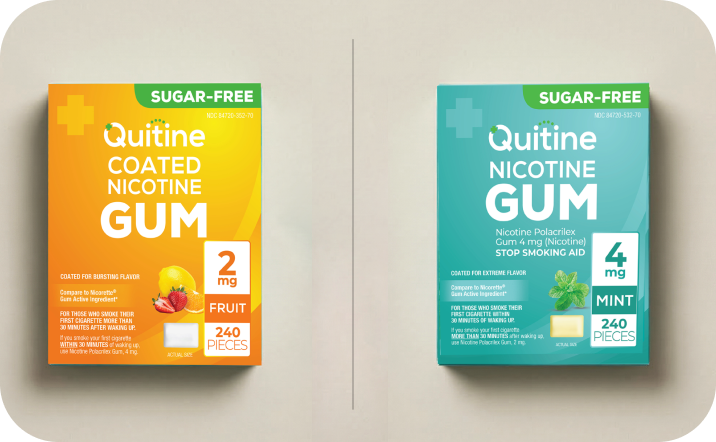
How Nicotine Gum Works
Nicotine gum delivers nicotine through the lining of your mouth as you chew. Unlike regular chewing gum, you need to use a specific "chew and park" technique to get the full effect.
Best for habit-triggered cravings
If you smoke or vape in response to specific triggers, after meals, during breaks, or when stressed, nicotine gum gives you something to do with your hands and mouth, which can help replace the physical habit.
Which Should You Choose?
The best choice depends on your personal preferences and smoking habits. If you miss the hand-to-mouth motion of smoking, gum might feel more natural. If you prefer something completely discreet, lozenges are a great option.Many people find that combining products, like using patches for all-day coverage and gum or lozenges for breakthrough cravings, gives them the best results.
Product Comparison
| Best For | Strength | |
|---|---|---|
| Nicotine Gum | Habit-triggered cravings | 2mg / 4mg |
| Nicotine Lozenges | Discreet craving relief | 2mg / 4mg |
| Nicotine Patches | All-day support | 21mg / 14mg / 7mg |
How a nicotine patch works, and how step-down dosing works
Think of the patch as background support. You put one piece on clean, dry, low-hair skin. Upper arm, chest, shoulder, or back are common spots. You press it on. Nicotine moves through the skin into the blood at a slow pace. Peak levels arrive later in the day, not in a minute. That steady line takes the edge off nicotine withdrawal so you can deal with the habit part, coffee, driving, stress, boredom.
The American Cancer Society describes patches as a measured dose through the skin, with a move to weaker patches over weeks. That is the whole design. High enough to keep you from climbing the walls. Then lower. Then lower again. Then off.
Quitine’s own walk-through of how nicotine patches work follows that same idea. One patch a day. Rotate the nicotine patch placement. Do not stack two patches unless a clinician says so. If vivid dreams show up, some people take the patch off at night and put a new one on in the morning.
That last point matters for the microdose crowd too. Nicotine can mess with sleep. Wearing a sliver "just for focus" into the evening can still keep you wired. A patch does not replace skill building. It does not stop your hand from reaching for a vape at a red light. That is why a plan plus a fast oral nicotine product still helps more than a patch alone for many people.
A step-down plan is still a small dose at the end. Step 3 is a low, known amount. You get there after your body has had time to adapt. Taking a 21mg patch, cutting it into many pieces, and hoping the math holds on sweaty skin is a different bet.
Combination therapy beats a homemade sliver
Pharmacists have a simpler answer than scissors. Use a patch for the all-day floor. Use nicotine gum or nicotine lozenge for the spike that still breaks through. Cleveland Clinic describes that pairing as a long-acting product plus a short-acting product.
That pairing has a name: combination NRT.
It fits real life:
- The patch is on while you work.
- A 4mg mint lozenge covers the first weeks if a craving still punches through.
- Later, 2mg nicotine gum or a mini lozenge handles harder moments without bumping the whole-day dose back up.
- You are not cutting the long-acting product into mystery pieces.
Quitine nicotine products are set up for that pairing. Early weeks often use a Step 1 patch with a 4mg oral nicotine product. Later weeks move to Step 2 or Step 3 with a 2mg oral product only on harder days. That is dose control with labeled units. If you like a smaller oral piece, mini nicotine lozenges dissolve with less fuss in a meeting or in a car.
Cutting a patch to "microdose" tries to solve a problem combination therapy has already solved. You wanted a smaller effect. Use a smaller labeled strength. You wanted a boost only at 3 p.m. Keep the patch steady and add one lozenge, then stop.
What the wellness pitch gets right, and who a patch is for
Nicotine can sharpen attention for a short time in some people. Patches avoid smoke tar and many vape chemicals. Slow delivery is less of a slot-machine than a cigarette. People who already use nicotine may feel clearer when the dose is smooth instead of jagged.
Nicotine can raise heart rate. It can raise blood pressure. It can disturb sleep. It can upset the stomach. It can irritate skin under the adhesive. It can create dependence in a person who was not dependent before. A non-smoker who starts a daily sliver is still training receptors.
People with heart disease, a recent heart attack, an irregular heartbeat, or blood pressure that is not controlled should talk with a clinician before any nicotine product. Pregnancy and breastfeeding need a clinician too. Labels say that in plain language for a reason.
Heat changes absorption. A heating pad, a hot yoga class, or a fever can push more nicotine through the skin than you planned. That is true for a whole patch. It is also true for a cut piece stuck to a warm arm.
And appetite is a weak reason to start nicotine. Any early drop in hunger often fades as the body adapts. Then you still have a nicotine habit, plus the same fridge. If focus is the real goal, treat sleep, protein, and the actual quit smoking plan first. A patch is a quit aid. It is a weak long-term "smart drug."
A patch is a strong fit when:
- You smoke or vape through most of the day
- You want fewer decisions than gum every hour
- You get background cravings, not only habit cravings
- You can remember one morning step
- You are willing to rotate skin sites and keep the area clean
A patch is a weaker solo fit when:
- Almost every nicotine craving is tied to a ritual, like coffee or a commute
- You need something in your mouth to replace the hand habit
- Your skin reacts to adhesives
- You want an on-off switch several times a day
Those weaker-solo cases still leave room for a patch. They just argue for pairing it with nicotine gum or lozenge. That is why having all NRT products in one kit is more useful than one hack product.
How to use a patch the way the label intends
Keep this mechanical. No ritual required.
- Pick clean, dry, low-hair skin on the upper body.
- Skip lotion, oil, or sunscreen on that spot.
- Peel the liner and press with your palm for about 10 to 20 seconds.
- Smooth the edges.
- Wash your hands.
- Wear it for the labeled time, usually a full day unless dreams get rough.
- Take it off, fold sticky sides together, and keep it away from kids and pets.
- Put the next patch on a new spot. Do not reuse the same site for about a week.
How to use nicotine replacement walks through those same patch steps, plus chew-and-park gum and parked lozenges. Technique matters as much as brand. Gum that gets chewed like candy dumps nicotine into the stomach and can make you sick. A lozenge that gets sucked like a mint does the same. Park it. Let the lining of the mouth do the work.
If a patch lifts at a corner, press it back. If it falls off, put a new one on a new site. Do not wait until tomorrow and sit in withdrawal. Water is fine. You can shower with most modern patches. Just do not bake the patch under a heating pad.
Discover Quitine and our best NRT products
Why Quitine?
Meet Mark and Oliver, the founders of Quitine. Mark has more than 40 years of experience as a pharmacist. His father’s long struggle with smoking shaped the work he does today. He has spent his career helping people leave cigarettes and vapes behind. Oliver brings deep experience in ecommerce, branding, product development, marketing, and logistics. Together they built Quitine to offer clear, practical nicotine replacement therapies that fit real daily life.
Our NRT products
Our pharmacist-formulated NRT products are made to support you while you change the habits that go with smoking or vaping.
Combination therapy for higher quit success
Research shows that combining a long-acting nicotine patch with a faster-acting form of NRT such as nicotine gum or nicotine lozenges can raise the chance of quitting smoking by 17 to 37 percent compared with using one product alone. At Quitine our nicotine patches deliver a steady amount of nicotine through the skin all day. Our nicotine gum and lozenges give you something to use when a craving hits. This dual approach, called NRT combination therapy, gives you more flexibility so you can stay comfortable while you change the habit.
Accessible pricing
We believe quitting should be within reach for everyone. We keep our therapies priced so more people can start without cutting corners on quality.
Personalized support
Quitting is personal, and so is the way we work with you. From the customer service team to the way each product is formulated, we stay with you through the process.
The Quitine Circle
The Quitine Circle is our free 90-day guided quit program and private support community. It is open to anyone quitting smoking or vaping and requires no purchase. It follows the same structured, pharmacist-backed approach that shapes our NRT products. You get short training modules, a practical quit workbook, weekly live Q and A sessions, and a moderated space with other people who are quitting, so you do not have to rely on willpower alone.
Discover which NRT is right for you
Not sure which product suits you best? Take our personalized quiz to find the NRT product that fits your needs. Take the Quiz
Real quitters. Real success.
See what our customers are saying about Quitine nicotine replacement therapy. Read Case Studies
The Quitine guarantee
Your satisfaction is covered. Learn more about our 30-day money-back promise. Learn More About Our Guarantee
Discover our best nicotine patches - Quitine
1) Quitine Nicotine Patches Step 1 21mg 28 Pieces
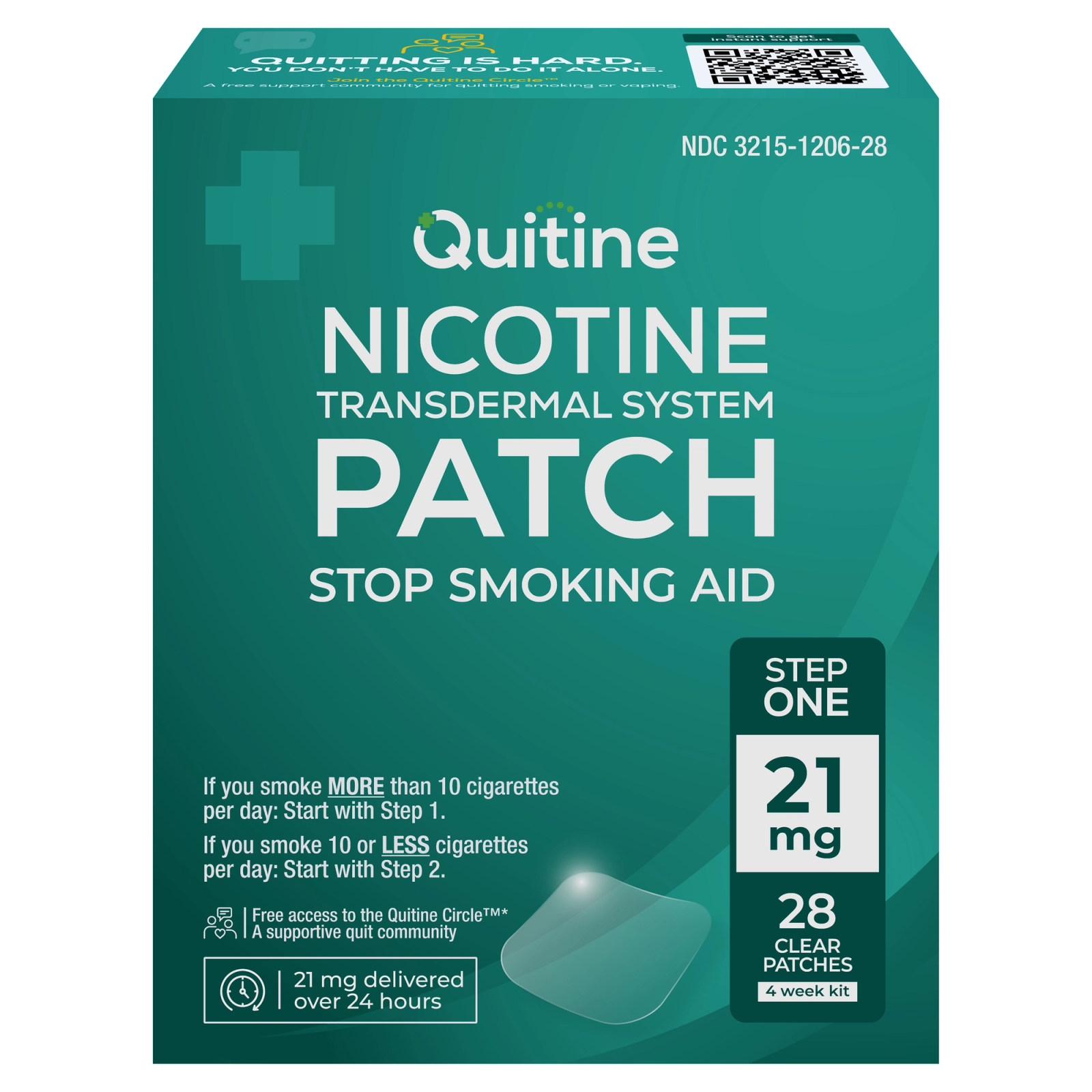
Description (Quitine Nicotine Patches Step 1 21mg 28 Pieces):
28 patches (4-week kit)
Start here if you smoke or vape within 30 minutes of waking, or if you smoke more than 10 cigarettes a day. You can combine the patches with 4 mg gum or lozenges when a craving breaks through.
Quitine nicotine patches are an FDA-regulated stop-smoking aid. Each patch delivers a steady amount of nicotine through the skin over a full 24 hours. You put one patch on in the morning on clean, dry skin. It stays in place through the day so the nicotine stays even while you work on the habits that go with smoking or vaping.
How to use
- Choose clean, dry, hairless skin on your upper arm, chest, or back. Skip lotions or oils before you apply the patch.
- Peel the liner and press the patch firmly for 10 to 20 seconds. Smooth the edges so it holds.
- Wear the patch for 24 hours. It is made for all-day use during regular activities.
- Remove the patch after 24 hours and put a new one on a different skin site. Rotate the spot each day to keep the skin comfortable.
Stop use if skin irritation occurs. See the package directions.
2) Quitine Nicotine Patches Step 2 14mg 14 Pieces
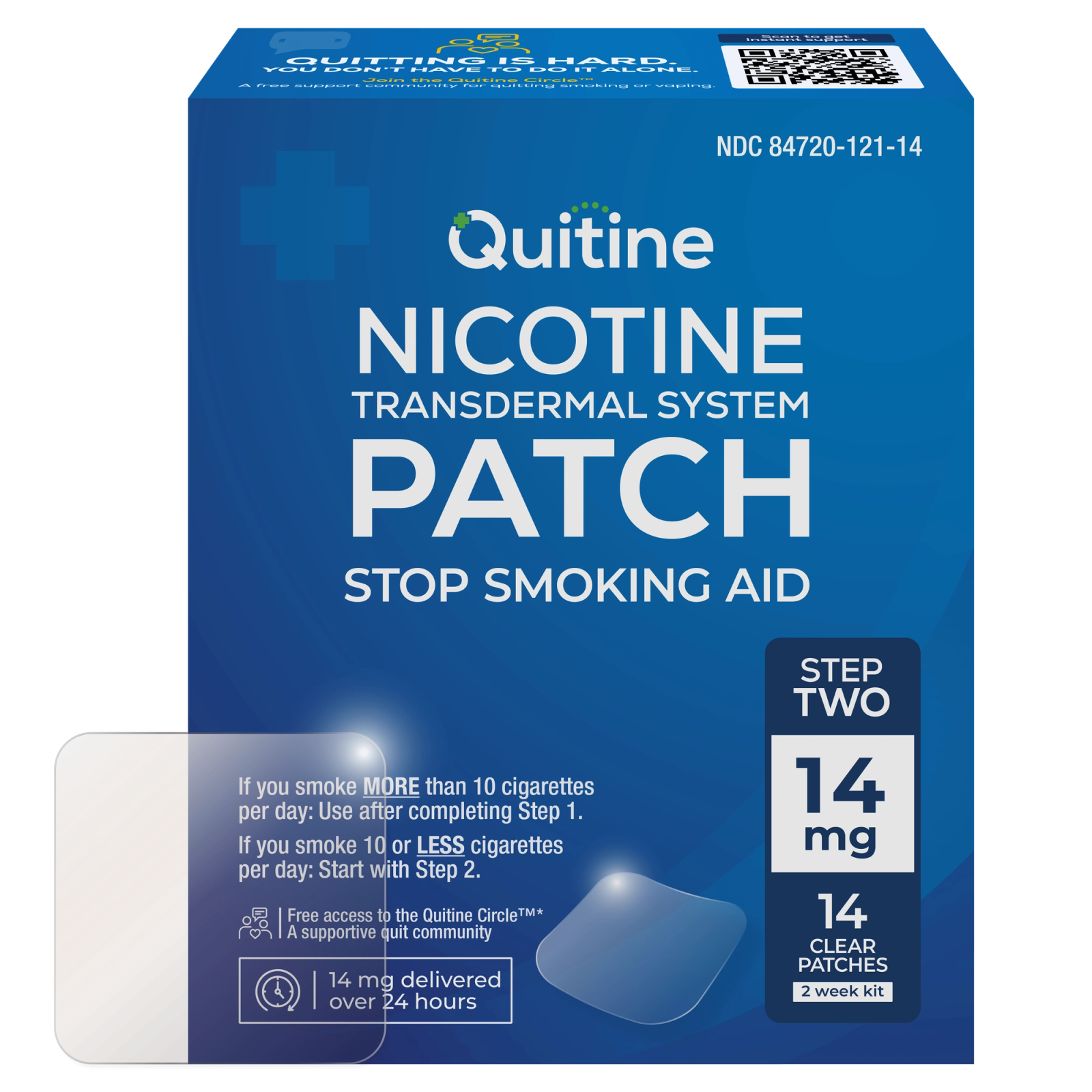
Description (Quitine Nicotine Patches Step 2 14mg 14 Pieces):
14 patches (2-week kit)
Start here if you smoke fewer than 10 cigarettes a day or vape lightly. You can also use these after you finish Step 1. Combine with 2 mg gum or lozenges if a craving breaks through.
Quitine nicotine patches are an FDA-regulated stop-smoking aid. Each patch delivers a steady amount of nicotine through the skin over 24 hours. You apply one patch each morning to clean, dry skin. It works in the background all day. There is no timing or counting required. You get consistent baseline support so you can focus on breaking the habit.
How to use
- Choose clean, dry, hairless skin on your upper arm, chest, or back. Skip lotions or oils before applying.
- Peel the liner and press the patch firmly for 10 to 20 seconds. Smooth the edges for a solid hold.
- Wear the patch for 24 hours. It is made for all-day wear, including everyday activities.
- Remove the patch after 24 hours and apply a new one to a different skin site. Rotate the site daily for comfort.
Stop use if skin irritation occurs. See the package directions for full details.
3) Quitine Nicotine Patches Step 3 7mg 14 Pieces
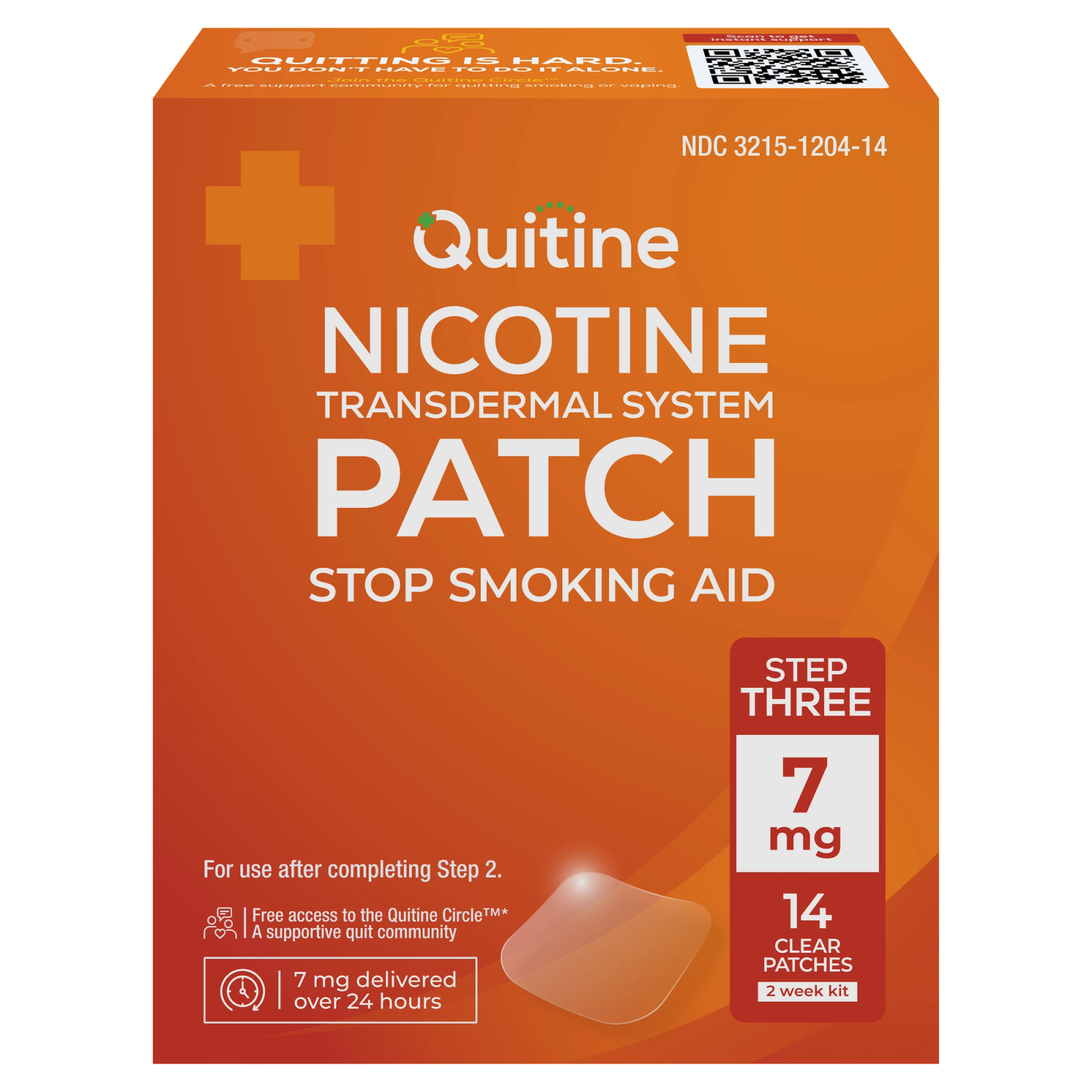
Description (Quitine Nicotine Patches Step 3 7mg 14 Pieces):
14 patches (2-week kit)
Use after you finish Step 2. This is the final taper. You can use the patches alone or add 2 mg gum or lozenges on harder days.
Quitine nicotine patches are an FDA-regulated stop-smoking aid. Each one delivers a steady amount of nicotine through the skin over 24 hours. You apply one patch every morning to clean, dry skin. The patch works in the background all day so you can focus on changing the habit itself.
How to use
- Choose a clean, dry, hairless area of skin on your upper arm, chest, or back. Skip any lotions or oils before you put the patch on.
- Peel the liner and press the patch firmly for 10 to 20 seconds. Smooth the edges so it stays in place.
- Wear the patch for a full 24 hours through everyday activities.
- After 24 hours, take it off and put a new patch on a different skin site. Rotate the location each day for comfort.
Stop use if skin irritation appears and follow the package directions.
FAQ
What is the difference between nicotine patch microdosing and a step-down patch plan?
Microdosing, in current wellness talk, usually means a homemade small piece of a higher-strength patch, worn for part of a day for focus or appetite. A step-down plan uses whole labeled strengths, 21mg then 14mg then 7mg, over set weeks so withdrawal stays manageable while you quit. One is a guessed amount for a side goal. The other is a measured quit tool. If you still want a smaller effect, start on the correct step or add a 2mg oral nicotine product for breakthrough moments instead of cutting the patch.
Can a nicotine patch help with focus if I am not trying to quit?
Some research finds short-term attention changes with nicotine, including in people who do not smoke. That does not make a cut patch a clean focus supplement. You can still build dependence. Heart rate, sleep, and mood can shift. If you already smoke or vape and you want a clearer head, a labeled quit smoking plan often feels "cleaner" because the dose stops swinging. Talk with a clinician before using NRT for any goal other than stopping tobacco or vapes.
Why do patch instructions say not to cut the patch?
Labels say not to cut because the release system is built for the full piece. Cutting can change how much nicotine leaves the patch, can leave sticky edges that fail, and can create leftover pieces that are unsafe for children and pets. If Step 1 feels strong, the designed move is Step 2 or a clinician’s advice, not a homemade fraction. Combination nicotine therapy with gum or a lozenge also lets you add a little extra only when a craving hits.
Should I wear a nicotine patch at night?
Many people wear it for a full day and night so morning withdrawal is softer. If dreams get intense or sleep gets worse, take it off at bedtime and put a new one on in the morning. That choice is about sleep quality on nicotine patches, not about turning the patch into a daytime microdose toy. Keep the next patch on a new skin site either way.
Is a patch enough by itself, or do I still need gum or lozenges?
A patch covers the all-day floor. Many people still get sharp nicotine cravings tied to stress, meals, or driving. Those spikes are why a short-acting product exists. You do not have to use oral NRT every hour. You use it when the patch is not enough. That pairing is more reliable than cutting the patch in the hope that a smaller piece will cover both jobs.
Read Also:

Ready to Quit or Just Cut Back?
If you're reading about nicotine, vaping, or smoking habits, chances are you're already thinking about making a change.
You don't have to figure it out alone. The Quitine Circle is our free support community, open to everyone quitting smoking or vaping. No purchase is required, and you do not need to use Quitine products to participate.
Inside the Quitine Circle you'll find:
The 90-Day Quit Program to guide your step down plan
A printable Quit Program Workbook to track progress
Practical tools for managing cravings and triggers
Support from others going through the same process
Quitting works best when you combine the right tools with the right structure. That's exactly what the Quitine system is built for.
Take our short quiz to see which Quitine Quit Kit fits your nicotine habits.

Not Sure Which Product Is Right for You?
Take our 2-minute Quit Quiz and get a personalized product recommendation and 90-day system based on your smoking or vaping habits.