
Nicotine patches and ADHD: potential benefits and risks

Potential benefits and risks come up for many people who notice that nicotine seems to sharpen focus for a short time. This leads some to wonder if nicotine patches could help manage ADHD symptoms. Quitine nicotine patches deliver steady nicotine without the smoke, which can support quitting while addressing cravings in a controlled way.
Nicotine research also examines nicotine patches for long COVID, nicotine patches for arthritis, nicotine patches for autism, nicotine patches for menopause symptoms, and nicotine patch protocols for chronic illness.
How nicotine interacts with the ADHD brain
ADHD often involves lower activity in brain pathways that handle dopamine and attention. Nicotine binds to receptors and can raise dopamine levels quickly. This creates a brief window of improved alertness and reduced mind wandering for some people.
The effect feels similar to how certain ADHD medicines work, which is why many with the condition smoke or use nicotine products at higher rates than others. The boost does not last because tolerance builds fast, and the brain starts to need the substance just to feel normal.
Patches release nicotine through the skin over many hours. This creates a more even level than smoking or vaping. Some early studies on adults with ADHD found better scores on attention tasks and fewer errors after short use of low-dose patches. The gains stayed mild and faded once the patch came off.
Potential short-term benefits seen in research
Small trials have tested nicotine patches on both smokers and non-smokers with ADHD. Participants sometimes showed faster reaction times and better sustained attention during the hours the patch stayed on. Some also reported less impulsivity.
One pilot trial in children and teens noted lower ratings of learning problems and hyperactivity from parents. Another study in young adults reported improved ability to stop an automatic response, which relates to impulse control.
These findings stay limited to short periods, often one day or one week. No major health group approves nicotine patches as an ADHD treatment. The benefits appear real but narrow, and they do not replace proven medicines or therapy.
People who already smoke may feel fewer withdrawal symptoms while using a patch, which can make daily tasks easier for a while. The steady delivery avoids the sharp peaks and drops that come with cigarettes.
Real risks that outweigh temporary gains
Nicotine remains addictive. People with ADHD face higher chances of dependence and stronger withdrawal when they try to stop. Symptoms like irritability and restlessness can feel worse than the original ADHD challenges during that period. Foggy thinking often appears as well.
Patches can cause skin irritation, nausea, dizziness, or sleep changes in some users. Higher doses may raise heart rate and blood pressure. Long-term use still carries cardiovascular concerns even without smoke.
Combining nicotine with ADHD medicines needs careful medical advice. Some reports note more side effects when both are present. Tolerance means any focus boost fades, leaving the user chasing the same effect with higher amounts or more frequent use.
Self-medicating with nicotine also skips the chance to address root causes through proper care. Smoking or vaping adds extra harm from other chemicals. Even nicotine sources without those chemicals keep the dependence cycle going.
Why ADHD and nicotine use often overlap
Many adults with ADHD start nicotine early as a way to calm restlessness or hold attention during school or work. The substance can feel like a quick fix for executive function struggles.
Once dependence sets in, quitting becomes harder. Nicotine withdrawal can amplify ADHD-like symptoms, creating a loop that keeps people using. Research notes that treating ADHD symptoms with approved methods can make quitting nicotine easier for some, especially when combined with patches for craving support.
Behavioral support matters here. Changing routines and tracking triggers work better when the physical pull of nicotine drops first. Building new habits follows more easily after that.
Safer paths for focus and nicotine control
Approved ADHD treatments, cognitive behavioral strategies, exercise, sleep habits, and structured routines form the core approach most doctors recommend. These target symptoms without adding a new dependence.
For those already using nicotine, nicotine replacement products offer a bridge. Steady nicotine patches handle baseline needs. Nicotine gum or nicotine lozenges can cover sudden urges. This combination helps many move away from smoking or vaping without cold turkey intensity.
A clear nicotine step-down plan reduces the dose over weeks. Pairing the products with community support like the Quitine Circle and tracking tools raises the chance of lasting change. Always check with a healthcare provider before starting any nicotine product, especially if you take other medicines or have heart concerns.
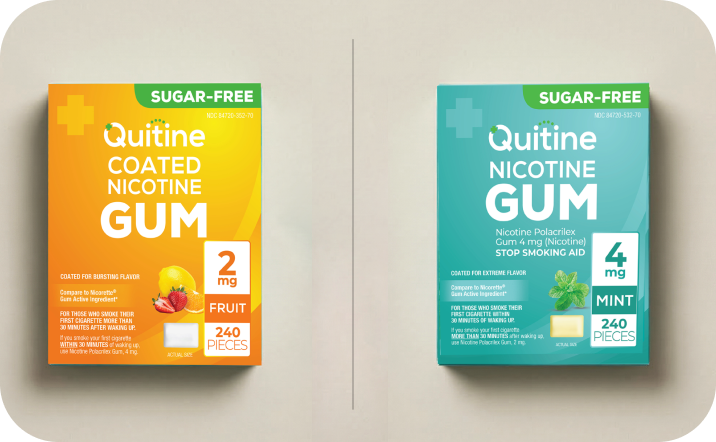
How Nicotine Gum Works
Nicotine gum delivers nicotine through the lining of your mouth as you chew. Unlike regular chewing gum, you need to use a specific "chew and park" technique to get the full effect.
Best for habit-triggered cravings
If you smoke or vape in response to specific triggers, after meals, during breaks, or when stressed, nicotine gum gives you something to do with your hands and mouth, which can help replace the physical habit.
Which Should You Choose?
The best choice depends on your personal preferences and smoking habits. If you miss the hand-to-mouth motion of smoking, gum might feel more natural. If you prefer something completely discreet, lozenges are a great option.Many people find that combining products, like using patches for all-day coverage and gum or lozenges for breakthrough cravings, gives them the best results.
Product Comparison
| Best For | Strength | |
|---|---|---|
| Nicotine Gum | Habit-triggered cravings | 2mg / 4mg |
| Nicotine Lozenges | Discreet craving relief | 2mg / 4mg |
| Nicotine Patches | All-day support | 21mg / 14mg / 7mg |
How Quitine supports controlled nicotine use
Quitine creates pharmacist-led nicotine replacement designed for real quitting. The clear nicotine patches come in a stepped strength plan that delivers nicotine evenly over 24 hours. You apply one each day and can add nicotine gum or nicotine lozenges when breakthrough cravings hit.
The products stay free of the extra chemicals in cigarettes and vapes. A free support circle includes a 90-day quit smoking program, progress tracker, short videos, and live sessions. Many people use the quit quiz to match strengths and build a personal kit.
The focus stays on gradual reduction and habit change from smoking. This approach supports long-term freedom from nicotine. Choose steady, pharmacist-backed support that helps you step down safely and stay smoke-free.
Discover Quitine and our best NRT products
Why Quitine?
Meet Mark and Oliver, the founders of Quitine. Mark has more than 40 years of experience as a pharmacist. His father’s long struggle with smoking shaped the work he does today. He has spent his career helping people leave cigarettes and vapes behind. Oliver brings deep experience in ecommerce, branding, product development, marketing, and logistics. Together they built Quitine to offer clear, practical nicotine replacement therapies that fit real daily life.
Our NRT products
Our pharmacist-formulated NRT products are made to support you while you change the habits that go with smoking or vaping.
Combination therapy for higher quit success
Research shows that combining a long-acting nicotine patch with a faster-acting form of NRT such as nicotine gum or nicotine lozenges can raise the chance of quitting smoking by 17 to 37 percent compared with using one product alone. At Quitine our nicotine patches deliver a steady amount of nicotine through the skin all day. Our nicotine gum and lozenges give you something to use when a craving hits. This dual approach, called NRT combination therapy, gives you more flexibility so you can stay comfortable while you change the habit.
Accessible pricing
We believe quitting should be within reach for everyone. We keep our therapies priced so more people can start without cutting corners on quality.
Personalized support
Quitting is personal, and so is the way we work with you. From the customer service team to the way each product is formulated, we stay with you through the process.
The Quitine Circle
The Quitine Circle is our free 90-day guided quit program and private support community. It is open to anyone quitting smoking or vaping and requires no purchase. It follows the same structured, pharmacist-backed approach that shapes our NRT products. You get short training modules, a practical quit workbook, weekly live Q and A sessions, and a moderated space with other people who are quitting, so you do not have to rely on willpower alone.
Discover which NRT is right for you
Not sure which product suits you best? Take our personalized quiz to find the NRT product that fits your needs. Take the Quiz
Real quitters. Real success.
See what our customers are saying about Quitine nicotine replacement therapy. Read Case Studies
The Quitine guarantee
Your satisfaction is covered. Learn more about our 30-day money-back promise. Learn More About Our Guarantee
Discover our best nicotine patches - Quitine
1) Quitine Nicotine Patches Step 1 21mg 28 Pieces
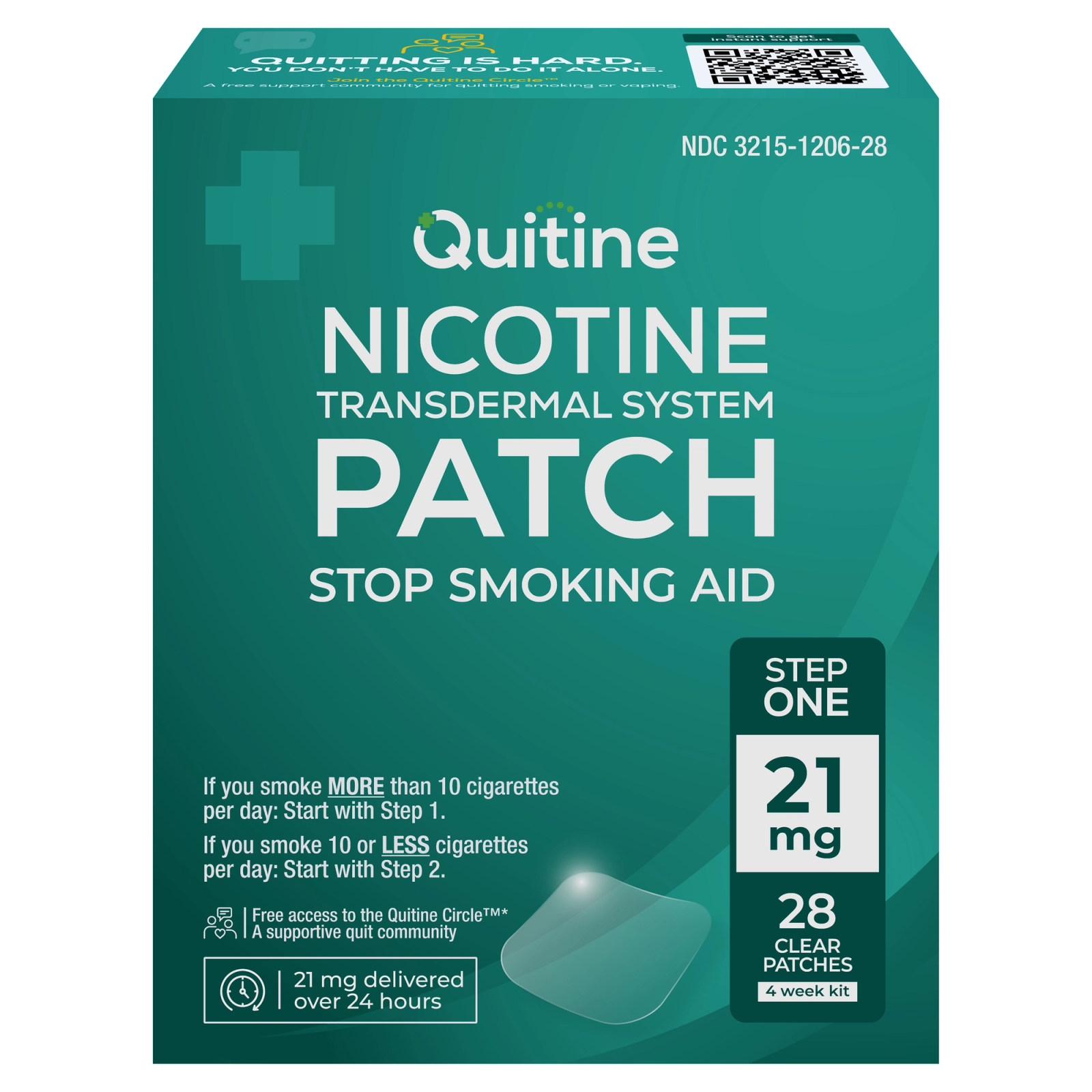
Description (Quitine Nicotine Patches Step 1 21mg 28 Pieces):
28 patches (4-week kit)
Start here if you smoke or vape within 30 minutes of waking, or if you smoke more than 10 cigarettes a day. You can combine the patches with 4 mg gum or lozenges when a craving breaks through.
Quitine nicotine patches are an FDA-regulated stop-smoking aid. Each patch delivers a steady amount of nicotine through the skin over a full 24 hours. You put one patch on in the morning on clean, dry skin. It stays in place through the day so the nicotine stays even while you work on the habits that go with smoking or vaping.
How to use
- Choose clean, dry, hairless skin on your upper arm, chest, or back. Skip lotions or oils before you apply the patch.
- Peel the liner and press the patch firmly for 10 to 20 seconds. Smooth the edges so it holds.
- Wear the patch for 24 hours. It is made for all-day use during regular activities.
- Remove the patch after 24 hours and put a new one on a different skin site. Rotate the spot each day to keep the skin comfortable.
Stop use if skin irritation occurs. See the package directions.
2) Quitine Nicotine Patches Step 2 14mg 14 Pieces
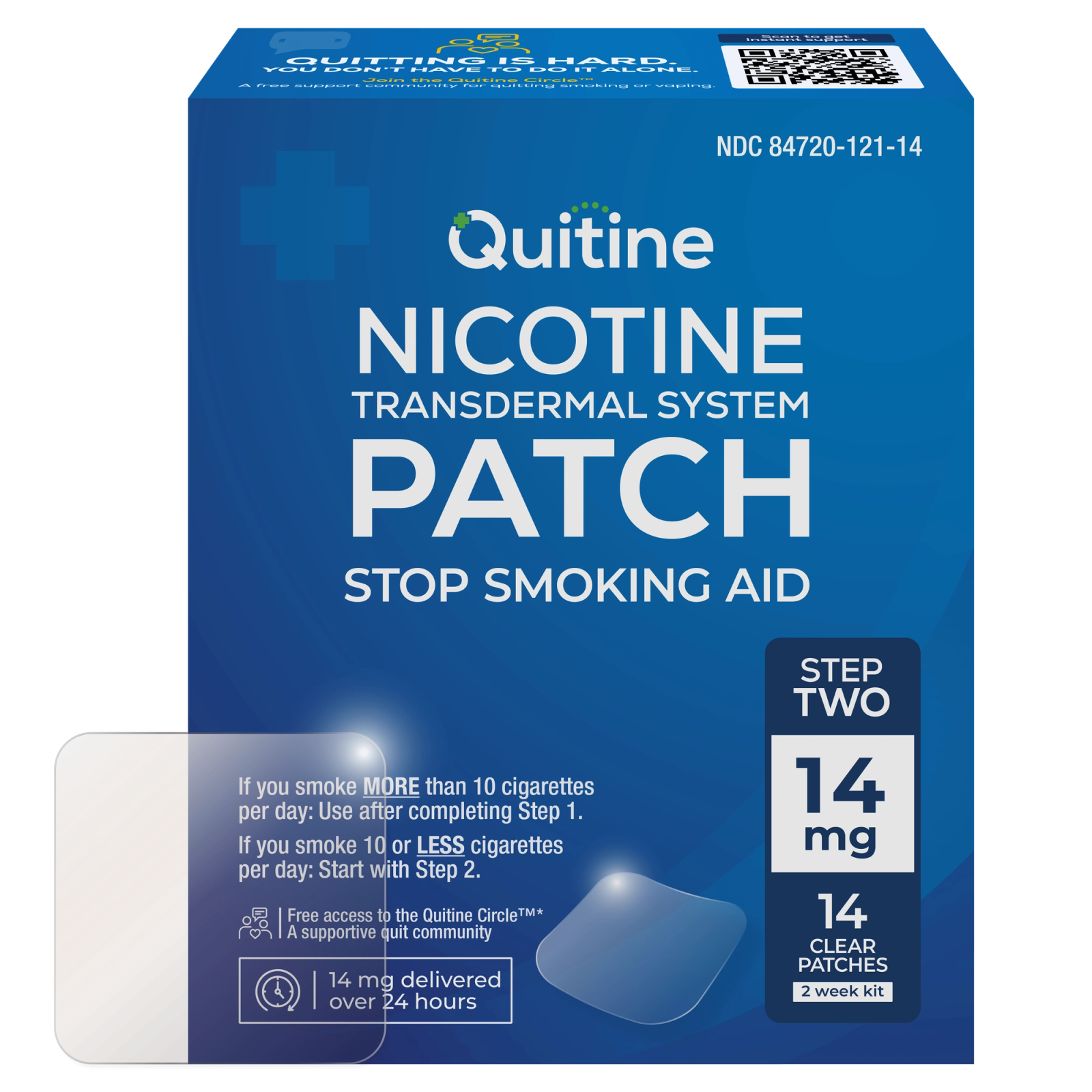
Description (Quitine Nicotine Patches Step 2 14mg 14 Pieces):
14 patches (2-week kit)
Start here if you smoke fewer than 10 cigarettes a day or vape lightly. You can also use these after you finish Step 1. Combine with 2 mg gum or lozenges if a craving breaks through.
Quitine nicotine patches are an FDA-regulated stop-smoking aid. Each patch delivers a steady amount of nicotine through the skin over 24 hours. You apply one patch each morning to clean, dry skin. It works in the background all day. There is no timing or counting required. You get consistent baseline support so you can focus on breaking the habit.
How to use
- Choose clean, dry, hairless skin on your upper arm, chest, or back. Skip lotions or oils before applying.
- Peel the liner and press the patch firmly for 10 to 20 seconds. Smooth the edges for a solid hold.
- Wear the patch for 24 hours. It is made for all-day wear, including everyday activities.
- Remove the patch after 24 hours and apply a new one to a different skin site. Rotate the site daily for comfort.
Stop use if skin irritation occurs. See the package directions for full details.
3) Quitine Nicotine Patches Step 3 7mg 14 Pieces
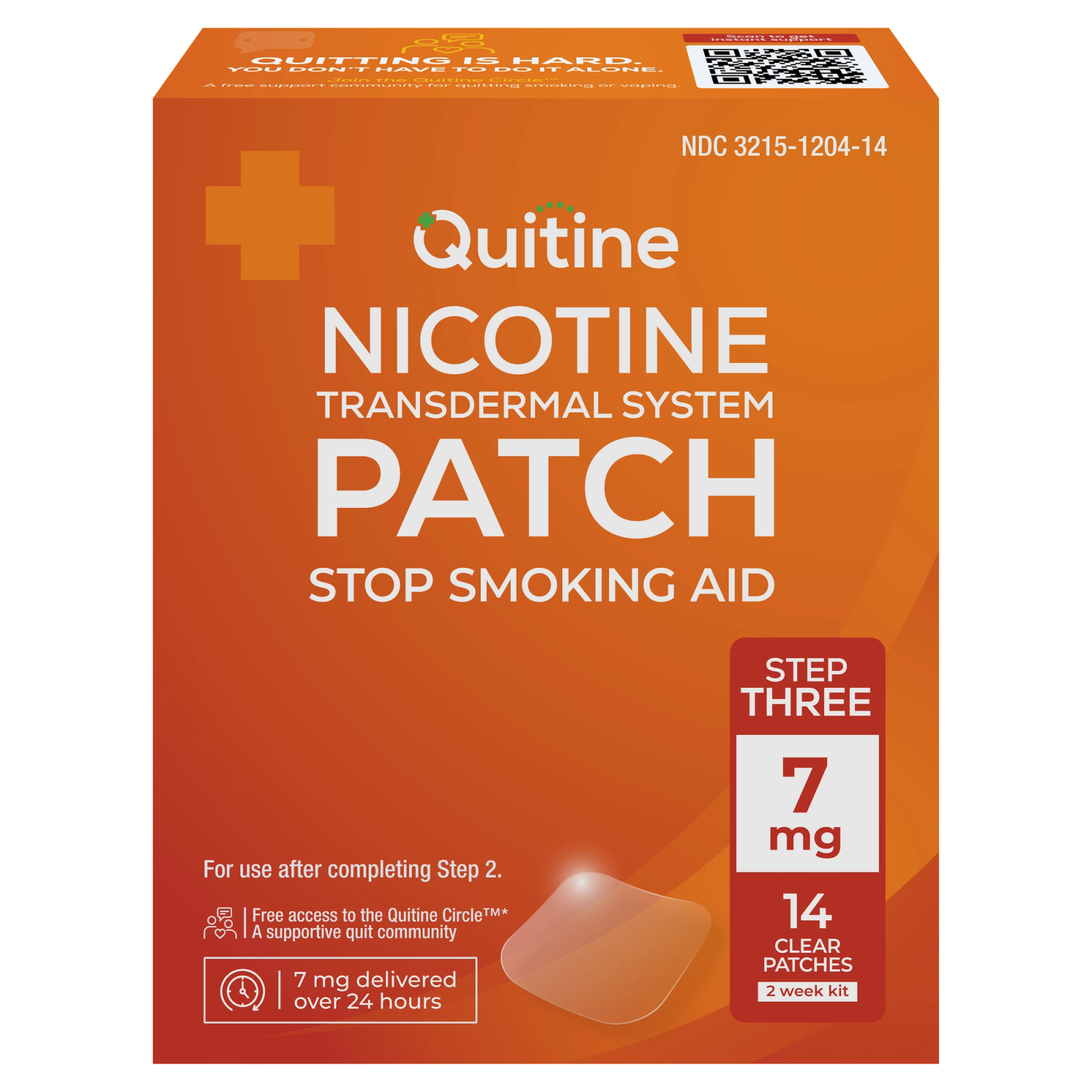
Description (Quitine Nicotine Patches Step 3 7mg 14 Pieces):
14 patches (2-week kit)
Use after you finish Step 2. This is the final taper. You can use the patches alone or add 2 mg gum or lozenges on harder days.
Quitine nicotine patches are an FDA-regulated stop-smoking aid. Each one delivers a steady amount of nicotine through the skin over 24 hours. You apply one patch every morning to clean, dry skin. The patch works in the background all day so you can focus on changing the habit itself.
How to use
- Choose a clean, dry, hairless area of skin on your upper arm, chest, or back. Skip any lotions or oils before you put the patch on.
- Peel the liner and press the patch firmly for 10 to 20 seconds. Smooth the edges so it stays in place.
- Wear the patch for a full 24 hours through everyday activities.
- After 24 hours, take it off and put a new patch on a different skin site. Rotate the location each day for comfort.
Stop use if skin irritation appears and follow the package directions.
Practical tips if you already use nicotine and have ADHD
Talk with your doctor about both conditions together. Treating ADHD symptoms first can ease the urge to self-medicate. If you decide to quit nicotine, start with the right patch strength based on your current use level.
Keep a simple log of focus and mood. Note your cravings as well. Note what helps outside of nicotine, such as short walks or timed work blocks. Fidget tools can help too. Use oral nicotine products only for strong urges so the total daily amount stays controlled.
Join a quitting support group or use structured quit smoking programs that address both ADHD and quitting. Small daily wins build the routines that replace the old nicotine habit.
What the latest evidence suggests overall
Reviews of nicotine research confirm mild short-term cognitive effects in some people with attention challenges. The same sources stress addiction risk and tolerance. Lack of long-term safety data also rules out nicotine as a treatment.
Health organizations position nicotine patches strictly as tools to stop smoking or vaping. Using them for ADHD falls outside approved use and carries avoidable downsides. Safer, proven options exist for both focus management and nicotine reduction.
Read also:
- Nicotine Lozenges vs. Nicotine Patch: Pros and Cons of Each Quit Smoking Aid
- The Psychological Effects of Quitting Smoking with Nicotine Gum
- Smoking vs. Vaping vs. Nicotine Gum: Which Is Least Harmful and Why?
- What Is Nicotine Gum and How Does It Work?
- Quit Strategies: Managing Cravings While Quitting Smoking or Vaping.

Ready to Quit or Just Cut Back?
If you're reading about nicotine, vaping, or smoking habits, chances are you're already thinking about making a change.
You don't have to figure it out alone. The Quitine Circle is our free support community, open to everyone quitting smoking or vaping. No purchase is required, and you do not need to use Quitine products to participate.
Inside the Quitine Circle you'll find:
The 90-Day Quit Program to guide your step down plan
A printable Quit Program Workbook to track progress
Practical tools for managing cravings and triggers
Support from others going through the same process
Quitting works best when you combine the right tools with the right structure. That's exactly what the Quitine system is built for.
Take our short quiz to see which Quitine Quit Kit fits your nicotine habits.

Not Sure Which Product Is Right for You?
Take our 2-minute Quit Quiz and get a personalized product recommendation and 90-day system based on your smoking or vaping habits.
Frequently asked questions
Nicotine patches fall under nicotine replacement therapy products that regulators approve specifically to support people who want to stop smoking or vaping. ADHD medications receive approval based on studies that measure changes in attention, hyperactivity, and impulse control across weeks and months. The pathways these tools affect and the conditions they target remain separate. Replacing an ADHD prescription with a patch leaves the primary symptoms without the approach designed for them and can start a dependence process that was not part of the original plan.
Research involving people without prior nicotine use typically finds only short-lived shifts in attention measures that end when the patch is removed. Beginning nicotine for the sake of focus introduces the chance of dependence where none existed. Clinicians generally point to established ADHD approaches that do not involve nicotine as the preferred starting point. Those approaches include prescribed options and adjustments to daily structure that address the condition directly.
Nicotine patches deliver a continuous level of nicotine through the skin for a full day once applied. Nicotine gum requires chewing and allows the user to decide when and how long to continue based on the moment. Nicotine lozenges dissolve in the mouth over a period of time after placement. Individuals working to stop smoking or vaping often match the form to the pattern of their urges, whether steady coverage or something available on demand feels more practical. Preference for the physical experience of each form also guides the selection.
People with ADHD can experience stronger patterns of dependence and more noticeable withdrawal effects when nicotine levels change. Health reviews before any nicotine product begins usually cover current medicines, heart factors, and sleep patterns. A gradual reduction schedule keeps the overall amount of nicotine decreasing across days and weeks. Noting changes in focus and mood alongside urge intensity can highlight what accompanies the nicotine product in daily life.
Care for ADHD symptoms typically starts with treatments and strategies that regulators and clinicians have evaluated for that purpose. Nicotine appears mainly when someone already depends on it from prior smoking or vaping and needs a short-term bridge. Nicotine patches offer one form of that bridge through the skin. Nicotine gum and nicotine lozenges provide oral alternatives that fit different moments. Moving the total nicotine amount downward over time helps separate the ADHD management from any ongoing nicotine use.