
Nicotine patches and digestive issues: nausea and reflux

Many people who use nicotine patches notice nausea or reflux while they quit smoking or vaping. These digestive issues can feel frustrating, yet they often improve with simple changes. Nicotine can relax the muscle that keeps stomach acid down, and the steady dose from a patch sometimes triggers mild stomach upset at first.
Understanding the cause helps you stay on track. Options like Quitine nicotine patches deliver controlled nicotine without the extra chemicals in cigarettes. It’s also helpful to understand other possible patch-related effects, including nicotine patch skin reactions, the risks of nicotine patch use in non-smokers, headaches and dizziness from nicotine patches, and potential nicotine patch withdrawal symptoms after stopping.
Start the 90-Day Quit Challenge.
Why nicotine patches sometimes lead to nausea and reflux
Nicotine patches release a steady amount of nicotine through the skin. This helps cut cravings without the harmful smoke. Still, some users feel nauseous or notice heartburn in the early days.
The body is adjusting to a new way of getting nicotine. Nicotine withdrawal from cigarettes can also stir up stomach feelings. In many cases the patch itself is not the only factor. Nicotine dosage plays a role. A patch that is stronger than needed can increase the chance of nausea. Skin absorption varies from person to person, so the same strength does not feel the same for everyone.
Reflux can appear because nicotine may loosen the lower esophageal sphincter. That ring of muscle normally keeps acid in the stomach. When it relaxes, acid can move upward and create a burning feeling. Research shows this effect can happen with nicotine from any source, including patches. One study found the pressure drop occurs even without smoke. Another look at the same question found no clear increase in actual reflux episodes for most patch users. The difference often comes down to individual sensitivity and how the body reacts during the first weeks of quitting.
Oral products such as nicotine gum or nicotine lozenges can add extra risk because some nicotine gets swallowed. That can irritate the stomach lining more directly. Patches avoid that path, which is why many people with sensitive digestion prefer them.
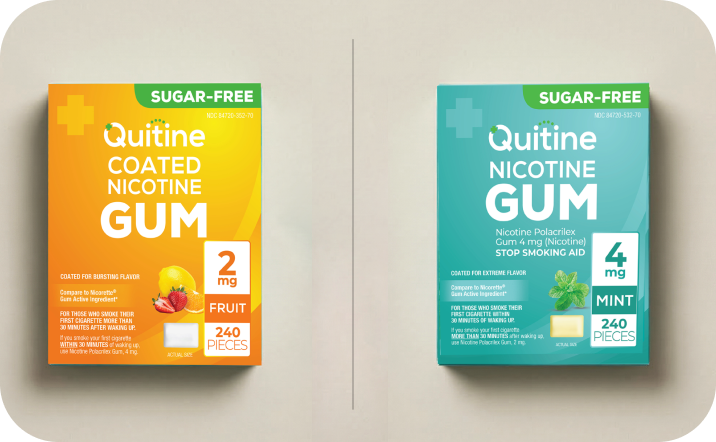
How Nicotine Gum Works
Nicotine gum delivers nicotine through the lining of your mouth as you chew. Unlike regular chewing gum, you need to use a specific "chew and park" technique to get the full effect.
Best for habit-triggered cravings
If you smoke or vape in response to specific triggers, after meals, during breaks, or when stressed, nicotine gum gives you something to do with your hands and mouth, which can help replace the physical habit.
Which Should You Choose?
The best choice depends on your personal preferences and smoking habits. If you miss the hand-to-mouth motion of smoking, gum might feel more natural. If you prefer something completely discreet, lozenges are a great option.Many people find that combining products, like using patches for all-day coverage and gum or lozenges for breakthrough cravings, gives them the best results.
Product Comparison
| Best For | Strength | |
|---|---|---|
| Nicotine Gum | Habit-triggered cravings | 2mg / 4mg |
| Nicotine Lozenges | Discreet craving relief | 2mg / 4mg |
| Nicotine Patches | All-day support | 21mg / 14mg / 7mg |
How nicotine affects the digestive system
Nicotine reaches the bloodstream and acts on nerves that control the gut. It can speed up or slow certain movements in the stomach and intestines. It may also raise acid production in some people. These changes explain why nausea, mild indigestion, or a sour taste can show up.
During the quit nicotine process the body is healing from years of smoke exposure. Smoke itself damages the lining of the esophagus and stomach. When you stop, the healing process can temporarily increase awareness of any remaining irritation. Nicotine from a patch keeps withdrawal milder, yet it still interacts with the same pathways.
People who already deal with acid reflux or sensitive stomachs may notice the effect more. Timing matters too. Wearing the nicotine patch while lying down soon after a heavy meal can make reflux feel stronger. Eating large or spicy meals while the patch is working can add to the discomfort. These effects are usually temporary. As the body settles into a lower nicotine level, many users find the stomach settles as well.
Managing nausea while using nicotine patches
Nausea often shows up in the first few days. It can come from the patch dose, from withdrawal, or from both. Lowering the dose for a short time or switching to a lower strength step often helps. Eating smaller meals more often keeps the stomach from feeling empty or overloaded. Bland foods such as toast, rice, or bananas settle better than fried or rich options.
Stay upright for a while after eating. Sip water throughout the day instead of large amounts at once. Some people find that removing the patch a few hours before bed reduces overnight queasiness, then putting a fresh one on in the morning.
If nausea continues, talk with a doctor or pharmacist. They can check whether the strength matches your past smoking level. Combining a low dose nicotine patch with a short-acting product for breakthrough cravings can also smooth the process. Products such as Quitine nicotine lozenges or nicotine gum give quick relief without raising the overall daily amount too high.
Handling reflux and heartburn with nicotine patches
Heartburn or a rising acid feeling can appear even if you never had it before quitting. Nicotine’s effect on the sphincter is one reason. Stress from quitting can tighten the abdomen and push acid upward as well.
Simple habits make a difference. Avoid lying down for at least two or three hours after meals. Raise the head of the bed a few inches if night symptoms bother you. Cut back on coffee, chocolate, mint, and acidic foods while your system adjusts. Chewing sugar-free gum (non-nicotine) after meals can increase saliva and help neutralize acid.
If reflux was already a problem, nicotine patches may still be easier than oral nicotine products. Oral forms place nicotine near the esophagus and can increase the chance of swallowed saliva carrying extra nicotine into the stomach. Patches keep delivery through the skin and give a flatter level across the day.
Over-the-counter antacids or acid reducers can offer short-term comfort. Check with a healthcare provider before adding them, especially if you take other medicines.
Choosing nicotine replacement that fits sensitive digestion
Different forms of nicotine replacement therapy affect the gut in different ways. Patches give a steady release and avoid the mouth-to-stomach path. That makes them a solid first choice for many people who notice nausea or reflux with gum or lozenges.
Gum and lozenges work well for sudden cravings, yet they require careful technique. Parking the nicotine product between cheek and gum instead of chewing or sucking hard reduces the amount of nicotine that gets swallowed. Even then, some users still feel more stomach activity.
Many people do best with a combination approach. A patch covers the baseline need while a lozenge or piece of gum handles strong urges. This keeps the total nicotine lower and steadier than high-dose oral use alone. Pharmacist-designed options from Quitine include step-down nicotine patches, mint or fruit gum, and mint or cherry nicotine lozenges so you can match the form and strength to how your body responds.
Practical steps to reduce digestive side effects
Start with the right strength based on how much you used to smoke or vape. Follow the step-down schedule so the nicotine dose drops over weeks. Apply the patch at the same time each day on a clean, hair-free spot above the waist.
Track symptoms for a few days. Note when nausea or reflux appears and what you ate or did around that time. Small pattern changes often bring relief. Stay hydrated, move gently after meals, and keep stress lower with short walks or breathing exercises.
If symptoms stay strong after a week or two, pause and speak with a doctor. They may suggest a different strength, a shorter wear time at night, or a short break while other support continues. Never smoke or vape while the patch is on. Extra nicotine raises the chance of overdose symptoms that include stronger nausea.
When digestive issues signal the need for medical advice
Most nausea and reflux linked to nicotine patches stay mild and fade. Seek care if vomiting becomes frequent, if pain is sharp or lasts many hours, if you notice blood, or if you feel weak and dizzy. These signs can point to something beyond the patch.
People with a history of ulcers, severe reflux disease, or heart problems should check with a healthcare provider before starting any nicotine replacement. The same applies if you are pregnant or breastfeeding. A pharmacist can also review your current medicines for any interactions that might worsen stomach symptoms.
How Quitine supports a smoother quit with fewer digestive surprises
Quitine offers nicotine patches in clear step strengths so you can start at the level that matches your past use and taper down. The patches sit alongside mint and fruit gum plus mint and cherry lozenges. This range lets you choose the form that feels gentlest on your stomach. Many people begin with a patch for all-day coverage and add a lozenge only when a strong craving hits.
The full collection of nicotine replacement products gives flexibility while keeping the focus on finishing. Free tools such as the Quitine Circle and the personalized quit smoking quiz help users stay consistent until they reach zero nicotine. The 30-day money-back guarantee removes financial pressure during the early stages.
Discover Quitine and our best NRT products
Why Quitine?
Meet Mark and Oliver, the founders of Quitine. Mark has more than 40 years of experience as a pharmacist. His father’s long struggle with smoking shaped the work he does today. He has spent his career helping people leave cigarettes and vapes behind. Oliver brings deep experience in ecommerce, branding, product development, marketing, and logistics. Together they built Quitine to offer clear, practical nicotine replacement therapies that fit real daily life.
Our NRT products
Our pharmacist-formulated NRT products are made to support you while you change the habits that go with smoking or vaping.
Combination therapy for higher quit success
Research shows that combining a long-acting nicotine patch with a faster-acting form of NRT such as nicotine gum or nicotine lozenges can raise the chance of quitting smoking by 17 to 37 percent compared with using one product alone. At Quitine our nicotine patches deliver a steady amount of nicotine through the skin all day. Our nicotine gum and lozenges give you something to use when a craving hits. This dual approach, called NRT combination therapy, gives you more flexibility so you can stay comfortable while you change the habit.
Accessible pricing
We believe quitting should be within reach for everyone. We keep our therapies priced so more people can start without cutting corners on quality.
Personalized support
Quitting is personal, and so is the way we work with you. From the customer service team to the way each product is formulated, we stay with you through the process.
The Quitine Circle
The Quitine Circle is our free 90-day guided quit program and private support community. It is open to anyone quitting smoking or vaping and requires no purchase. It follows the same structured, pharmacist-backed approach that shapes our NRT products. You get short training modules, a practical quit workbook, weekly live Q and A sessions, and a moderated space with other people who are quitting, so you do not have to rely on willpower alone.
Discover which NRT is right for you
Not sure which product suits you best? Take our personalized quiz to find the NRT product that fits your needs. Take the Quiz
Real quitters. Real success.
See what our customers are saying about Quitine nicotine replacement therapy. Read Case Studies
The Quitine guarantee
Your satisfaction is covered. Learn more about our 30-day money-back promise. Learn More About Our Guarantee
Discover our best nicotine patches - Quitine
1) Quitine Nicotine Patches Step 1 21mg 28 Pieces
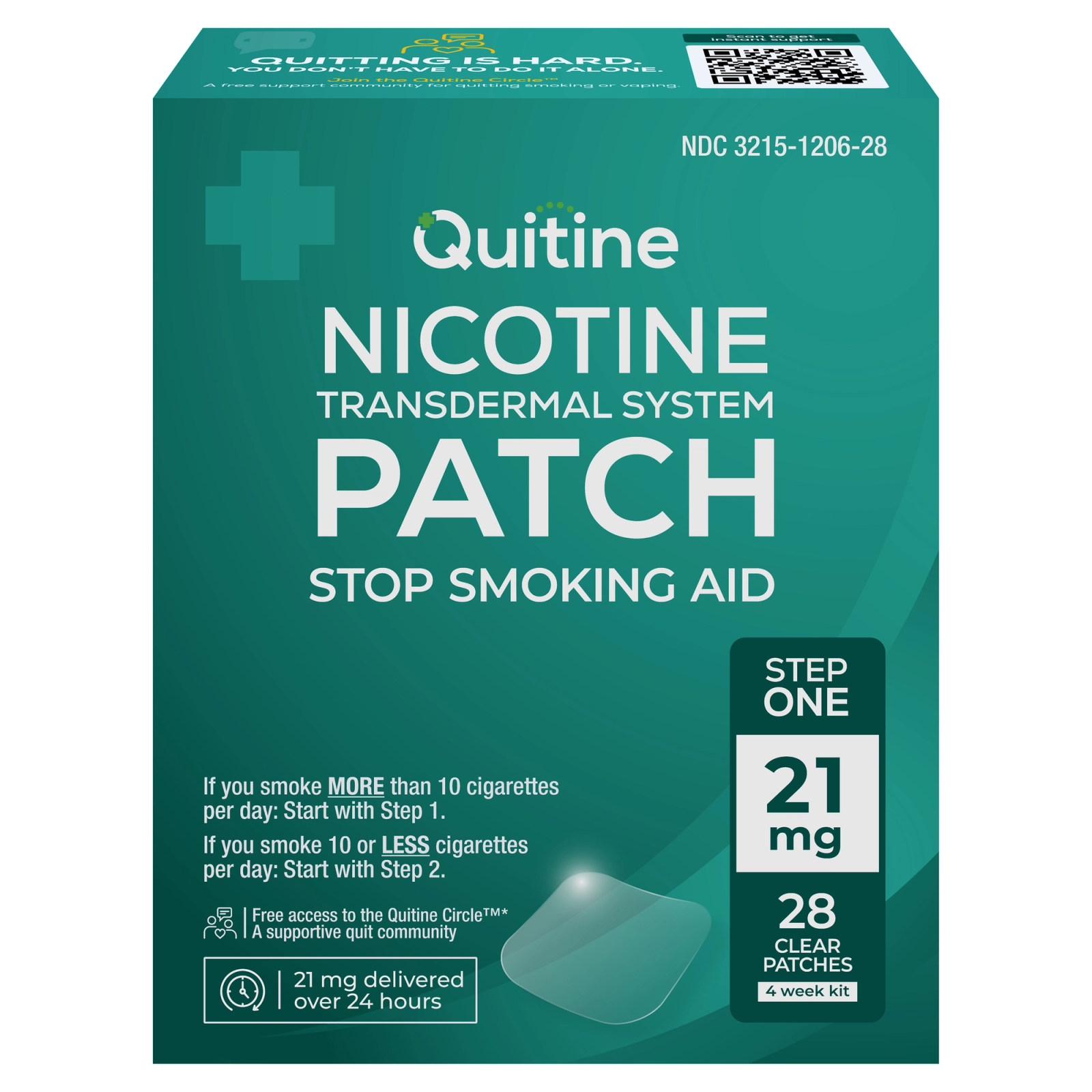
Description (Quitine Nicotine Patches Step 1 21mg 28 Pieces):
28 patches (4-week kit)
Start here if you smoke or vape within 30 minutes of waking, or if you smoke more than 10 cigarettes a day. You can combine the patches with 4 mg gum or lozenges when a craving breaks through.
Quitine nicotine patches are an FDA-regulated stop-smoking aid. Each patch delivers a steady amount of nicotine through the skin over a full 24 hours. You put one patch on in the morning on clean, dry skin. It stays in place through the day so the nicotine stays even while you work on the habits that go with smoking or vaping.
How to use
- Choose clean, dry, hairless skin on your upper arm, chest, or back. Skip lotions or oils before you apply the patch.
- Peel the liner and press the patch firmly for 10 to 20 seconds. Smooth the edges so it holds.
- Wear the patch for 24 hours. It is made for all-day use during regular activities.
- Remove the patch after 24 hours and put a new one on a different skin site. Rotate the spot each day to keep the skin comfortable.
Stop use if skin irritation occurs. See the package directions.
2) Quitine Nicotine Patches Step 2 14mg 14 Pieces
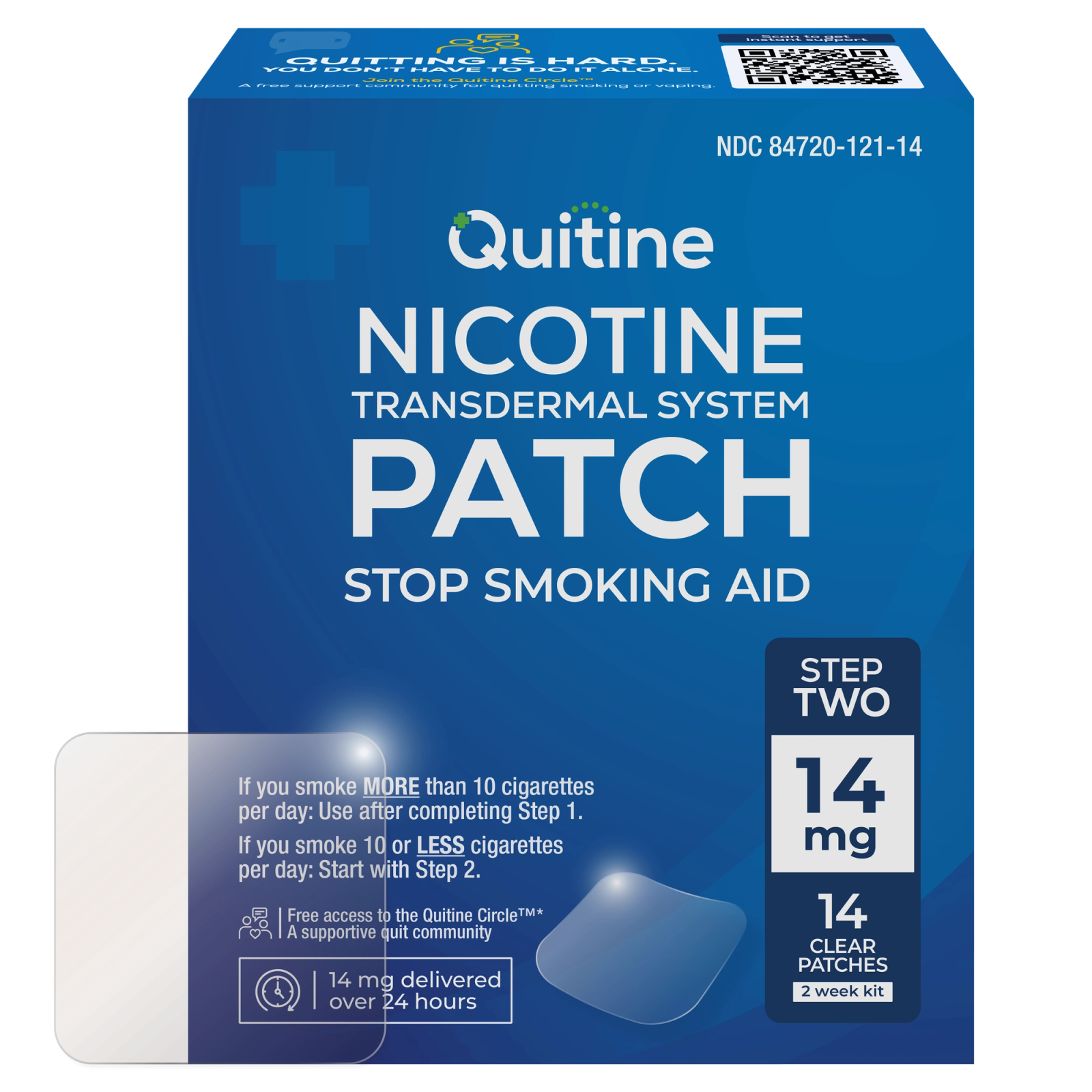
Description (Quitine Nicotine Patches Step 2 14mg 14 Pieces):
14 patches (2-week kit)
Start here if you smoke fewer than 10 cigarettes a day or vape lightly. You can also use these after you finish Step 1. Combine with 2 mg gum or lozenges if a craving breaks through.
Quitine nicotine patches are an FDA-regulated stop-smoking aid. Each patch delivers a steady amount of nicotine through the skin over 24 hours. You apply one patch each morning to clean, dry skin. It works in the background all day. There is no timing or counting required. You get consistent baseline support so you can focus on breaking the habit.
How to use
- Choose clean, dry, hairless skin on your upper arm, chest, or back. Skip lotions or oils before applying.
- Peel the liner and press the patch firmly for 10 to 20 seconds. Smooth the edges for a solid hold.
- Wear the patch for 24 hours. It is made for all-day wear, including everyday activities.
- Remove the patch after 24 hours and apply a new one to a different skin site. Rotate the site daily for comfort.
Stop use if skin irritation occurs. See the package directions for full details.
3) Quitine Nicotine Patches Step 3 7mg 14 Pieces
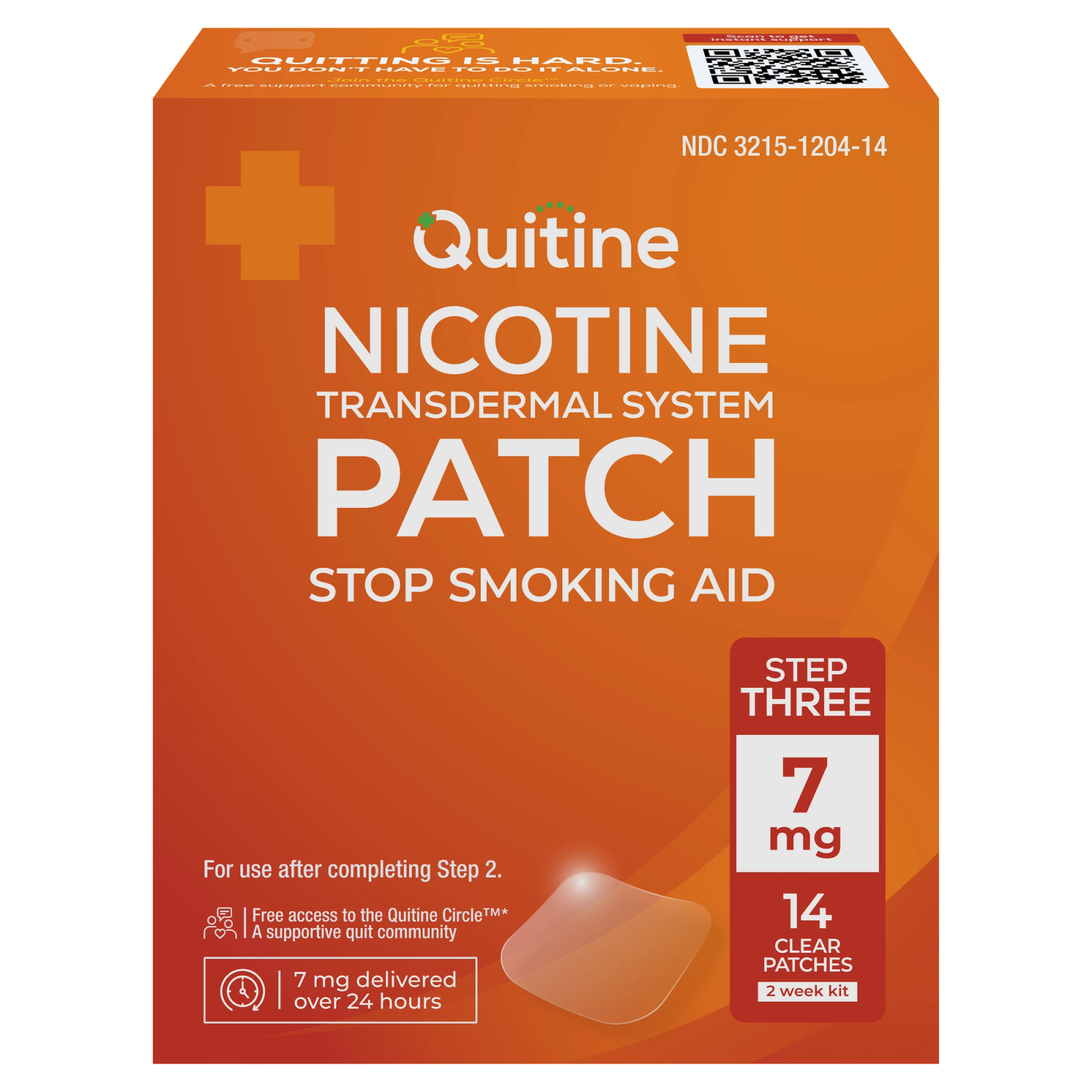
Description (Quitine Nicotine Patches Step 3 7mg 14 Pieces):
14 patches (2-week kit)
Use after you finish Step 2. This is the final taper. You can use the patches alone or add 2 mg gum or lozenges on harder days.
Quitine nicotine patches are an FDA-regulated stop-smoking aid. Each one delivers a steady amount of nicotine through the skin over 24 hours. You apply one patch every morning to clean, dry skin. The patch works in the background all day so you can focus on changing the habit itself.
How to use
- Choose a clean, dry, hairless area of skin on your upper arm, chest, or back. Skip any lotions or oils before you put the patch on.
- Peel the liner and press the patch firmly for 10 to 20 seconds. Smooth the edges so it stays in place.
- Wear the patch for a full 24 hours through everyday activities.
- After 24 hours, take it off and put a new patch on a different skin site. Rotate the location each day for comfort.
Stop use if skin irritation appears and follow the package directions.
FAQ
Can nicotine patches cause long-term reflux problems?
Most people see any reflux ease as the body adjusts and the nicotine dose drops. The effect on the sphincter is temporary for the large majority of users. If reflux continues after you finish the nicotine patch program, other factors such as diet or existing conditions are more likely involved. Speak with a doctor if symptoms linger.
Is nausea more common with patches or with gum and lozenges?
Oral nicotine products tend to produce more stomach complaints because some nicotine can be swallowed. Patches deliver nicotine through the skin and often cause less direct gut irritation. Individual response still varies, so trying a lower strength or a mixed approach can reveal what feels best for you.
What should I do if nausea starts right after I put on a new patch?
Remove the patch if the feeling is strong, wait a few hours, and try a lower strength the next day. Eat a small bland snack, stay upright, and drink water slowly. Contact a healthcare provider if the nausea returns with every new patch or comes with other strong symptoms.
Can I use antacids while wearing a nicotine patch?
Many people do so safely for short-term relief. Check the label and ask a pharmacist or doctor first, especially if you take other medicines or have ongoing stomach conditions. Antacids do not change how the patch works, yet they can make the day more comfortable while your system settles.
Do digestive side effects mean the patch is not working?
No. Nausea or mild reflux often appear while the body is adapting. The patch is still delivering nicotine and reducing cigarette cravings. Managing the side effects with dose, food, and posture usually lets you keep using the product until the symptoms fade.
Start the 90-Day Quit Challenge.
Read Also:
- How nicotine patches work: mechanism and best practices
- Nicotine patch dosage: how to choose the right strength
- Nicotine patch side effects timeline: what happens day by day
- Nicotine patches and anxiety: do they make it better or worse?
- Nicotine patches and sleep quality: causes of insomnia and solutions

Ready to Quit or Just Cut Back?
If you're reading about nicotine, vaping, or smoking habits, chances are you're already thinking about making a change.
You don't have to figure it out alone. The Quitine Circle is our free support community, open to everyone quitting smoking or vaping. No purchase is required, and you do not need to use Quitine products to participate.
Inside the Quitine Circle you'll find:
The 90-Day Quit Program to guide your step down plan
A printable Quit Program Workbook to track progress
Practical tools for managing cravings and triggers
Support from others going through the same process
Quitting works best when you combine the right tools with the right structure. That's exactly what the Quitine system is built for.
Take our short quiz to see which Quitine Quit Kit fits your nicotine habits.

Not Sure Which Product Is Right for You?
Take our 2-minute Quit Quiz and get a personalized product recommendation and 90-day system based on your smoking or vaping habits.