
Nicotine patches and inflammation markers

Nicotine patches release a steady amount of nicotine through the skin. Many people want to know how this affects inflammation markers such as CRP, IL-6, or TNF-alpha while quitting. Research shows mixed but often neutral or anti-inflammatory patterns with patches. Smoking itself raises many of these markers. Quitine nicotine patches offer controlled delivery that supports a quit without the full toxic load of smoke.
Nicotine patches can affect several body systems during a quit. Learn more about nicotine patches and exercise performance, nicotine patches and immune system response, nicotine patches and liver metabolism, and nicotine patches and kidney function.
Get Support From the Quitine Community.
How nicotine patches interact with inflammation pathways
Nicotine binds to nicotinic receptors on immune cells. The alpha-7 receptor plays a main role in shifting some responses. Activation can lower the release of certain pro-inflammatory signals.
In controlled human tests, patches led to a milder fever and cardiovascular reaction after an inflammatory challenge. The anti-inflammatory cytokine IL-10 rose more clearly. Pro-inflammatory cytokines such as TNF-alpha and IL-6 showed a faster return toward baseline in some cases.
Animal work with patches showed reduced fever responses and lower expression of selected pro-inflammatory cytokines. These shifts point to a selective dampening rather than a full shutdown of inflammation.
Effects on common blood markers of inflammation
Smoking raises several inflammation markers. Quitting smoking tends to lower them over time. A recent study compared people who quit with nicotine replacement therapy to those who quit without it. Changes in inflammation markers, endothelial function, oxidative stress, and lipids were similar in both groups.
This suggests that the nicotine patch itself does not block the improvements that come from stopping smoke. Markers often improve once the combustion products are removed.
Skin studies in nonsmokers found reduced inflammatory responses to irritants and UV light after weeks of daily patch use. Reactive hyperemia also lessened temporarily. These findings support a local anti-inflammatory action of nicotine delivered through the skin.
Differences between smoking and patch use
Cigarette smoke contains many compounds that drive inflammation. Smokers commonly show higher levels of CRP, IL-6, and TNF-alpha. These elevations link to higher cardiovascular risk and other health concerns.
Patches supply nicotine without those extra toxins. This allows the body to begin recovering from smoke-related inflammation while still managing dependence. Steady delivery keeps receptor activity more even than the sharp peaks from cigarettes.
Some adaptive immune changes from smoking can last after quitting. Innate inflammatory responses often improve faster once smoke exposure ends. Using a patch during the early quit smoking phase does not appear to prevent these gains.
Potential relevance for inflammatory conditions
Nicotine has been studied in conditions where inflammation is central. In ulcerative colitis, some people experience symptom relief with nicotine, and patches have been tested for this purpose. The ability to lower certain gut cytokines is one proposed reason.
Results are less consistent in other conditions. Arthritis research has not produced strong evidence that patches treat the disease. Any use outside of quitting needs medical guidance because nicotine still carries risks. The overall pattern is context-dependent. What reduces inflammation in one setting may not help in another.
Why many choose Quitine nicotine patches during a quit
Quitine offers a clear step-down patch system. Higher strengths support people with greater prior dependence. Lower strengths follow as the body adjusts. Steady release helps manage withdrawal while the body recovers from smoke-related inflammation.
Many combine the patch with nicotine gum or nicotine lozenges for flexible support. The combination keeps baseline levels even while handling breakthrough moments.
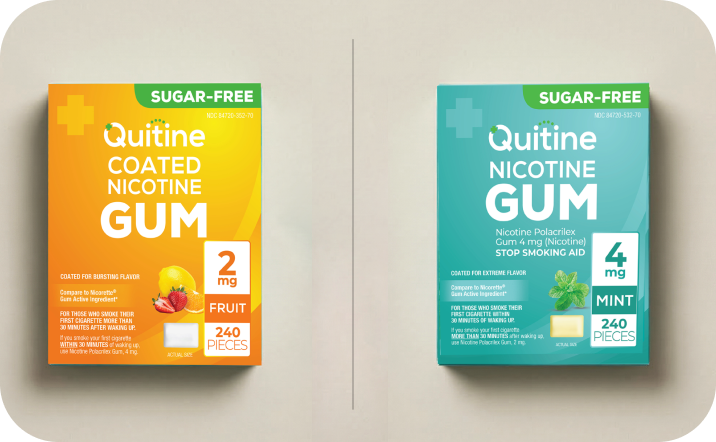
How Nicotine Gum Works
Nicotine gum delivers nicotine through the lining of your mouth as you chew. Unlike regular chewing gum, you need to use a specific "chew and park" technique to get the full effect.
Best for habit-triggered cravings
If you smoke or vape in response to specific triggers, after meals, during breaks, or when stressed, nicotine gum gives you something to do with your hands and mouth, which can help replace the physical habit.
Which Should You Choose?
The best choice depends on your personal preferences and smoking habits. If you miss the hand-to-mouth motion of smoking, gum might feel more natural. If you prefer something completely discreet, lozenges are a great option.Many people find that combining products, like using patches for all-day coverage and gum or lozenges for breakthrough cravings, gives them the best results.
Product Comparison
| Best For | Strength | |
|---|---|---|
| Nicotine Gum | Habit-triggered cravings | 2mg / 4mg |
| Nicotine Lozenges | Discreet craving relief | 2mg / 4mg |
| Nicotine Patches | All-day support | 21mg / 14mg / 7mg |
The full collection of nicotine replacement products gives flexibility while keeping the focus on finishing. Free tools such as the Quitine Circle and the personalized quit smoking quiz help users stay consistent until they reach zero nicotine. The 30-day money-back guarantee removes financial pressure during the early stages.
Discover Quitine and our best NRT products
Why Quitine?
Meet Mark and Oliver, the founders of Quitine. Mark has more than 40 years of experience as a pharmacist. His father’s long struggle with smoking shaped the work he does today. He has spent his career helping people leave cigarettes and vapes behind. Oliver brings deep experience in ecommerce, branding, product development, marketing, and logistics. Together they built Quitine to offer clear, practical nicotine replacement therapies that fit real daily life.
Our NRT products
Our pharmacist-formulated NRT products are made to support you while you change the habits that go with smoking or vaping.
Combination therapy for higher quit success
Research shows that combining a long-acting nicotine patch with a faster-acting form of NRT such as nicotine gum or nicotine lozenges can raise the chance of quitting smoking by 17 to 37 percent compared with using one product alone. At Quitine our nicotine patches deliver a steady amount of nicotine through the skin all day. Our nicotine gum and lozenges give you something to use when a craving hits. This dual approach, called NRT combination therapy, gives you more flexibility so you can stay comfortable while you change the habit.
Accessible pricing
We believe quitting should be within reach for everyone. We keep our therapies priced so more people can start without cutting corners on quality.
Personalized support
Quitting is personal, and so is the way we work with you. From the customer service team to the way each product is formulated, we stay with you through the process.
The Quitine Circle
The Quitine Circle is our free 90-day guided quit program and private support community. It is open to anyone quitting smoking or vaping and requires no purchase. It follows the same structured, pharmacist-backed approach that shapes our NRT products. You get short training modules, a practical quit workbook, weekly live Q and A sessions, and a moderated space with other people who are quitting, so you do not have to rely on willpower alone.
Discover which NRT is right for you
Not sure which product suits you best? Take our personalized quiz to find the NRT product that fits your needs. Take the Quiz
Real quitters. Real success.
See what our customers are saying about Quitine nicotine replacement therapy. Read Case Studies
The Quitine guarantee
Your satisfaction is covered. Learn more about our 30-day money-back promise. Learn More About Our Guarantee
Discover our best nicotine patches - Quitine
1) Quitine Nicotine Patches Step 1 21mg 28 Pieces
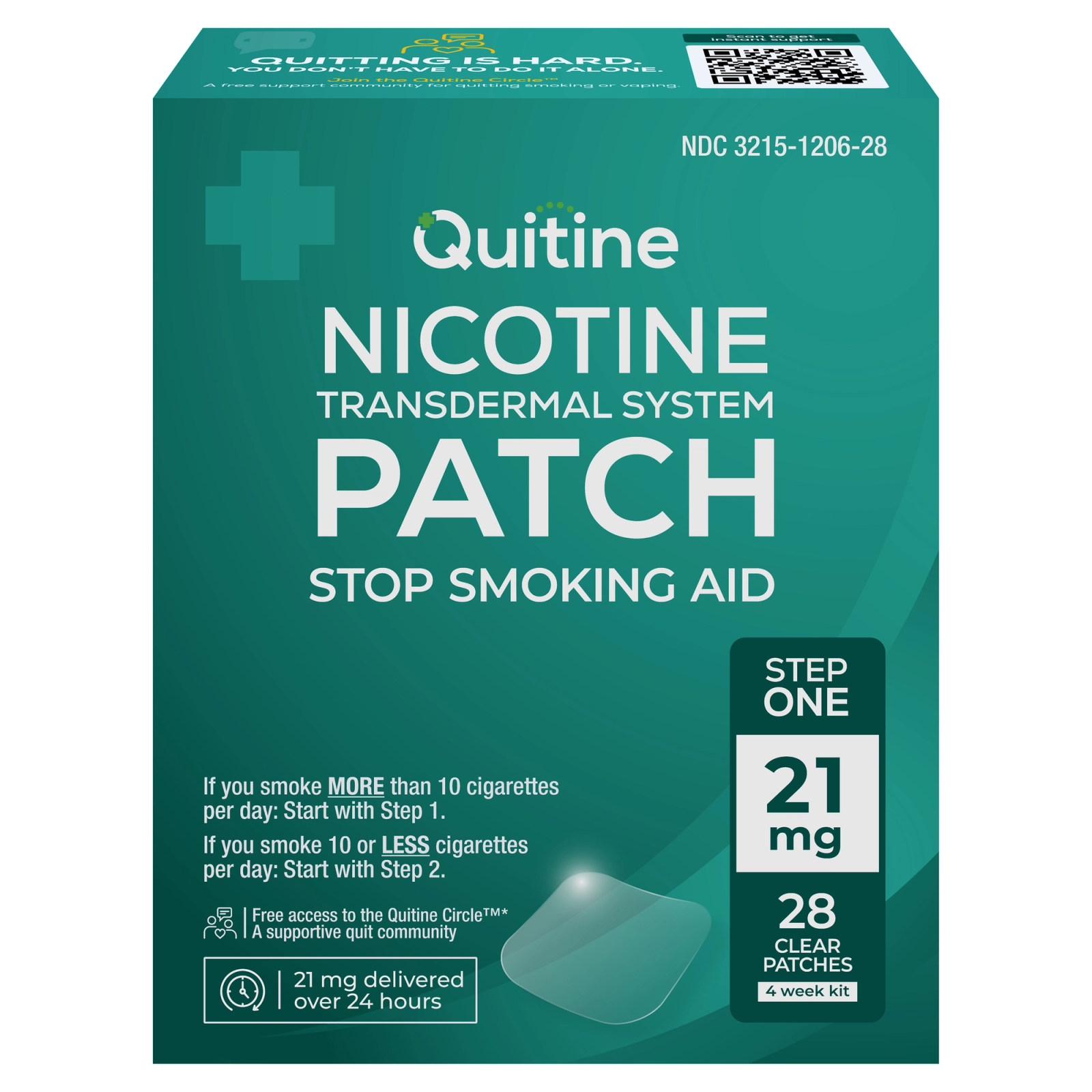
Description (Quitine Nicotine Patches Step 1 21mg 28 Pieces):
28 patches (4-week kit)
Start here if you smoke or vape within 30 minutes of waking, or if you smoke more than 10 cigarettes a day. You can combine the patches with 4 mg gum or lozenges when a craving breaks through.
Quitine nicotine patches are an FDA-regulated stop-smoking aid. Each patch delivers a steady amount of nicotine through the skin over a full 24 hours. You put one patch on in the morning on clean, dry skin. It stays in place through the day so the nicotine stays even while you work on the habits that go with smoking or vaping.
How to use
- Choose clean, dry, hairless skin on your upper arm, chest, or back. Skip lotions or oils before you apply the patch.
- Peel the liner and press the patch firmly for 10 to 20 seconds. Smooth the edges so it holds.
- Wear the patch for 24 hours. It is made for all-day use during regular activities.
- Remove the patch after 24 hours and put a new one on a different skin site. Rotate the spot each day to keep the skin comfortable.
Stop use if skin irritation occurs. See the package directions.
2) Quitine Nicotine Patches Step 2 14mg 14 Pieces
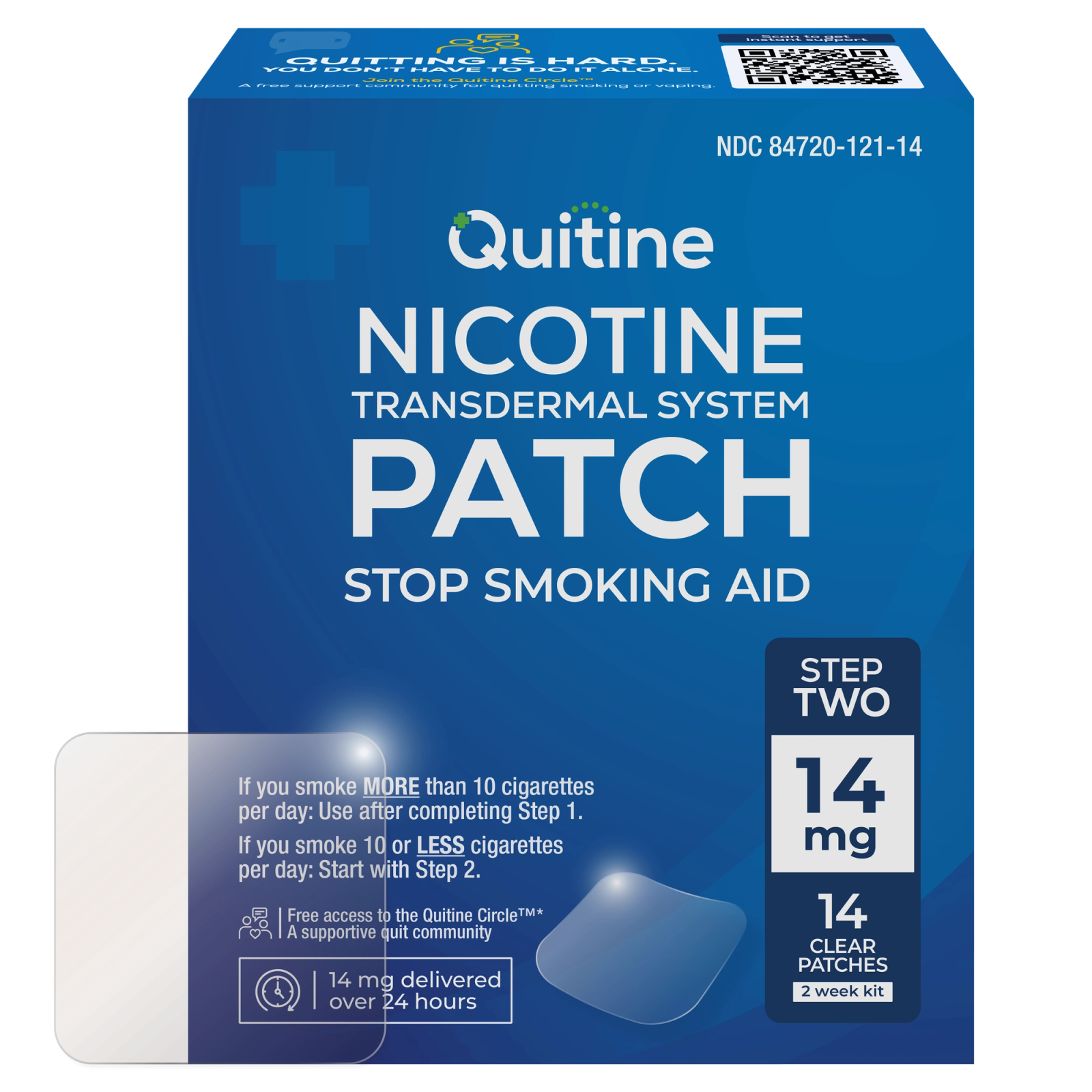
Description (Quitine Nicotine Patches Step 2 14mg 14 Pieces):
14 patches (2-week kit)
Start here if you smoke fewer than 10 cigarettes a day or vape lightly. You can also use these after you finish Step 1. Combine with 2 mg gum or lozenges if a craving breaks through.
Quitine nicotine patches are an FDA-regulated stop-smoking aid. Each patch delivers a steady amount of nicotine through the skin over 24 hours. You apply one patch each morning to clean, dry skin. It works in the background all day. There is no timing or counting required. You get consistent baseline support so you can focus on breaking the habit.
How to use
- Choose clean, dry, hairless skin on your upper arm, chest, or back. Skip lotions or oils before applying.
- Peel the liner and press the patch firmly for 10 to 20 seconds. Smooth the edges for a solid hold.
- Wear the patch for 24 hours. It is made for all-day wear, including everyday activities.
- Remove the patch after 24 hours and apply a new one to a different skin site. Rotate the site daily for comfort.
Stop use if skin irritation occurs. See the package directions for full details.
3) Quitine Nicotine Patches Step 3 7mg 14 Pieces
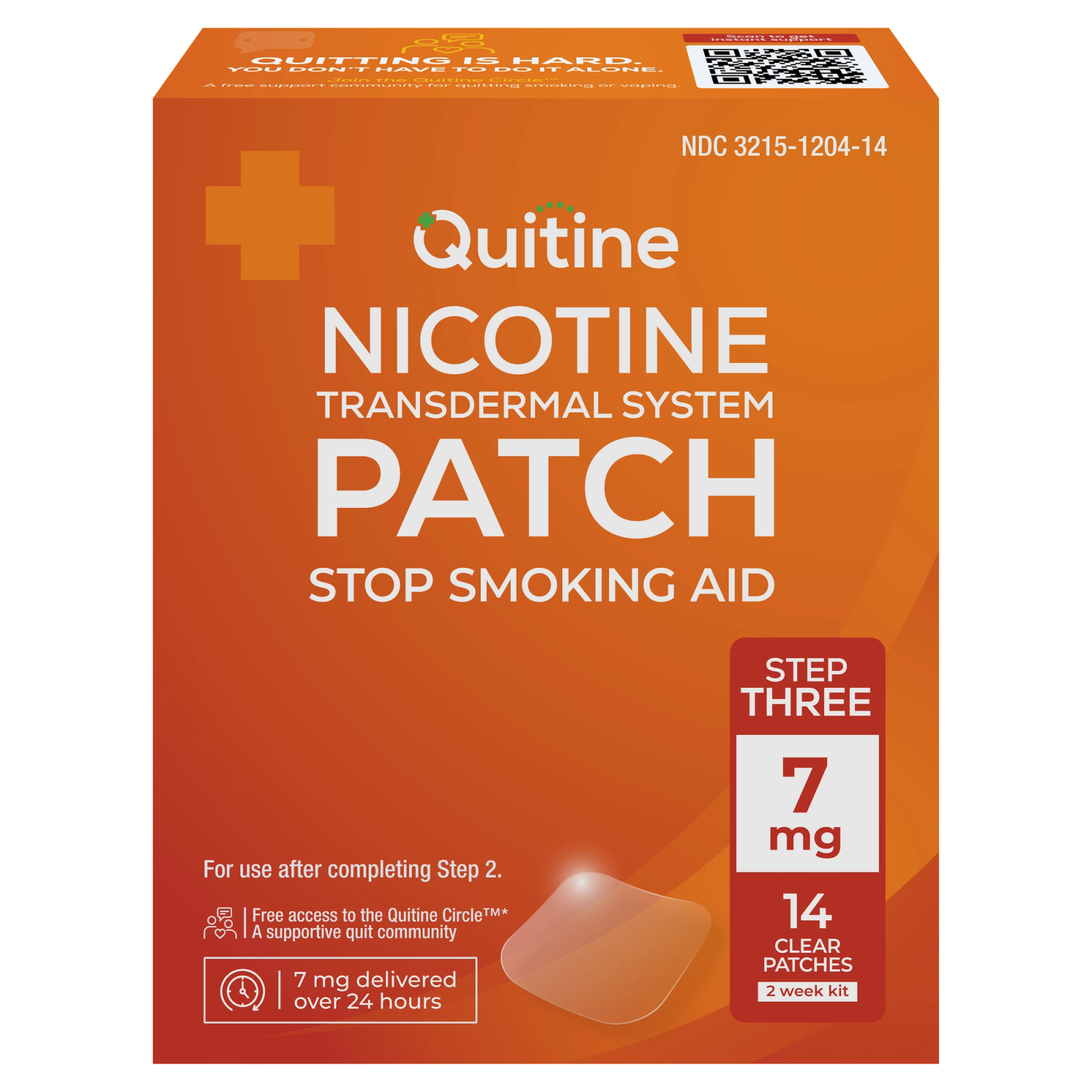
Description (Quitine Nicotine Patches Step 3 7mg 14 Pieces):
14 patches (2-week kit)
Use after you finish Step 2. This is the final taper. You can use the patches alone or add 2 mg gum or lozenges on harder days.
Quitine nicotine patches are an FDA-regulated stop-smoking aid. Each one delivers a steady amount of nicotine through the skin over 24 hours. You apply one patch every morning to clean, dry skin. The patch works in the background all day so you can focus on changing the habit itself.
How to use
- Choose a clean, dry, hairless area of skin on your upper arm, chest, or back. Skip any lotions or oils before you put the patch on.
- Peel the liner and press the patch firmly for 10 to 20 seconds. Smooth the edges so it stays in place.
- Wear the patch for a full 24 hours through everyday activities.
- After 24 hours, take it off and put a new patch on a different skin site. Rotate the location each day for comfort.
Stop use if skin irritation appears and follow the package directions.
Practical tips for monitoring during patch use
Apply the patch to clean, dry skin and rotate nicotine patch placement daily. Consistent use keeps nicotine levels stable. Track how you feel in the first weeks of a quit, including energy levels and any signs of lingering inflammation.
Routine blood work can show changes in markers over time. Stay in touch with a health care provider if you have existing inflammatory conditions. Store nicotine patches safely away from children and pets.
The goal for most users is gradual reduction. Long-term high-dose use is not the aim. Removing smoke remains one of the strongest steps for lowering inflammation markers over time.
Frequently asked questions
Do nicotine patches raise or lower inflammation markers?
Patches can dampen certain acute inflammatory responses and raise anti-inflammatory signals such as IL-10 in controlled tests. When used to quit, they do not block the improvements in markers that come from stopping smoke. Individual responses differ based on dose and prior smoking history.
How do patches compare with continued smoking for inflammation markers?
Smoking raises many markers including CRP, IL-6, and TNF-alpha through a mix of toxins. Patches supply nicotine without those extra compounds. This allows the body to begin recovering from smoke-driven inflammation while dependence is managed. Steady delivery produces more consistent effects than cigarette peaks.
Can nicotine patches help with chronic inflammatory conditions?
Some research notes reduced inflammatory responses in skin and certain gut conditions such as ulcerative colitis. Results are mixed or less favorable in other diseases. Nicotine replacement products are not approved treatments for these conditions. Medical supervision is required for any use beyond quitting.
What happens to inflammation markers after switching to a patch and quitting?
Removing combustion products often leads to gradual improvement in markers. Nicotine itself continues to influence some cytokine balances while the patch is used. As the dose steps down and nicotine stops fully, further recovery can occur. Timing varies from person to person.
Should people with high inflammation markers use nicotine patches while quitting?
Many people with elevated markers still benefit from quitting smoking. A health care provider can help weigh controlled nicotine from a patch against continued smoking. Monitoring and a clear taper plan support safer use. Personalized guidance remains the best approach.
Get Support From the Quitine Community.
Read Also:

Ready to Quit or Just Cut Back?
If you're reading about nicotine, vaping, or smoking habits, chances are you're already thinking about making a change.
You don't have to figure it out alone. The Quitine Circle is our free support community, open to everyone quitting smoking or vaping. No purchase is required, and you do not need to use Quitine products to participate.
Inside the Quitine Circle you'll find:
The 90-Day Quit Program to guide your step down plan
A printable Quit Program Workbook to track progress
Practical tools for managing cravings and triggers
Support from others going through the same process
Quitting works best when you combine the right tools with the right structure. That's exactly what the Quitine system is built for.
Take our short quiz to see which Quitine Quit Kit fits your nicotine habits.

Not Sure Which Product Is Right for You?
Take our 2-minute Quit Quiz and get a personalized product recommendation and 90-day system based on your smoking or vaping habits.