
Nicotine patches and liver metabolism: what happens in your body

Nicotine patches and liver metabolism work together in a clear process. The patch releases nicotine through your skin into the blood. Your liver then breaks most of it down. This steady path helps manage nicotine cravings without the extra chemicals from tobacco. Many people choose Quitine nicotine patches for all-day support during a quit.
You can also learn how nicotine patches affect exercise performance, nicotine patches influence immune response, nicotine patches relate to inflammation markers, and nicotine patches affect kidney function.
Get Your Personalized Quit Plan.
How nicotine from patches reaches your bloodstream
A nicotine patch sticks to clean, dry skin on your upper arm, chest, or back. Nicotine moves slowly through the outer skin layers into the bloodstream. This creates a steady level that lasts about a full day.
Patch nicotine enters the circulation directly. Once in the blood, it travels to the brain and other organs, including the liver. The liver handles the bulk of the breakdown work.
You apply one patch each morning and remove it the next day. Rotating the nicotine patch placement helps avoid irritation. This method keeps nicotine available without the peaks and drops that come from cigarettes.
The liver’s main job in processing nicotine
Your liver acts as the primary site for nicotine clearance. Blood carrying nicotine from the patch flows through the liver. There, specialized enzymes convert most of the nicotine into other compounds that the body can remove more easily.
The main product is cotinine. Cotinine stays in the body longer than nicotine itself and gets measured in many tests of nicotine exposure. The liver also creates smaller amounts of other metabolites. Some nicotine leaves through the kidneys, but the liver does the heavy lifting.
Because nicotine patches deliver nicotine at a controlled rate, the liver processes a more even amount over time. Steady input can make the overall workload more predictable for the organ.
Key enzymes that break down nicotine
The liver relies on a few main enzymes for nicotine. CYP2A6 handles the largest share. It turns nicotine into an intermediate form that quickly becomes cotinine. CYP2B6 also plays a part, especially when CYP2A6 activity is lower. Other helpers include flavin-containing monooxygenase 3 (FMO3) and certain UDP-glucuronosyltransferase enzymes that add groups to make the compounds more water-soluble for excretion.
These enzymes sit inside liver cells. Their activity varies from person to person because of genetics, age, sex, and other factors. Some people process nicotine faster. Others clear it more slowly. The slower pace can mean higher nicotine levels from the same patch dose, which sometimes supports better nicotine craving control.
Nicotine from patches follows these same pathways. The steady supply shapes how the enzymes work across the day.
Factors that change liver processing speed
Several everyday factors affect how quickly the liver handles nicotine from a patch.
Genetics rank high. Variants in the CYP2A6 gene slow or speed the main pathway. Women often show higher CYP2A6 activity than men. Age can play a role later in life. Certain medicines and hormones also shift enzyme levels.
Liver health matters too. Conditions that reduce overall liver function can slow clearance. Blood flow through the liver influences the process because nicotine has high extraction. Meals and diet can cause short-term changes as well.
Smoking itself once induced some liver enzymes through other smoke chemicals. When people switch to patches, those induction effects fade. The nicotine from a patch does not keep the same induction going.
Differences between patch nicotine and smoking on the liver
Cigarette smoke contains many compounds beyond nicotine. Some of those compounds speed up certain liver enzymes, especially CYP1A2. That change can alter how the body handles other medicines. When someone quits smoking and uses a patch instead, enzyme activity returns toward normal over days to a week.
Patch nicotine reaches the liver without the extra load of combustion products. Research shows medical nicotine use has not been linked to clear liver injury or enzyme elevations beyond placebo levels. The body still metabolizes the nicotine, and the overall chemical burden stays lower.
Some studies note that nicotine can add to oxidative stress or fat handling in the liver when paired with a high-fat diet. The controlled dose from a patch limits exposure compared with continuous smoking. Many people find the switch reduces overall harm while still addressing withdrawal.
Possible effects of nicotine on liver function
Nicotine metabolism itself generates some reactive compounds that the liver must manage. In animal work and limited human observations, long-term high exposure has been connected to increased oxidative stress and changes in fat metabolism, especially when diet is poor.
Nicotine replacement therapy has a strong safety record for the liver. Reviews of clinical use find no pattern of liver test problems or overt injury. The steady, lower peak levels from patches appear better tolerated than the repeated high doses from smoking.
If someone already has liver concerns, a doctor can guide the choice of strength and monitoring. Most healthy adults process patch nicotine without issue.
How Quitine supports steady nicotine delivery
Quitine offers a full range of nicotine patches built for the step-down approach. Step 1 starts at the higher strength for people who smoked or vaped heavily. Step 2 and Step 3 lower the dose over time so the body adjusts gradually. The patches deliver nicotine evenly across 24 hours and stay discreet on the skin.
The full collection of nicotine replacement products gives flexibility while keeping the focus on finishing. Free tools such as the Quitine Circle and the personalized quit smoking quiz help users stay consistent until they reach zero nicotine. The 30-day money-back guarantee removes financial pressure during the early stages.
Discover Quitine and our best NRT products
Why Quitine?
Meet Mark and Oliver, the founders of Quitine. Mark has more than 40 years of experience as a pharmacist. His father’s long struggle with smoking shaped the work he does today. He has spent his career helping people leave cigarettes and vapes behind. Oliver brings deep experience in ecommerce, branding, product development, marketing, and logistics. Together they built Quitine to offer clear, practical nicotine replacement therapies that fit real daily life.
Our NRT products
Our pharmacist-formulated NRT products are made to support you while you change the habits that go with smoking or vaping.
Combination therapy for higher quit success
Research shows that combining a long-acting nicotine patch with a faster-acting form of NRT such as nicotine gum or nicotine lozenges can raise the chance of quitting smoking by 17 to 37 percent compared with using one product alone. At Quitine our nicotine patches deliver a steady amount of nicotine through the skin all day. Our nicotine gum and lozenges give you something to use when a craving hits. This dual approach, called NRT combination therapy, gives you more flexibility so you can stay comfortable while you change the habit.
Accessible pricing
We believe quitting should be within reach for everyone. We keep our therapies priced so more people can start without cutting corners on quality.
Personalized support
Quitting is personal, and so is the way we work with you. From the customer service team to the way each product is formulated, we stay with you through the process.
The Quitine Circle
The Quitine Circle is our free 90-day guided quit program and private support community. It is open to anyone quitting smoking or vaping and requires no purchase. It follows the same structured, pharmacist-backed approach that shapes our NRT products. You get short training modules, a practical quit workbook, weekly live Q and A sessions, and a moderated space with other people who are quitting, so you do not have to rely on willpower alone.
Discover which NRT is right for you
Not sure which product suits you best? Take our personalized quiz to find the NRT product that fits your needs. Take the Quiz
Real quitters. Real success.
See what our customers are saying about Quitine nicotine replacement therapy. Read Case Studies
The Quitine guarantee
Your satisfaction is covered. Learn more about our 30-day money-back promise. Learn More About Our Guarantee
Discover our best nicotine patches - Quitine
1) Quitine Nicotine Patches Step 1 21mg 28 Pieces
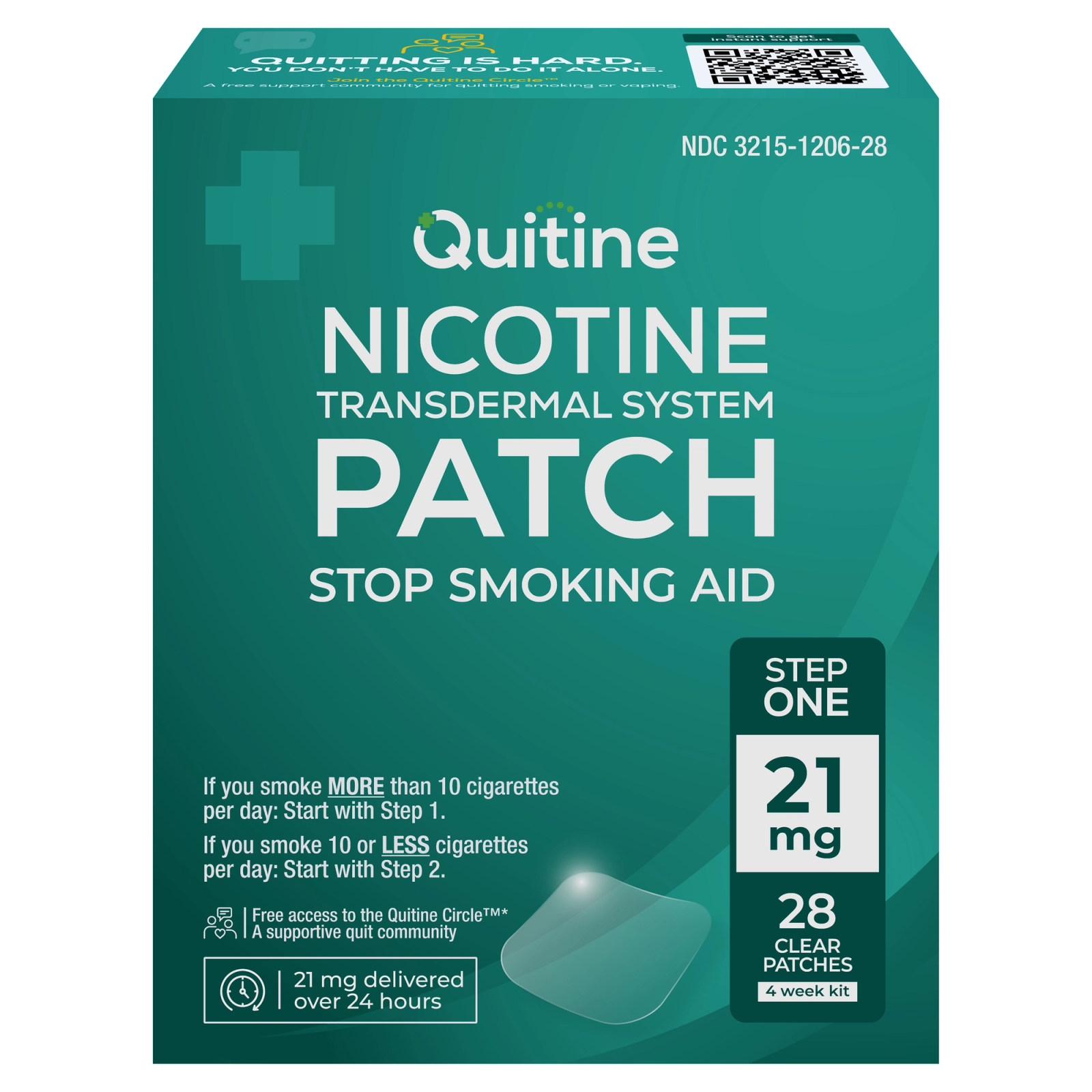
Description (Quitine Nicotine Patches Step 1 21mg 28 Pieces):
28 patches (4-week kit)
Start here if you smoke or vape within 30 minutes of waking, or if you smoke more than 10 cigarettes a day. You can combine the patches with 4 mg gum or lozenges when a craving breaks through.
Quitine nicotine patches are an FDA-regulated stop-smoking aid. Each patch delivers a steady amount of nicotine through the skin over a full 24 hours. You put one patch on in the morning on clean, dry skin. It stays in place through the day so the nicotine stays even while you work on the habits that go with smoking or vaping.
How to use
- Choose clean, dry, hairless skin on your upper arm, chest, or back. Skip lotions or oils before you apply the patch.
- Peel the liner and press the patch firmly for 10 to 20 seconds. Smooth the edges so it holds.
- Wear the patch for 24 hours. It is made for all-day use during regular activities.
- Remove the patch after 24 hours and put a new one on a different skin site. Rotate the spot each day to keep the skin comfortable.
Stop use if skin irritation occurs. See the package directions.
2) Quitine Nicotine Patches Step 2 14mg 14 Pieces
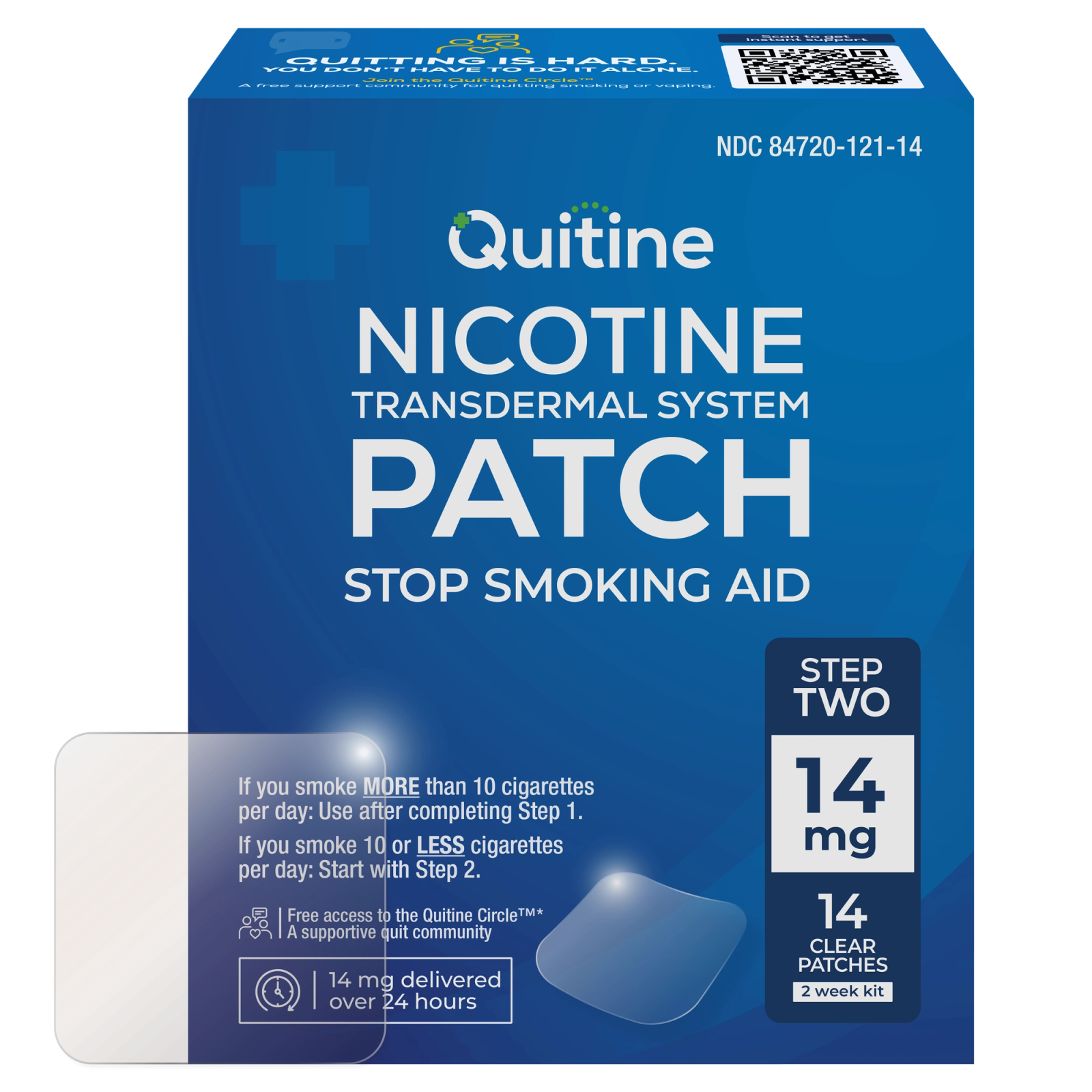
Description (Quitine Nicotine Patches Step 2 14mg 14 Pieces):
14 patches (2-week kit)
Start here if you smoke fewer than 10 cigarettes a day or vape lightly. You can also use these after you finish Step 1. Combine with 2 mg gum or lozenges if a craving breaks through.
Quitine nicotine patches are an FDA-regulated stop-smoking aid. Each patch delivers a steady amount of nicotine through the skin over 24 hours. You apply one patch each morning to clean, dry skin. It works in the background all day. There is no timing or counting required. You get consistent baseline support so you can focus on breaking the habit.
How to use
- Choose clean, dry, hairless skin on your upper arm, chest, or back. Skip lotions or oils before applying.
- Peel the liner and press the patch firmly for 10 to 20 seconds. Smooth the edges for a solid hold.
- Wear the patch for 24 hours. It is made for all-day wear, including everyday activities.
- Remove the patch after 24 hours and apply a new one to a different skin site. Rotate the site daily for comfort.
Stop use if skin irritation occurs. See the package directions for full details.
3) Quitine Nicotine Patches Step 3 7mg 14 Pieces
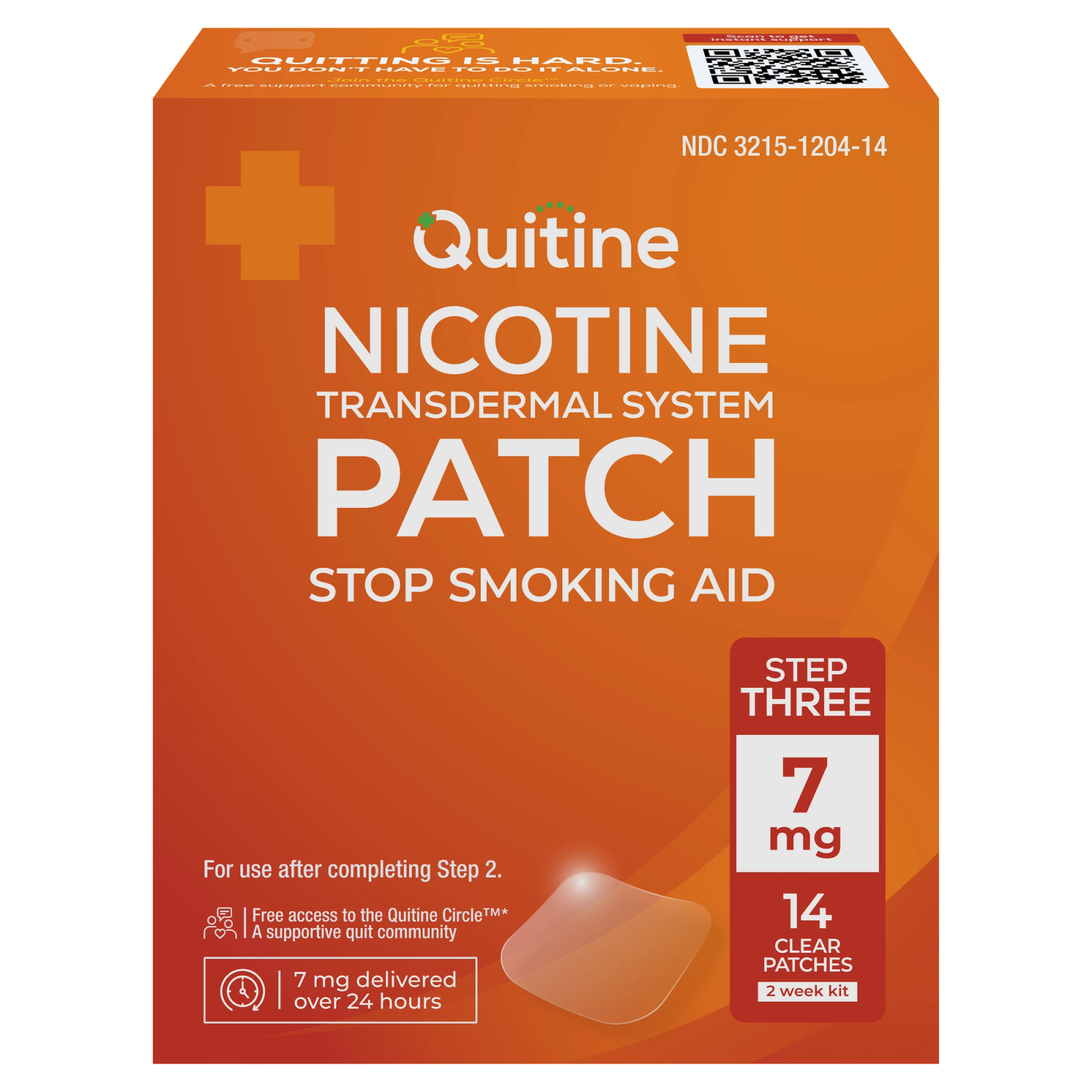
Description (Quitine Nicotine Patches Step 3 7mg 14 Pieces):
14 patches (2-week kit)
Use after you finish Step 2. This is the final taper. You can use the patches alone or add 2 mg gum or lozenges on harder days.
Quitine nicotine patches are an FDA-regulated stop-smoking aid. Each one delivers a steady amount of nicotine through the skin over 24 hours. You apply one patch every morning to clean, dry skin. The patch works in the background all day so you can focus on changing the habit itself.
How to use
- Choose a clean, dry, hairless area of skin on your upper arm, chest, or back. Skip any lotions or oils before you put the patch on.
- Peel the liner and press the patch firmly for 10 to 20 seconds. Smooth the edges so it stays in place.
- Wear the patch for a full 24 hours through everyday activities.
- After 24 hours, take it off and put a new patch on a different skin site. Rotate the location each day for comfort.
Stop use if skin irritation appears and follow the package directions.
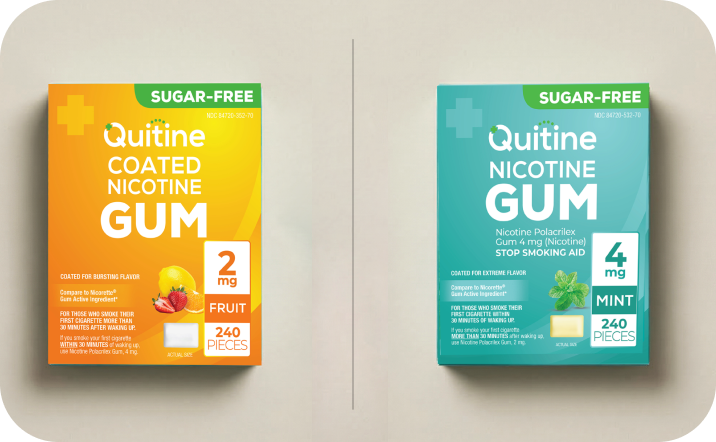
How Nicotine Gum Works
Nicotine gum delivers nicotine through the lining of your mouth as you chew. Unlike regular chewing gum, you need to use a specific "chew and park" technique to get the full effect.
Best for habit-triggered cravings
If you smoke or vape in response to specific triggers, after meals, during breaks, or when stressed, nicotine gum gives you something to do with your hands and mouth, which can help replace the physical habit.
Which Should You Choose?
The best choice depends on your personal preferences and smoking habits. If you miss the hand-to-mouth motion of smoking, gum might feel more natural. If you prefer something completely discreet, lozenges are a great option.Many people find that combining products, like using patches for all-day coverage and gum or lozenges for breakthrough cravings, gives them the best results.
Product Comparison
| Best For | Strength | |
|---|---|---|
| Nicotine Gum | Habit-triggered cravings | 2mg / 4mg |
| Nicotine Lozenges | Discreet craving relief | 2mg / 4mg |
| Nicotine Patches | All-day support | 21mg / 14mg / 7mg |
Practical tips when using patches
Apply the patch to fresh skin each day. Avoid broken or irritated areas. Wash hands after handling so nicotine does not transfer to eyes or mouth. Keep used patches out of reach of children and pets.
Stay consistent. Skipping days can bring nicotine withdrawal back and make the process harder. If skin reacts, move to a different site and talk with a pharmacist or doctor. People with certain heart conditions or who take specific medicines should check with a clinician first.
Hydration and a balanced diet support overall liver function while the body clears nicotine. Regular check-ins on progress help you decide when to step down to a lower strength.
FAQ
How does the liver handle nicotine from a patch differently than from a cigarette?
The liver uses the same core enzymes to process nicotine whether it comes from a nicotine patch or a cigarette. The main difference lies in the delivery pattern and the absence of extra smoke chemicals. A patch supplies a steady stream of nicotine through the skin into the bloodstream, so the liver receives a more even load throughout the day. Cigarette smoke also carries compounds that can temporarily speed up certain other liver enzymes. Once those compounds are gone, enzyme activity settles back toward its usual pace while the liver continues converting the patch nicotine mainly into cotinine and related forms for removal.
Can liver problems change how well a nicotine patch works?
Reduced liver function can slow the breakdown of nicotine that arrives from a nicotine patch. When clearance is slower, blood levels of nicotine may stay higher for longer from the same nicotine patch dosage. This change can influence how strongly the body feels the nicotine and how long craving relief lasts. People with existing liver concerns often benefit from guidance on the starting strength and any needed adjustments so the process stays comfortable and effective.
Do nicotine patches put extra stress on the liver?
Nicotine from a patch still undergoes metabolism in the liver, mainly through enzymes such as CYP2A6. The controlled, steady release keeps the overall chemical load lower than the repeated high peaks and extra compounds found in cigarette smoke. Clinical reviews of medical nicotine use have not linked patches to patterns of liver injury or unusual enzyme elevations. The liver continues its normal work of converting nicotine into forms the body can clear, without the added burden that comes from combustion products.
Why do some people feel stronger effects from the same patch strength?
Enzyme activity in the liver varies from person to person because of genetics, sex, age, and other factors. People whose CYP2A6 pathway works more slowly clear nicotine at a gentler rate, so the same nicotine patch can produce higher and longer-lasting levels in the blood. Faster metabolizers process the nicotine more quickly and may notice milder effects. These natural differences help explain why one strength feels different across individuals while the steady delivery method remains the same.
Is it safe to use patches long term for liver health?
Patches are designed for a structured step-down period that gradually lowers the nicotine dose. During that time the liver processes the incoming nicotine through its usual pathways without signs of lasting strain in most users. Extending use past the recommended course is best discussed with a clinician so the plan continues to match individual needs. The goal of the step system nicotine patch is to reach a point where the body no longer relies on external nicotine while the liver keeps performing its regular clearance role.
Start the 90-Day Quit Challenge.
Read Also:

Ready to Quit or Just Cut Back?
If you're reading about nicotine, vaping, or smoking habits, chances are you're already thinking about making a change.
You don't have to figure it out alone. The Quitine Circle is our free support community, open to everyone quitting smoking or vaping. No purchase is required, and you do not need to use Quitine products to participate.
Inside the Quitine Circle you'll find:
The 90-Day Quit Program to guide your step down plan
A printable Quit Program Workbook to track progress
Practical tools for managing cravings and triggers
Support from others going through the same process
Quitting works best when you combine the right tools with the right structure. That's exactly what the Quitine system is built for.
Take our short quiz to see which Quitine Quit Kit fits your nicotine habits.

Not Sure Which Product Is Right for You?
Take our 2-minute Quit Quiz and get a personalized product recommendation and 90-day system based on your smoking or vaping habits.