
Nicotine patches for menopause symptoms: what to know

Nicotine patches for menopause symptoms: what to know. Many women search for relief from hot flashes, night sweats, and mood shifts during menopause and wonder if nicotine patches might help. Nicotine patches are made for one main job: helping people quit smoking or vaping by delivering steady nicotine to ease cravings and withdrawal.
They are not a treatment for menopause symptoms. For women who smoke during this stage of life, quitting can support better symptom control over time. Quitine nicotine patches provide a clear step-down option as part of a full quit approach.
Nicotine patches are also discussed for nicotine patches and long COVID, nicotine patches and ADHD, nicotine patches for arthritis, nicotine patches for autism, and nicotine patch protocol for chronic illness.
What nicotine patches are and how they work
Nicotine patches stick to the skin and release a controlled amount of nicotine into the bloodstream over many hours. This keeps nicotine levels steady so the body does not swing between high and low points that trigger strong cravings. Most people apply a new patch each morning to clean, dry skin on the upper arm, chest, or hip. The patch works in the background while other short-acting forms, such as nicotine gum or nicotine lozenges, handle sudden urges.
Patches come in different strengths, so users can step down gradually. Higher strengths suit people who use more nicotine each day. Lower strengths come later as dependence drops. The goal is always the same: stop relying on cigarettes or vapes while the body adjusts. Nicotine replacement does not contain the thousands of other chemicals found in smoke. That difference matters for overall health, especially during menopause when the body already faces changes in blood vessels, bone, and hormone balance.
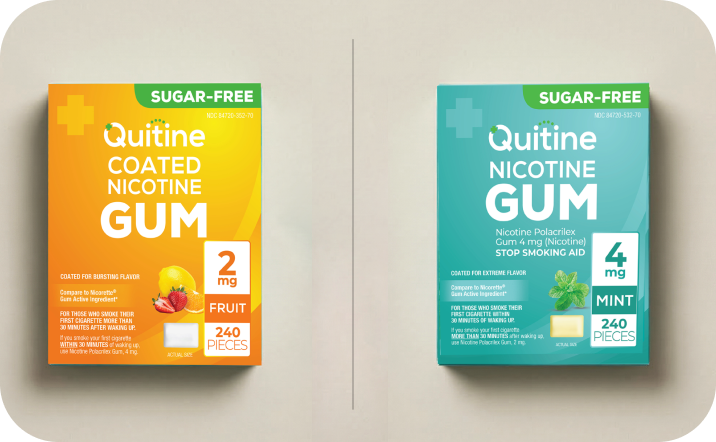
How Nicotine Gum Works
Nicotine gum delivers nicotine through the lining of your mouth as you chew. Unlike regular chewing gum, you need to use a specific "chew and park" technique to get the full effect.
Best for habit-triggered cravings
If you smoke or vape in response to specific triggers, after meals, during breaks, or when stressed, nicotine gum gives you something to do with your hands and mouth, which can help replace the physical habit.
Which Should You Choose?
The best choice depends on your personal preferences and smoking habits. If you miss the hand-to-mouth motion of smoking, gum might feel more natural. If you prefer something completely discreet, lozenges are a great option.Many people find that combining products, like using patches for all-day coverage and gum or lozenges for breakthrough cravings, gives them the best results.
Product Comparison
| Best For | Strength | |
|---|---|---|
| Nicotine Gum | Habit-triggered cravings | 2mg / 4mg |
| Nicotine Lozenges | Discreet craving relief | 2mg / 4mg |
| Nicotine Patches | All-day support | 21mg / 14mg / 7mg |
Why some women consider nicotine patches for menopause
Menopause brings drops in estrogen that can cause vasomotor symptoms (hot flashes and night sweats), sleep trouble, mood changes, and more. Some people notice that nicotine changes how they feel alert or calm, so they wonder if a patch might steady those feelings. Others hear stories online or from friends and decide to try it. A few confuse nicotine patches with other medicated skin patches used for hormone therapy or heart conditions.
The interest is understandable. Menopause can feel overwhelming, and any possible tool looks worth checking. Medical groups that focus on menopause do not list nicotine patches as a treatment option for these symptoms. Research centers on smoking cessation, not hormone-related relief.
The truth about nicotine patches and menopause symptoms
No strong clinical trials show that nicotine patches reduce the number or intensity of hot flashes, improve sleep related to menopause, or ease mood swings caused by hormone shifts. Leading groups such as the North American Menopause Society and the American College of Obstetricians and Gynecologists do not recommend nicotine patches for menopause symptom relief. The patches are approved and studied for helping people stop tobacco use.
Using a nicotine patch only for menopause symptoms adds unnecessary exposure to nicotine. Nicotine can raise heart rate and blood pressure for a short time and may irritate the skin where the patch sits. Sleep can also change if the patch is worn at night. These effects run counter to what many women want during a time when cardiovascular risk already rises and sleep is often fragile.
If the real goal is feeling better during menopause, better-supported paths exist. Hormone therapy, certain non-hormone medicines, and lifestyle steps have clearer backing. Nicotine patches belong in the conversation only when the person also wants to quit smoking or vaping.
How smoking affects menopause symptoms
Smoking makes menopause symptoms worse for many women. Current smokers tend to report more frequent and more intense hot flashes than women who never smoked. Smoking can also push menopause earlier and add strain to the heart and blood vessels at a stage when estrogen protection is already falling.
The reasons include the way smoke chemicals affect hormone pathways and blood-vessel function. Temperature regulation becomes harder, and the body may react more strongly to the natural drops in estrogen. Secondhand smoke can play a role, too. The good news is that stopping smoking changes the picture. Women who quit report fewer and milder hot flashes over time compared with those who keep smoking. The longer the time since quitting, the clearer the benefit appears for many.
Quitting also supports better sleep, easier breathing, and lower long-term risks that matter more after menopause. For women already dealing with night sweats or mood shifts, removing the extra load from smoking is one of the most useful steps available.
Benefits of quitting smoking during menopause
Stopping cigarettes or vapes during the menopausal transition brings several practical gains. Hot flashes and night sweats often become less bothersome once the body is free of smoke. Circulation improves, which helps temperature control. Lung function recovers step by step, and the risk of heart and vessel problems drops. Bone health also benefits because smoking speeds bone loss.
Many women notice better taste and smell within days and easier breathing within weeks. Energy can rise as oxygen delivery improves. These changes support the other efforts women make, such as exercise, stress reduction, or prescribed treatments for menopause symptoms. Quitting removes a barrier that can make hormone therapy or non-hormone options less effective or less safe in some cases.
Nicotine patches fit here as a tool for the quit process itself. They handle the physical dependence so the focus can stay on the habit and emotional sides of stopping. Combination use with short-acting forms often works well for heavier users.
Using nicotine patches safely while managing menopause
Talk with a doctor or pharmacist before starting any nicotine replacement, especially if you have heart concerns, high blood pressure, or take other medicines. Share your full list of symptoms and current treatments. The patch strength should match how much nicotine you currently use each day. Most people begin with a higher strength if they smoke more or use nicotine soon after waking, then step down over weeks.
Apply the patch to a new clean spot each day to limit skin irritation. If vivid dreams or sleep trouble appear, some people remove the patch at bedtime and put a new one on in the morning. Do not smoke or vape while using the patch. That combination can raise nicotine levels too high.
Short-acting options such as nicotine lozenges or nicotine gum can cover sudden cravings that break through the steady patch dose. Many women find this combination helpful during stressful periods or after meals. A structured step-down plan lasting several months gives the body time to adjust without abrupt cuts.
Watch for common effects such as mild skin redness, headache, or temporary nausea. These often settle as the body gets used to the patch. Stop and seek medical advice if chest pain, severe dizziness, or strong allergic reactions occur.
How Quitine supports women quitting nicotine
Quitine offers nicotine replacement products designed by a pharmacist with decades of experience helping people stop smoking and vaping. The range includes clear, thin nicotine patches in stepped strengths, plus matching gum and lozenges for breakthrough support. The products form part of a 90-day structured approach that lowers the dose over time so withdrawal stays manageable.
Users can take a short quit quiz to receive a personalized plan based on their current habits. The free Quitine Circle community adds weekly live support, short video modules, a progress tracker, and a workbook. Real success stories show how others moved from daily use to freedom. A 30-day money-back guarantee and subscription options with savings make the process more practical. All products are HSA and FSA-eligible.
Women get pharmacist-backed products along with clear tapering and ongoing human support. During menopause, when energy and motivation can fluctuate, having a ready plan and community reduces the chance of slipping back.
Discover Quitine and our best NRT products
Why Quitine?
Meet Mark and Oliver, the founders of Quitine. Mark has more than 40 years of experience as a pharmacist. His father’s long struggle with smoking shaped the work he does today. He has spent his career helping people leave cigarettes and vapes behind. Oliver brings deep experience in ecommerce, branding, product development, marketing, and logistics. Together they built Quitine to offer clear, practical nicotine replacement therapies that fit real daily life.
Our NRT products
Our pharmacist-formulated NRT products are made to support you while you change the habits that go with smoking or vaping.
Combination therapy for higher quit success
Research shows that combining a long-acting nicotine patch with a faster-acting form of NRT such as nicotine gum or nicotine lozenges can raise the chance of quitting smoking by 17 to 37 percent compared with using one product alone. At Quitine our nicotine patches deliver a steady amount of nicotine through the skin all day. Our nicotine gum and lozenges give you something to use when a craving hits. This dual approach, called NRT combination therapy, gives you more flexibility so you can stay comfortable while you change the habit.
Accessible pricing
We believe quitting should be within reach for everyone. We keep our therapies priced so more people can start without cutting corners on quality.
Personalized support
Quitting is personal, and so is the way we work with you. From the customer service team to the way each product is formulated, we stay with you through the process.
The Quitine Circle
The Quitine Circle is our free 90-day guided quit program and private support community. It is open to anyone quitting smoking or vaping and requires no purchase. It follows the same structured, pharmacist-backed approach that shapes our NRT products. You get short training modules, a practical quit workbook, weekly live Q and A sessions, and a moderated space with other people who are quitting, so you do not have to rely on willpower alone.
Discover which NRT is right for you
Not sure which product suits you best? Take our personalized quiz to find the NRT product that fits your needs. Take the Quiz
Real quitters. Real success.
See what our customers are saying about Quitine nicotine replacement therapy. Read Case Studies
The Quitine guarantee
Your satisfaction is covered. Learn more about our 30-day money-back promise. Learn More About Our Guarantee
Discover our best nicotine patches - Quitine
1) Quitine Nicotine Patches Step 1 21mg 28 Pieces
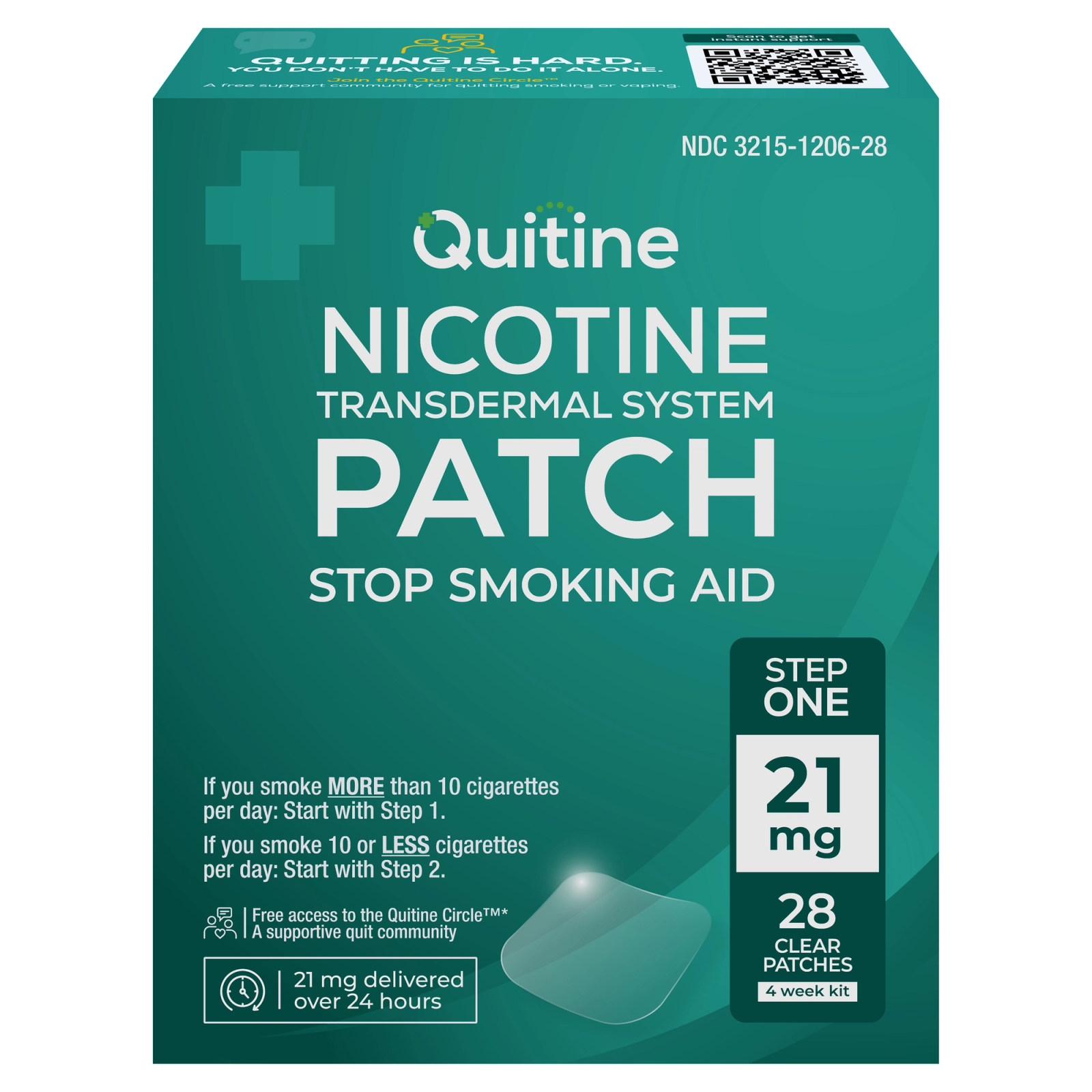
Description (Quitine Nicotine Patches Step 1 21mg 28 Pieces):
28 patches (4-week kit)
Start here if you smoke or vape within 30 minutes of waking, or if you smoke more than 10 cigarettes a day. You can combine the patches with 4 mg gum or lozenges when a craving breaks through.
Quitine nicotine patches are an FDA-regulated stop-smoking aid. Each patch delivers a steady amount of nicotine through the skin over a full 24 hours. You put one patch on in the morning on clean, dry skin. It stays in place through the day so the nicotine stays even while you work on the habits that go with smoking or vaping.
How to use
- Choose clean, dry, hairless skin on your upper arm, chest, or back. Skip lotions or oils before you apply the patch.
- Peel the liner and press the patch firmly for 10 to 20 seconds. Smooth the edges so it holds.
- Wear the patch for 24 hours. It is made for all-day use during regular activities.
- Remove the patch after 24 hours and put a new one on a different skin site. Rotate the spot each day to keep the skin comfortable.
Stop use if skin irritation occurs. See the package directions.
2) Quitine Nicotine Patches Step 2 14mg 14 Pieces
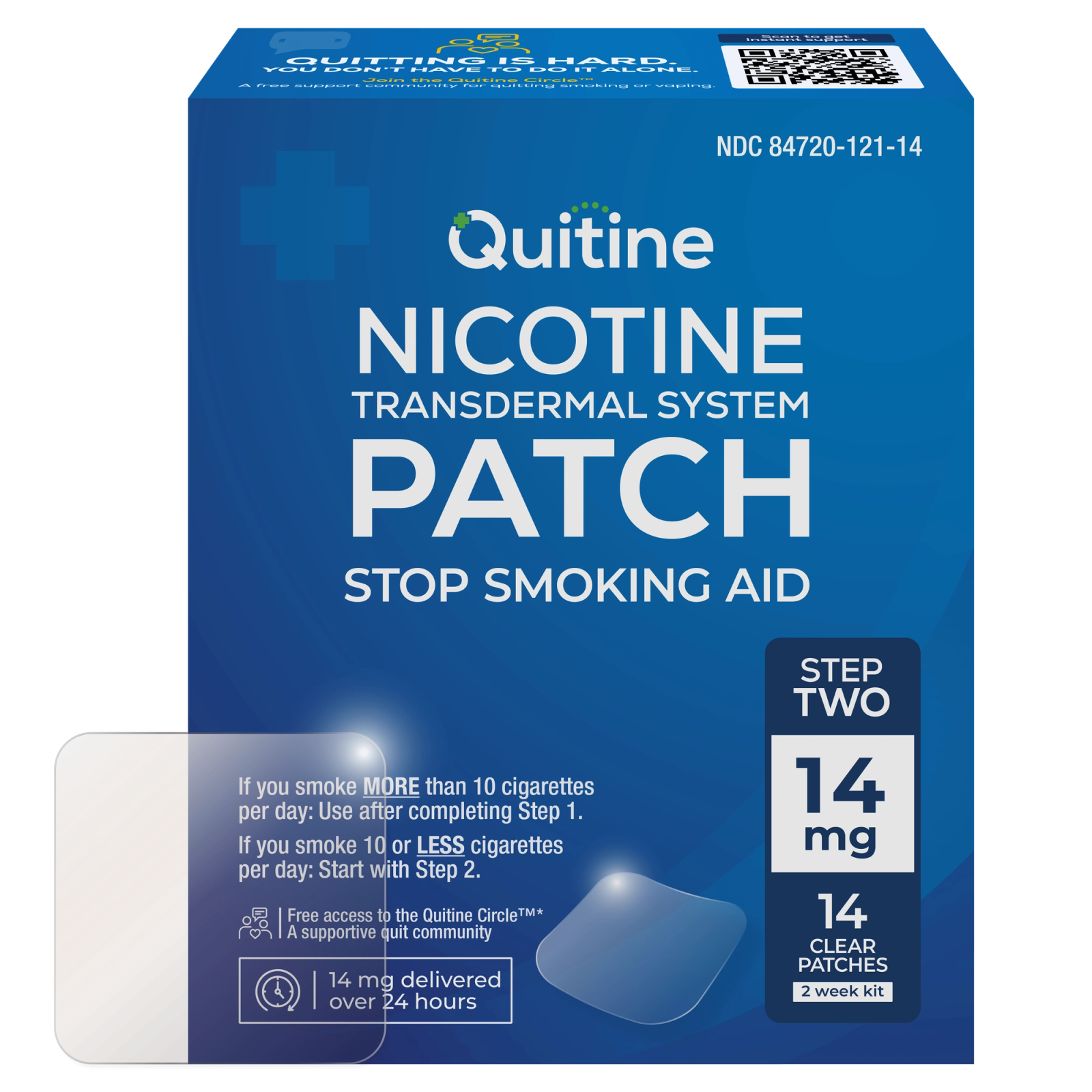
Description (Quitine Nicotine Patches Step 2 14mg 14 Pieces):
14 patches (2-week kit)
Start here if you smoke fewer than 10 cigarettes a day or vape lightly. You can also use these after you finish Step 1. Combine with 2 mg gum or lozenges if a craving breaks through.
Quitine nicotine patches are an FDA-regulated stop-smoking aid. Each patch delivers a steady amount of nicotine through the skin over 24 hours. You apply one patch each morning to clean, dry skin. It works in the background all day. There is no timing or counting required. You get consistent baseline support so you can focus on breaking the habit.
How to use
- Choose clean, dry, hairless skin on your upper arm, chest, or back. Skip lotions or oils before applying.
- Peel the liner and press the patch firmly for 10 to 20 seconds. Smooth the edges for a solid hold.
- Wear the patch for 24 hours. It is made for all-day wear, including everyday activities.
- Remove the patch after 24 hours and apply a new one to a different skin site. Rotate the site daily for comfort.
Stop use if skin irritation occurs. See the package directions for full details.
3) Quitine Nicotine Patches Step 3 7mg 14 Pieces
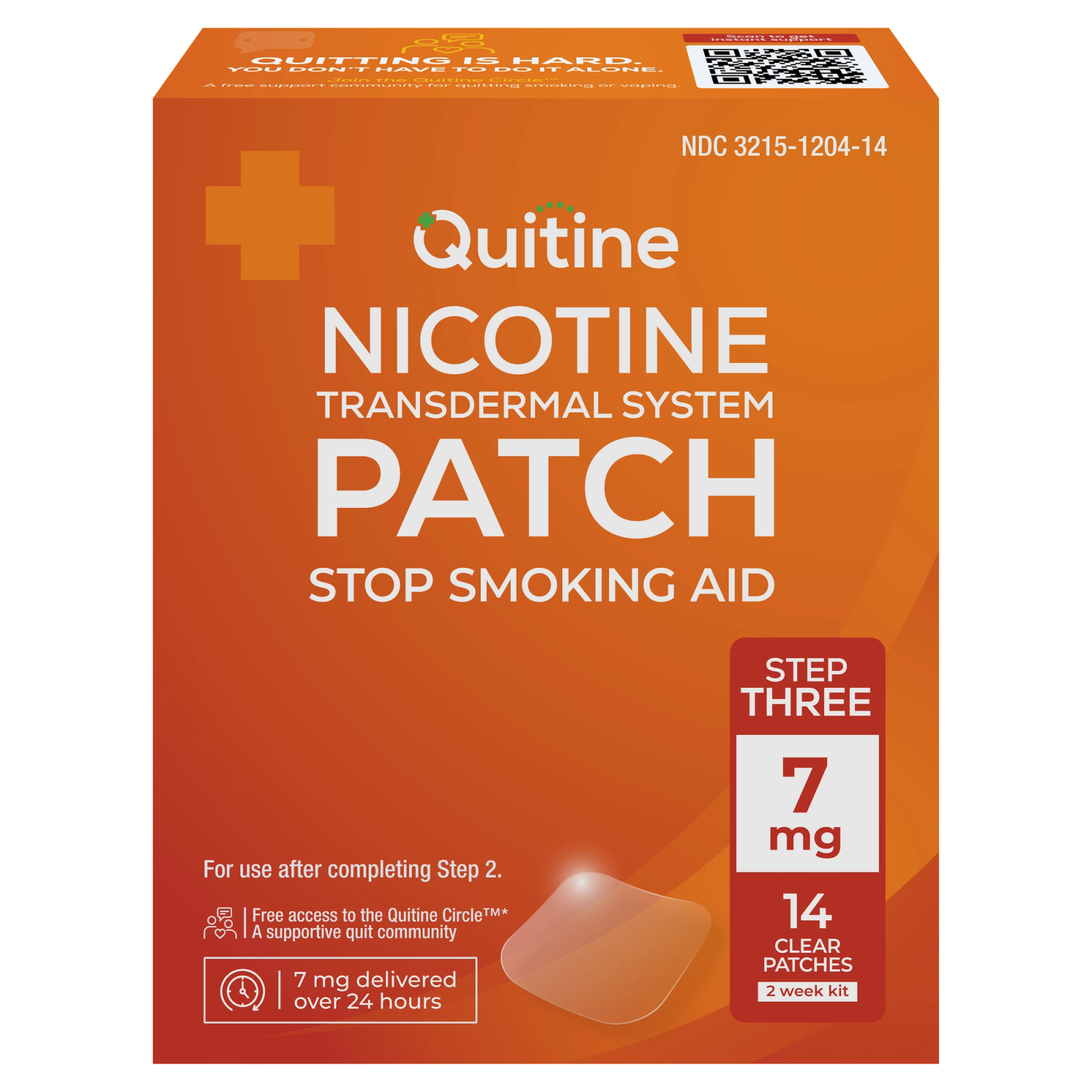
Description (Quitine Nicotine Patches Step 3 7mg 14 Pieces):
14 patches (2-week kit)
Use after you finish Step 2. This is the final taper. You can use the patches alone or add 2 mg gum or lozenges on harder days.
Quitine nicotine patches are an FDA-regulated stop-smoking aid. Each one delivers a steady amount of nicotine through the skin over 24 hours. You apply one patch every morning to clean, dry skin. The patch works in the background all day so you can focus on changing the habit itself.
How to use
- Choose a clean, dry, hairless area of skin on your upper arm, chest, or back. Skip any lotions or oils before you put the patch on.
- Peel the liner and press the patch firmly for 10 to 20 seconds. Smooth the edges so it stays in place.
- Wear the patch for a full 24 hours through everyday activities.
- After 24 hours, take it off and put a new patch on a different skin site. Rotate the location each day for comfort.
Stop use if skin irritation appears and follow the package directions.
Practical tips for daily use of nicotine patches
Choose a consistent time each morning to apply the new patch. Wash the area with plain water and dry it well. Press the nicotine patch firmly for about ten seconds. Rotate sites so the same skin does not get used day after day. Keep used patches out of reach of children and pets because they still contain residual nicotine.
Store unused patches in a cool place away from heat. If a patch loosens during a hot flash or after exercise, replace it with a fresh one. Pair the patch with simple habit changes: drink water when an urge hits, step outside for fresh air, or call a support person. Track progress in a notebook or the community tools so small wins stay visible.
If you also use hormone therapy patches, place the nicotine patch on a different body area. Ask your clinician about any timing preferences. Stay hydrated and keep rooms cooler to make both menopause symptoms and the quit process more comfortable.
Other approaches that help menopause symptoms
Hormone therapy remains the most effective option for moderate to severe hot flashes for many women who can use it safely. Non-hormone medicines such as certain antidepressants or newer agents that target temperature regulation pathways also help some people. Lifestyle steps add real value: regular movement, a balanced diet rich in whole foods, limited alcohol and spicy triggers, and good sleep routines.
Cooling strategies like layered clothing, fans, and chilled drinks give quick relief during a hot flash. Stress tools such as breathing exercises or short walks lower the chance that tension turns into another wave of heat. These approaches work alongside a quit plan rather than against it. Quitting smoking often makes every other step more effective.
Read also:
Frequently asked questions
Nicotine patches function as nicotine replacement therapy that delivers a steady dose through the skin to help manage withdrawal while someone stops smoking or vaping. Menopause already involves natural shifts in hormone levels that affect temperature regulation and sleep patterns. The consistent release from nicotine patches differs from the fluctuating nicotine intake that comes with cigarettes or vapes. This difference can support overall comfort during the menopause transition for women who are also working on quitting. The patches remain a tool focused on dependence rather than a direct approach to vasomotor symptoms.
Nicotine patches can form part of a quitting plan for women in menopause when a clinician reviews personal health details first. Skin sensitivity often increases during this stage, so rotating application sites each day helps limit irritation from the adhesive. Baseline changes in heart rate and blood pressure that accompany menopause make it useful to track how the body responds to the steady nicotine level. Short-acting forms such as nicotine gum or nicotine lozenges can pair with the patch for breakthrough support without adding extra daily nicotine load. Ongoing communication with a doctor or pharmacist keeps the approach matched to individual needs.
Quitting smoking removes the additional chemicals that influence blood-vessel function and hormone pathways during the menopause transition. Circulation and oxygen delivery often improve once the body is free of smoke, which can ease the physical effort of managing daily temperature shifts. Lung capacity recovery supports better energy levels that many women notice as they navigate sleep changes and mood fluctuations. The step-down process with nicotine replacement therapy allows the body to adjust gradually while these broader improvements take hold. Over time the absence of smoking creates space for other menopause supports to work more smoothly.
Starting strength for nicotine patches follows current daily nicotine use rather than menopause status alone. People who reach for nicotine soon after waking or use higher amounts typically begin with a higher-strength patch and move through a structured step-down over several weeks. The steady background dose from the patch leaves room for short-acting options when sudden urges appear. Matching the initial level to personal patterns helps keep withdrawal manageable while the body adapts. A pharmacist or clinician can refine the plan based on exact habits and any other treatments already in place.
Nicotine patches and hormone therapy patches can often be used in the same period because the nicotine products lack the combustion chemicals that alter hormone processing. Placing each type of patch on separate areas of skin reduces the chance of local irritation from either adhesive. Both systems rely on clean, dry application sites, so daily skin care routines that already help with menopause-related dryness remain relevant. Sharing the full list of products with a clinician allows monitoring for any combined effects on heart rate or blood pressure. This coordinated approach keeps the focus on both the quitting process and hormone support without unnecessary overlap.

Ready to Quit or Just Cut Back?
If you're reading about nicotine, vaping, or smoking habits, chances are you're already thinking about making a change.
You don't have to figure it out alone. The Quitine Circle is our free support community, open to everyone quitting smoking or vaping. No purchase is required, and you do not need to use Quitine products to participate.
Inside the Quitine Circle you'll find:
The 90-Day Quit Program to guide your step down plan
A printable Quit Program Workbook to track progress
Practical tools for managing cravings and triggers
Support from others going through the same process
Quitting works best when you combine the right tools with the right structure. That's exactly what the Quitine system is built for.
Take our short quiz to see which Quitine Quit Kit fits your nicotine habits.

Not Sure Which Product Is Right for You?
Take our 2-minute Quit Quiz and get a personalized product recommendation and 90-day system based on your smoking or vaping habits.